About This Plant
Wild chamomile (Matricaria discoidea), often called pineapple weed, is a small annual herb known for its distinctive sweet, pineapple-like scent. Despite lacking the white ray petals associated with traditional chamomile, it shares many of the same aromatic and medicinal qualities. It is commonly found growing unnoticed along pathways, driveways, and other compacted soils, where it thrives in conditions that challenge most other plants.
Originally native to parts of Asia, wild chamomile has become widely naturalized across North America. It is especially common in disturbed environments such as prairies, urban edges, and heavily trafficked areas. Its presence often signals compacted or nutrient-poor soils, and it plays a role in early ecological succession by stabilizing disturbed ground.
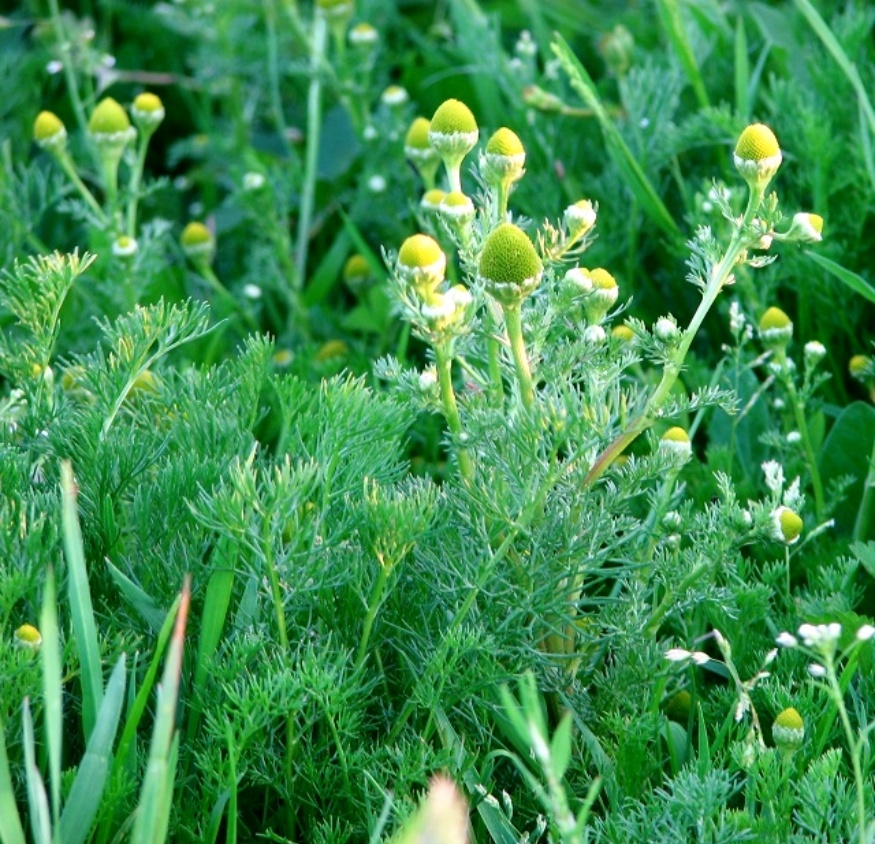
The plant is easily identified by its finely divided, feathery leaves and its small, cone-shaped greenish-yellow flower heads. Unlike true chamomile, it lacks white petals, giving it a more understated appearance. Crushing the flower heads releases a strong, fruity aroma that is unmistakable and serves as one of the best identification features.
Historically, wild chamomile has been used as a local substitute for true chamomile, particularly in regions where the cultivated species was not readily available. It has been appreciated as a gentle household remedy, especially suited for children and those seeking mild herbal support. Its accessibility made it a staple in folk herbal traditions.
Medicinally, wild chamomile is valued for its soothing effects on both the digestive and nervous systems. It is commonly used to relieve mild digestive discomfort such as gas and cramping, and to promote relaxation in cases of mild stress or restlessness. The flowers and leaves are typically prepared as a tea, though they may also be used in topical applications. While less potent than true chamomile, its safety, abundance, and pleasant flavor make it a valuable and approachable medicinal plant.
Traditional Use
Folk Use
Wild chamomile has long been valued as a gentle, readily available substitute for true chamomile. Its mild calming effects make it especially useful for children and individuals sensitive to stronger herbs. Traditionally, it has been prepared as a tea to support digestion, relieve mild stomach discomfort, and reduce nervous tension.
The plant is commonly used after meals to ease bloating, gas, and minor cramping. Its soothing qualities also extend to the nervous system, where it may help promote relaxation and mild sleep support. Though less potent than cultivated chamomile, it is appreciated for its accessibility and safety.
Externally, wild chamomile can be used as a wash or compress for minor skin irritations, inflammation, and small wounds. Its anti-inflammatory properties make it useful in simple home remedies for everyday ailments.
Chinese Medicine
Wild chamomile is not a traditional herb in Chinese medicine, but its energetic profile aligns with herbs that clear mild heat and calm the spirit. It is considered slightly cooling and drying, helping to relieve minor digestive heat and stagnation.
It may be used in a similar manner to chamomile-like herbs to harmonize the stomach and calm the shen, particularly in cases where stress affects digestion. Its gentle nature makes it suitable for mild imbalances rather than acute conditions.
Special Chemistry
Wild chamomile contains essential oils and flavonoids similar to those found in true chamomile, including compounds such as bisabolol. These contribute to its anti-inflammatory, antispasmodic, and mild calming effects on both the digestive and nervous systems.
Signature
The plant's low-growing, resilient habit and sweet, fruity aroma reflect its role as a gentle healer for everyday complaints. Its ability to thrive in compacted soils mirrors its usefulness in easing tension and stagnation within the body.
Combinations
Wild chamomile pairs well with lemon balm for calming the nervous system, and with peppermint for digestive support. It may also be combined with chamomile for a more potent relaxing blend.
Precautions
Wild chamomile is generally very safe, but individuals with sensitivities to the Asteraceae family should exercise caution. Proper identification is important, as it grows in areas where other small composite plants may be present. As with most mild herbs, moderation is recommended.
| Medicinal Species | Matricaria discoidea, Matricaria chamomilla |
|---|---|
| Tastes | bitter, acrid/pungent |
| Organ Systems | digestive, immune/lymphatic, nervous |
| Thermal Nature | cool |
| Moisture | drying |
| Parts Used | leaves, flowers |
| Preparations | oil, tea/infusion, tincture, wash, compress |
| Organs and Tissue | stomach, liver, brain, mucosa |
Growing Guide
Wild chamomile is an adaptable annual that thrives in disturbed soils, particularly in areas subject to foot traffic such as paths, driveways, and garden edges. It prefers full sun but can tolerate partial shade, and it readily establishes in poor, compacted soils where many other plants fail.
Seeds can be sown directly onto the soil surface in early spring, as they require light to germinate. The seeds should not be buried deeply; simply pressing them into the soil is sufficient. Germination is typically quick, often within one to two weeks under favorable conditions.
This plant is highly self-seeding and may spread aggressively if left unmanaged. Regular harvesting of the flowering heads can help control its spread while encouraging continuous growth. It requires minimal watering once established and is drought tolerant, making it an excellent low-maintenance plant for naturalized areas.