
About This Plant
Cranesbills (Geranium spp.) are a diverse group of hardy perennial herbs in the geranium family (Geraniaceae), admired for their attractive flowers and respected for their long history in traditional herbal medicine. Although the genus includes hundreds of species worldwide, the principal medicinal species in North America is Geranium maculatum, commonly known as wild geranium. Other species, including Geranium robertianum, Geranium pratense and Geranium sanguineum, have also been used in regional herbal traditions because they share similar astringent properties. These plants naturally inhabit deciduous woodlands, forest margins, meadows and open hillsides, where they provide early-season nectar for pollinating insects while contributing beauty to native plant communities.
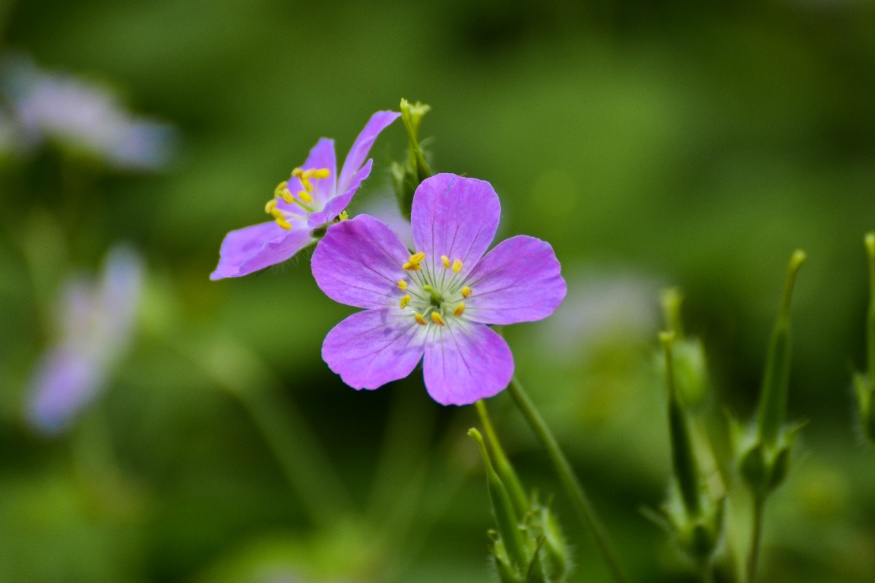
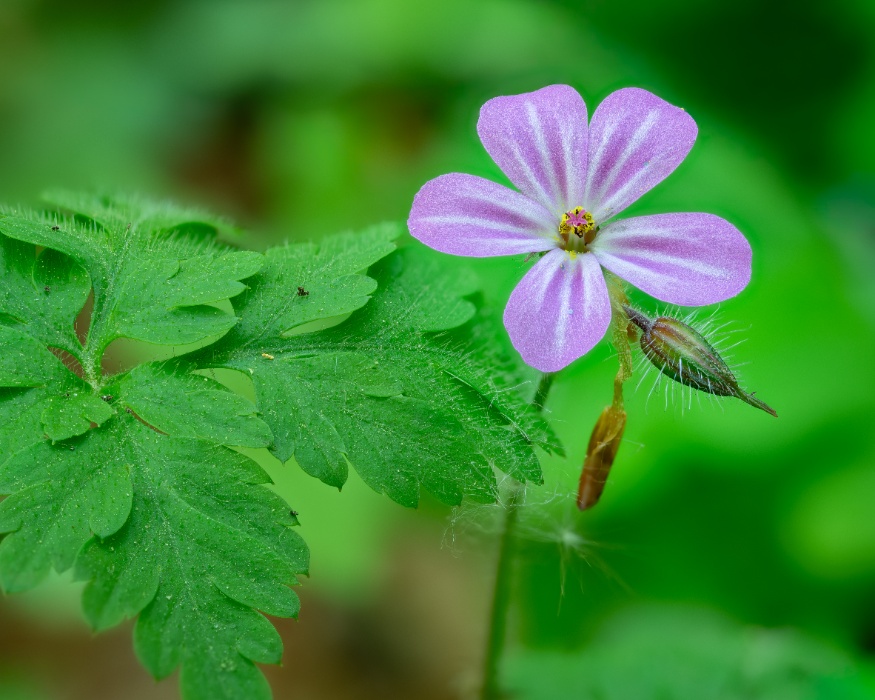
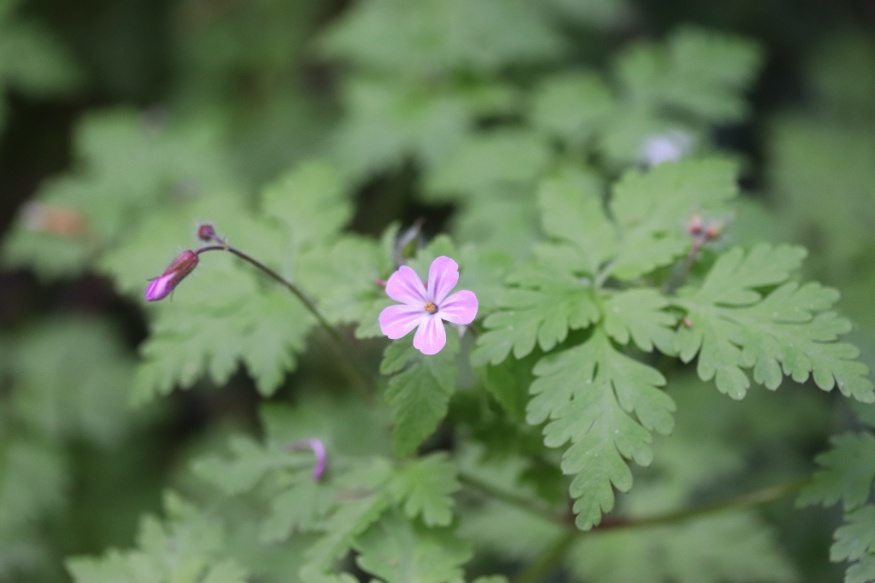
Cranesbills are easily recognized by their palmately divided leaves, delicate five-petalled flowers and distinctive seed capsules that resemble the long bill of a crane, giving rise to their common name. Depending on the species, flowers range from pale pink and lavender to deep magenta or purple and bloom from late spring into early summer. After flowering, the characteristic beaked seed capsule dries and springs open, scattering seeds several feet from the parent plant. Most species gradually expand into attractive clumps through short rhizomes while remaining well behaved in woodland gardens. Their adaptability, attractive foliage and reliable flowering have made many cranesbills popular ornamental perennials in addition to their medicinal value.
Wild geranium has held a particularly important place in North American herbal medicine. Indigenous peoples recognized the remarkable astringency of the root and prepared decoctions to support digestive health, soothe diarrhea and assist with minor bleeding. Early European settlers adopted these practices, and by the nineteenth century wild geranium had become one of the most respected native herbal astringents. The dried root appeared in numerous herbal texts and pharmacopoeias, where it was valued for toning mucous membranes, supporting oral health through gargles and washes, and promoting the healing of minor skin irritations. Although the leaves possess similar properties, they are considerably milder than the root.
Modern Western herbalists continue to value cranesbill primarily for its exceptionally high tannin content and reliable astringent action. Short-term preparations of the root are still used to support digestive comfort, healthy mucous membranes and topical skin care, while washes and gargles remain among its most traditional applications. Because harvesting the medicinal root kills the plant, cultivated sources are strongly preferred over wild populations. Combining ornamental beauty, ecological value and a long record of traditional use, cranesbills remain an outstanding example of a native woodland plant whose medicinal significance has endured from Indigenous traditions to contemporary Western herbal practice.
Traditional Use
Folk Use
Cranesbills have long been regarded as some of North America's finest native astringent herbs. Indigenous peoples and later European settlers relied particularly upon wild geranium (Geranium maculatum) to address conditions involving excessive bleeding, diarrhea and inflammation. The root, exceptionally rich in tannins, became one of the most respected herbal astringents available throughout eastern North America and was commonly carried by early physicians and frontier herbalists.
Decoctions prepared from the dried root were traditionally administered to support healthy digestion during episodes of diarrhea and to soothe irritated mucous membranes. The same preparations were frequently employed as gargles for sore throats and inflamed gums or applied externally as washes for minor wounds, skin irritations and hemorrhoids. Because of its powerful contracting action on tissues, cranesbill was often chosen whenever excessive secretions or minor bleeding required gentle herbal support.
The leaves possess similar but considerably milder properties than the root and were sometimes brewed into teas when fresh roots were unavailable. Among the medicinal species, Geranium maculatum remains the best documented in North American herbalism, while several European cranesbills - including Geranium robertianum - share related astringent qualities. Today the genus continues to be respected by Western herbalists as a classic source of botanical tannins for digestive and topical applications.
Chinese Medicine
Cranesbill is not a traditional herb of the classical Chinese Materia Medica and therefore has no established role within ancient Traditional Chinese Medicine. Although several Geranium species have appeared in regional Asian folk medicine, the genus was never incorporated into the core TCM pharmacopoeia. Consequently, there are no classical channel associations, standard formulas or dosage recommendations recorded for Geranium maculatum or related species.
From a modern energetic perspective, cranesbill can be interpreted as cool and strongly astringent, with actions that stabilize tissues and reduce excessive fluid loss. Its exceptionally high tannin content suggests an affinity for the Large Intestine, Stomach and Liver by helping to clear mild Heat associated with inflammation while toning weakened tissues. The traditional use of the root for diarrhea, minor bleeding and inflamed mucous membranes aligns well with the TCM concept of securing leakage and consolidating bodily fluids. Externally, its cooling and drying qualities have traditionally been valued for calming irritated skin and supporting the natural healing of superficial wounds.
Modern practitioners integrating Western herbs with TCM principles generally regard cranesbill as a supportive botanical rather than a primary Chinese medicinal. It is most appropriately used when a gentle yet effective astringent action is desired. For complex patterns involving significant Heat, Dampness or Blood deficiency, practitioners typically select herbs with a much longer history of clinical use within the Chinese Materia Medica.
Special Chemistry
Cranesbill root is exceptionally rich in hydrolysable tannins, particularly geraniin and related ellagitannins, which account for its powerful astringent action. It also contains gallic acid, ellagic acid, flavonoids, phenolic acids and small amounts of volatile compounds. These constituents contribute antioxidant activity while supporting the traditional use of the plant for toning tissues, reducing minor inflammation and promoting healthy healing of irritated mucous membranes and skin.
Signature
The deeply divided leaves resemble an open hand, suggesting the plant's traditional ability to gather, tighten and restore weakened tissues. The distinctive beak-like seed capsule, resembling the bill of a crane, has long symbolized precision and balance. Its firm, tannin-rich root reflects its reputation for strengthening integrity where excessive fluid loss or lax tissues require gentle support.
Combinations
Cranesbill combines well with Yarrow, Plantain and Chamomile for topical preparations supporting irritated skin and minor wounds. Internally, it has traditionally been paired with Raspberry leaf and Blackberry leaf in astringent digestive formulas. Because of its high tannin content, cranesbill is generally used as a supporting herb rather than the sole ingredient in long-term preparations.
Precautions
Cranesbill is generally considered safe when used appropriately in traditional herbal preparations. Because of its high tannin content, prolonged use of large amounts may reduce the absorption of certain minerals or contribute to digestive discomfort in sensitive individuals. It is best reserved for short-term use when its astringent action is specifically desired. Those with chronic constipation should use caution, as excessive astringency may aggravate the condition. Harvest roots responsibly, preferably from cultivated plants, since removing the root kills the plant and repeated wild harvesting can reduce natural populations.
| Medicinal Species | Geranium maculatum (primary), Geranium robertianum, Geranium pratense, Geranium sanguineum |
|---|---|
| Tastes | bitter, astringent |
| Organ Systems | circulatory, digestive, urinary, reproductive, integumentary (skin, hair, nails) |
| Thermal Nature | cool |
| Moisture | drying |
| Parts Used | roots, leaves |
| Preparations | decoction, tea/infusion, tincture, powder, wash |
| Organs and Tissue | stomach, large intestine, blood, skin, uterus |
Growing Guide
Cranesbills are hardy perennial woodland plants valued for their attractive flowers and long history in traditional herbal medicine. Most species thrive in partial shade with rich, well-drained soils containing abundant organic matter, although many tolerate full sun when moisture remains consistent. Wild geranium (Geranium maculatum) naturally grows in deciduous forests, woodland edges and open meadows where spring sunlight reaches the forest floor before tree canopies fully develop.
Seeds benefit from approximately 60–90 days of cold moist stratification before sowing outdoors in autumn or refrigerating before spring planting. Germination can be somewhat irregular, requiring patience. Mature plants also divide readily during spring or autumn, making division the preferred propagation method for maintaining desirable colonies. Once established, cranesbills require little maintenance beyond occasional watering during prolonged drought and the removal of spent flower stalks if self-seeding is not desired.
The plants emerge early each spring, producing deeply divided leaves followed by delicate pink to lavender flowers that attract numerous native bees and other pollinating insects. Medicinal roots are traditionally harvested from mature plants during autumn after the foliage begins dying back, while young healthy leaves may be collected throughout the growing season. Because native woodland populations can be slow to recover from root harvesting, cultivated sources are preferred whenever possible to protect wild stands.