About This Plant
Bull thistle (Cirsium vulgare) is a robust biennial member of the daisy family (Asteraceae) recognized by its deeply lobed, heavily spined leaves and striking purple flower heads. Native to Europe and western Asia, it has become widely naturalized throughout much of North America, where it commonly inhabits disturbed ground, abandoned fields, roadsides, pastures and open forest margins. Although often classified as a noxious weed because of its ability to spread readily by seed, bull thistle also provides important ecological benefits by producing abundant nectar for pollinating insects and nutritious seeds that sustain many species of birds. Its bold appearance and resilience make it one of the easiest thistles to recognize in the landscape.
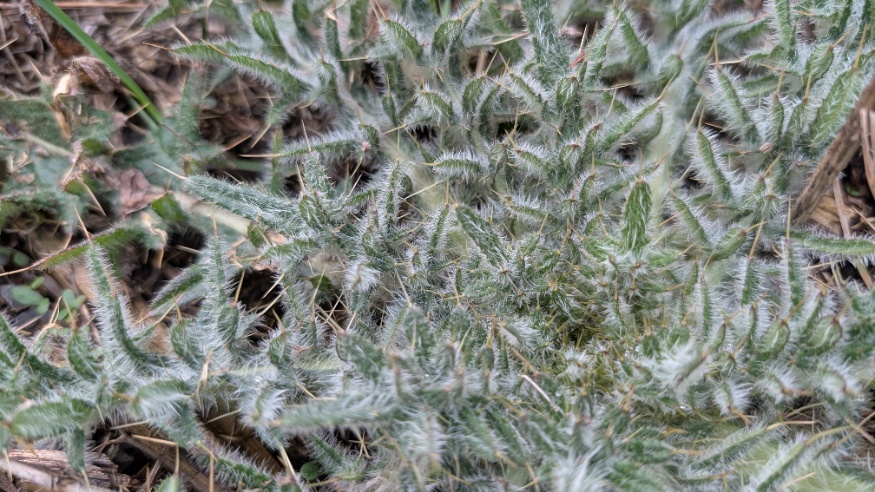
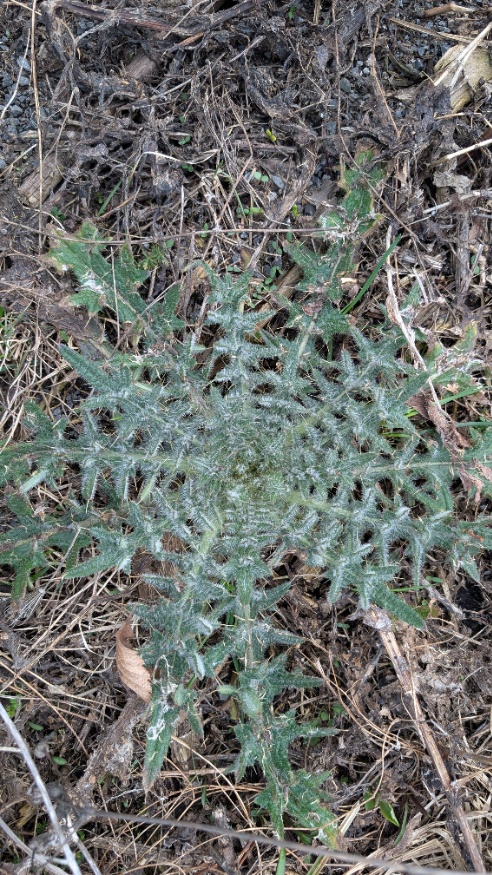
During its first growing season, bull thistle develops a large basal rosette of dark green leaves armed with sharp yellow spines along every margin. In its second year, it sends up an erect flowering stalk that commonly reaches between two and six feet in height, often branching near the top. The stems bear conspicuous wings formed by the continuation of the leaf bases, another useful identification feature. From early to late summer, the plant produces large reddish-purple flower heads surrounded by rigid spiny bracts. Following pollination, each flower develops numerous seeds equipped with silky white plumes that allow them to travel considerable distances on the wind. The flowers attract bees, butterflies, hoverflies and many other beneficial insects, while finches frequently feed on the ripened seeds.
Historically, bull thistle occupied an interesting place in rural life. Despite its intimidating armour, nearly every part of the young plant was considered useful. Tender peeled stems, leaf midribs, immature flower stalks and first-year roots were eaten after removing the spines, providing a nutritious wild vegetable during times when cultivated foods were scarce. The down from mature seed heads was occasionally used as stuffing for pillows or insulation, while flowering stems sometimes served as livestock fodder after the spines had been removed. Like many resilient weeds, bull thistle became a symbol of persistence and the ability to flourish under difficult conditions.
In Western herbalism, bull thistle has traditionally been valued as a mild bitter tonic that supports healthy digestion, liver function and urinary elimination. The root and leaves were prepared as teas, decoctions or tinctures to encourage appetite and assist the body's natural cleansing processes. Fresh leaves were also applied externally to minor skin irritations in some regional folk traditions. Although other thistles and bitter herbs such as Dandelion, Burdock and Oregon Grape are more commonly used by modern herbalists, bull thistle remains an interesting example of a plant whose medicinal, edible and ecological value is often overlooked because of its formidable appearance. With careful handling and proper identification, it offers both historical insight and practical benefits for those interested in traditional wild foods and medicinal plants.
Traditional Use
Folk Use
Bull thistle has a long but often overlooked history in European folk medicine. Although less famous than many other medicinal herbs, rural herbalists recognized the plant as both a nourishing wild food and a useful remedy for supporting liver function, digestion and urinary health. Young stems were peeled and eaten, immature flower stalks were cooked like vegetables, and the taproot was occasionally harvested during the first growing season before becoming woody. The bitterness of the leaves was believed to stimulate sluggish digestion and improve appetite.
Traditional herbal preparations frequently involved teas or decoctions of the root and leaves to encourage healthy liver activity and assist the body's natural elimination processes. Herbalists also regarded bull thistle as a mild diuretic that supported urinary function while promoting the removal of excess fluid. Fresh crushed leaves were sometimes applied externally as poultices over minor wounds, boils and inflamed skin, taking advantage of the plant's traditional reputation for cleansing damaged tissue.
Like many members of the thistle family, bull thistle was often viewed as a strengthening herb for individuals recovering from illness or poor nutrition. While it has never achieved the widespread medicinal reputation of Dandelion or Oregon Grape, many traditional herbalists considered it a useful local substitute where those species were unavailable. Today it is used only occasionally in Western herbalism, but interest continues among foragers seeking resilient edible and medicinal wild plants.
Chinese Medicine
Bull thistle is not a traditional herb of the Chinese Materia Medica and therefore has no classical designation regarding channels, energetic actions or standard herbal formulas. Its medicinal history developed almost entirely within European folk traditions rather than traditional Chinese medicine. Consequently, there are no historical records of Cirsium vulgare being routinely prescribed by ancient Chinese physicians.
From a modern integrative perspective, bull thistle could be interpreted as having a mildly cool energetic nature with a bitter taste that encourages the downward movement of excess Heat while supporting the Liver and Gallbladder. The bitter principles traditionally associated with thistles may help stimulate digestive secretions and promote healthy bile flow, making the plant conceptually similar to other bitter digestive herbs. Its historical reputation as a blood purifier and mild diuretic could also be viewed as supporting the body's ability to clear Damp-Heat through the urinary system, although these interpretations are based on energetic comparison rather than classical TCM literature.
Practitioners seeking herbs with comparable actions typically rely upon well-established Chinese medicinals that possess centuries of documented use and standardized preparation. Bull thistle therefore remains an uncommon herb within modern TCM practice and is generally regarded as a Western botanical that may complement, rather than replace, traditional Chinese medicinal herbs. Its primary value continues to lie in European herbal traditions and contemporary foraging rather than classical Chinese medicine.
Special Chemistry
Bull thistle contains flavonoids, phenolic acids, sesquiterpene lactones, tannins and small amounts of volatile compounds that contribute to its antioxidant and bitter properties. The leaves and roots also contain minerals, inulin and other carbohydrates that support their historical use as a nourishing wild food. Like many members of the thistle family, the concentration of active compounds varies depending on soil conditions, plant age and the season of harvest.
Signature
The deep taproot penetrating compacted soils reflects the plant's traditional association with reaching deeply into the body's cleansing and restorative processes. Its formidable spines protecting a colourful flower suggest resilience, healthy boundaries and hidden nourishment beneath a rugged exterior. The abundant nectar produced despite its defensive armour has also led some herbalists to associate the plant with balancing protection and generosity.
Combinations
Bull thistle combines well with other traditional liver-supporting herbs such as Dandelion, Oregon Grape and Burdock when a broader bitter tonic formula is desired. For digestive support it has historically been paired with aromatic herbs that improve appetite and reduce bloating. Modern Western herbalists more commonly include bull thistle as a minor supporting herb within cleansing formulas rather than using it as the principal medicinal.
Precautions
Although generally regarded as a relatively safe wild edible when properly identified, bull thistle should be harvested with care because the rigid spines can easily puncture skin. Gloves and protective clothing are recommended. Individuals with allergies to members of the Asteraceae family should exercise caution, as allergic reactions are possible. Mature leaves become increasingly fibrous and less suitable for consumption. Plants growing beside busy roads, industrial sites or areas treated with herbicides should never be harvested for medicinal or culinary use. Proper identification is essential because several other spiny plants may superficially resemble bull thistle, although most are not dangerously poisonous.
| Medicinal Species | Cirsium vulgare |
|---|---|
| Tastes | bitter, sweet |
| Organ Systems | circulatory, digestive, hepatobiliary (liver & gallbladder), urinary, integumentary (skin, hair, nails) |
| Thermal Nature | cool |
| Moisture | drying |
| Parts Used | roots, leaves, flowers, seeds |
| Preparations | decoction, extract, tea/infusion, tincture, powder, wash, poultice |
| Organs and Tissue | stomach, liver, gallbladder, kidneys, blood |
Growing Guide
Bull thistle is a hardy biennial that readily establishes from seed and thrives in open, sunny locations with little competition. Although often considered a troublesome weed, it can be intentionally cultivated for pollinator habitat or educational medicinal gardens if care is taken to prevent unwanted spreading. It grows well in a wide range of soils, including gravelly, sandy and nutrient-poor ground, provided drainage is adequate. Once established, the plant tolerates drought remarkably well due to its deep taproot.
Seeds benefit from approximately 30–60 days of cold moist stratification, although autumn sowing outdoors often produces the most reliable germination by allowing winter conditions to naturally break dormancy. Spring sowing after refrigeration is also successful. Seedlings develop a flat rosette of heavily spined leaves during their first year while storing energy in the taproot. During the second season a tall flowering stalk develops, often reaching six feet in favourable conditions before producing numerous purple flower heads throughout summer.
Because each flowering plant is capable of producing thousands of wind-dispersed seeds, deadheading should be performed before seeds mature if natural spread is not desired. Thick gloves and protective clothing are recommended when handling mature plants because the stiff spines easily penetrate light fabric. Despite its aggressive nature in disturbed habitats, bull thistle provides an abundant nectar source for bees, butterflies and many beneficial insects while its seeds are eagerly consumed by goldfinches and other seed-eating birds. When intentionally cultivated, placing plants where seed heads can be managed allows gardeners to enjoy their ecological value without contributing to invasive populations.