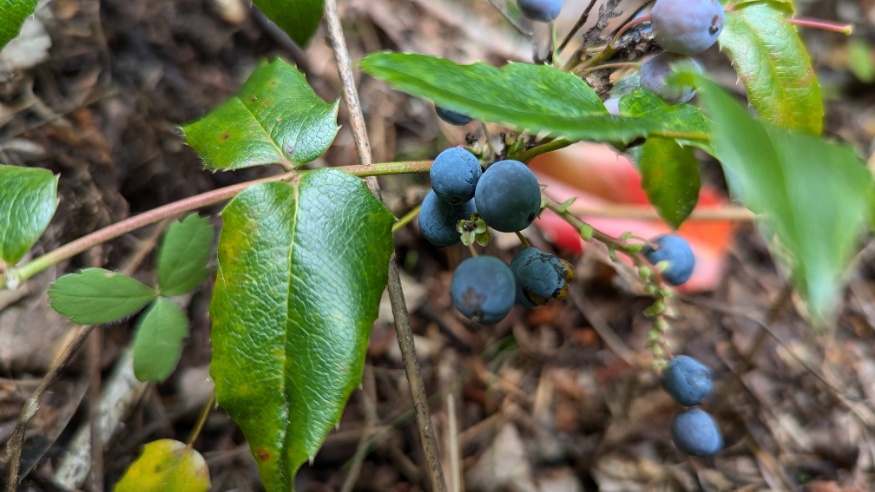
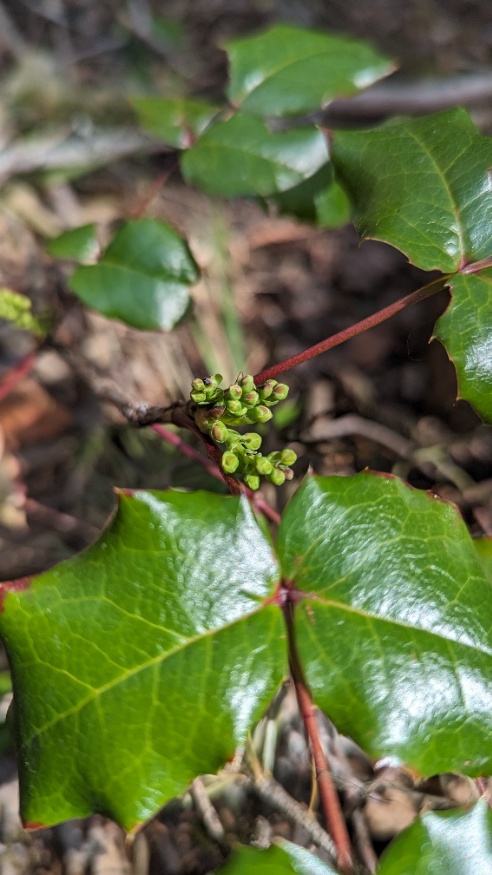
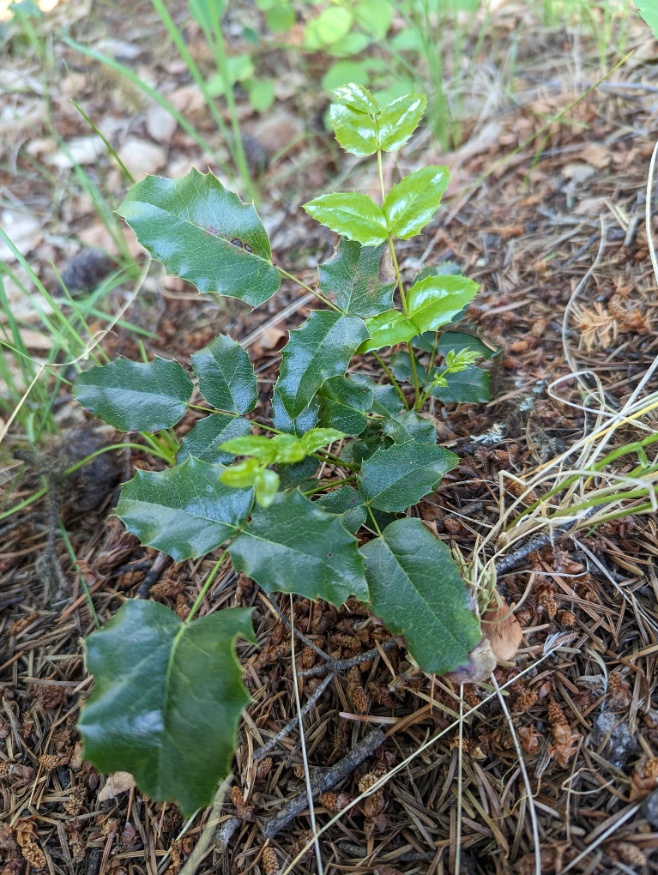
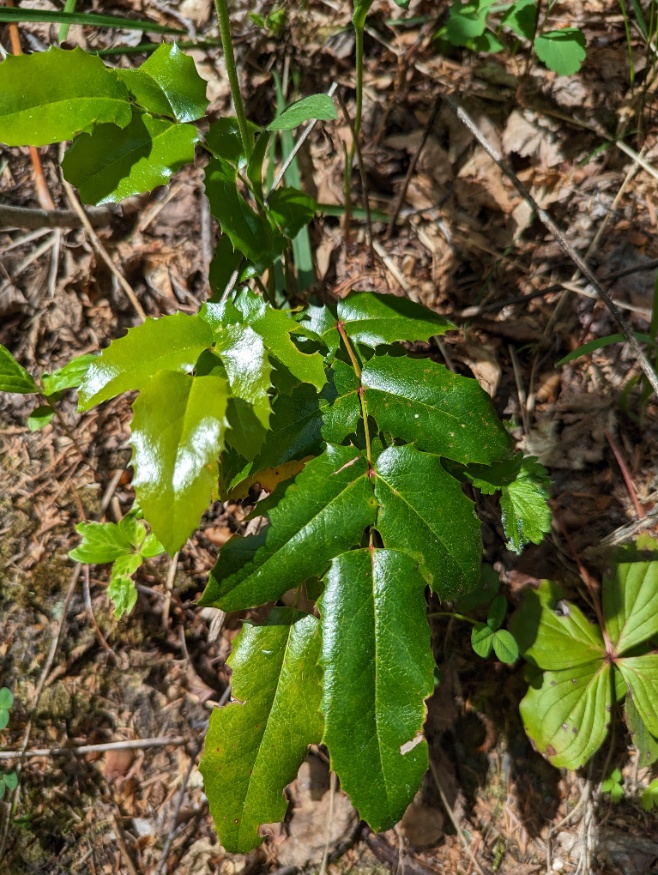
Oregon grape (Mahonia aquifolium) is an evergreen shrub native to the forests of western North America. Its glossy, holly-like leaves form dense clusters along upright stems and often develop reddish tones during winter. In early spring the plant produces clusters of bright yellow flowers that are rich in nectar and attract early pollinators. These flowers later develop into small blue-purple berries that resemble grapes and are sometimes used in preserves. The plant thrives in shaded woodland environments and often grows along forest edges and beneath larger trees. The bright yellow inner bark of the roots contains potent medicinal compounds that have long been valued in herbal medicine, particularly for supporting liver health, digestion, and inflammatory skin conditions.
Oregon grape has long been used as a medicinal plant by Indigenous peoples of western North America. The bright yellow inner bark of the root was traditionally prepared as a decoction to treat digestive disorders, infections, and inflammatory conditions. The plant became widely used in North American herbalism as a bitter tonic that stimulates liver function and improves digestion. External preparations of the root bark were also used to treat skin problems such as eczema, psoriasis, and infections.
Oregon grape is not traditionally used in classical Chinese herbal medicine, but its active compound berberine is also found in several Chinese herbs such as Coptis and Phellodendron. For this reason many practitioners interpret its actions similarly to these bitter heat-clearing herbs. Within a TCM framework, Oregon grape is considered strongly bitter and cold, helping to clear damp heat and toxins from the Liver and digestive system.
The roots contain the alkaloid berberine along with berbamine and other isoquinoline alkaloids. These compounds contribute to antimicrobial, anti-inflammatory, and liver-supportive effects.
The vivid yellow inner bark reflects the plant's traditional association with liver and bile function, organs historically connected with yellow bile in many medical traditions.
Often combined with burdock root, yellow dock, or dandelion for liver support and skin conditions.
Strongly bitter and should not be used during pregnancy. High doses may irritate the digestive tract.
| Medicinal Species | Mahonia aquifolium, Mahonia nervosa, Mahonia repens |
|---|---|
| Tastes | bitter |
| Organ Systems | digestive, hepatobiliary (liver & gallbladder), immune/lymphatic, integumentary (skin, hair, nails) |
| Thermal Nature | cold |
| Moisture | drying |
| Parts Used | roots, inner bark |
| Preparations | decoction, extract, tincture, capsule, wash, cream |
| Organs and Tissue | liver, gallbladder, blood |
Oregon grape grows well in woodland conditions with moist, well-drained soils rich in organic matter. It tolerates deep shade but can also grow in partial sun, particularly in cooler climates. Seeds benefit from cold stratification before germination. The plant spreads slowly through underground rhizomes and may also be propagated by division. Once established it is relatively drought tolerant and adaptable, making it a useful understory shrub for naturalized landscapes and forest gardens.