About This Plant
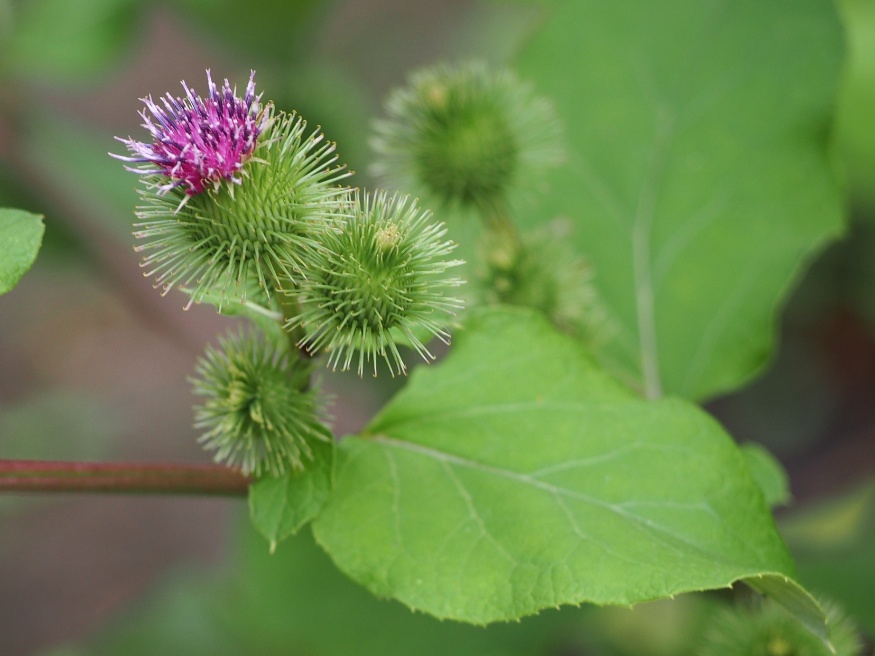
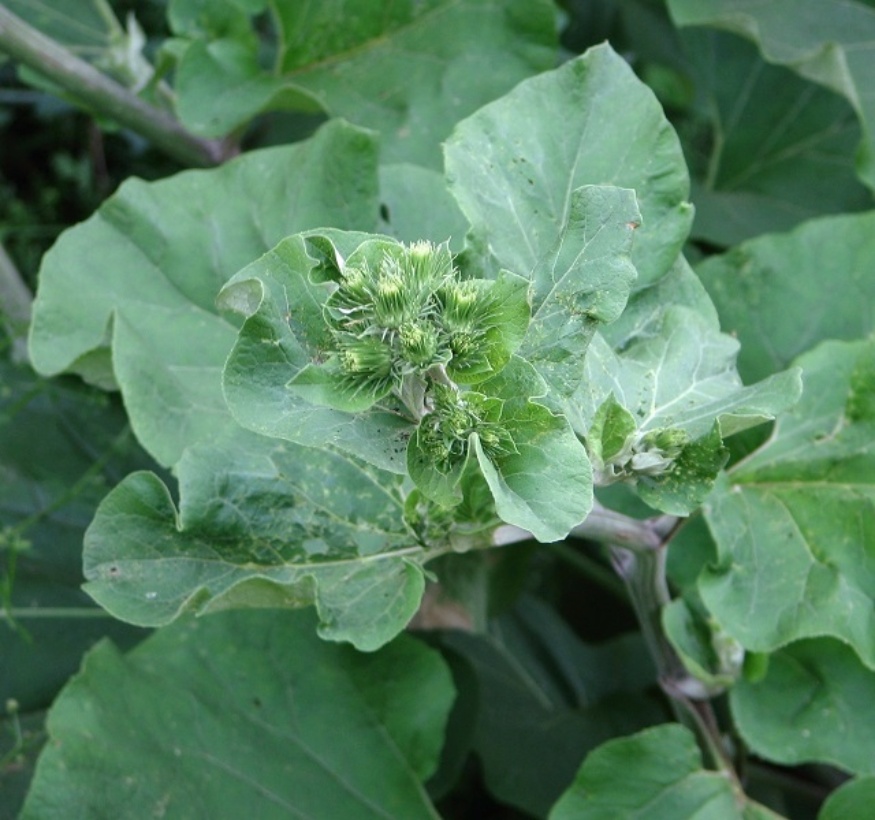
Burdock (Arctium lappa) is a robust biennial plant recognized for its large, heart-shaped leaves and distinctive burr-covered seed heads. In its first year, the plant forms a broad rosette of leaves close to the ground, while in its second year it sends up tall flowering stalks that can reach several feet in height.
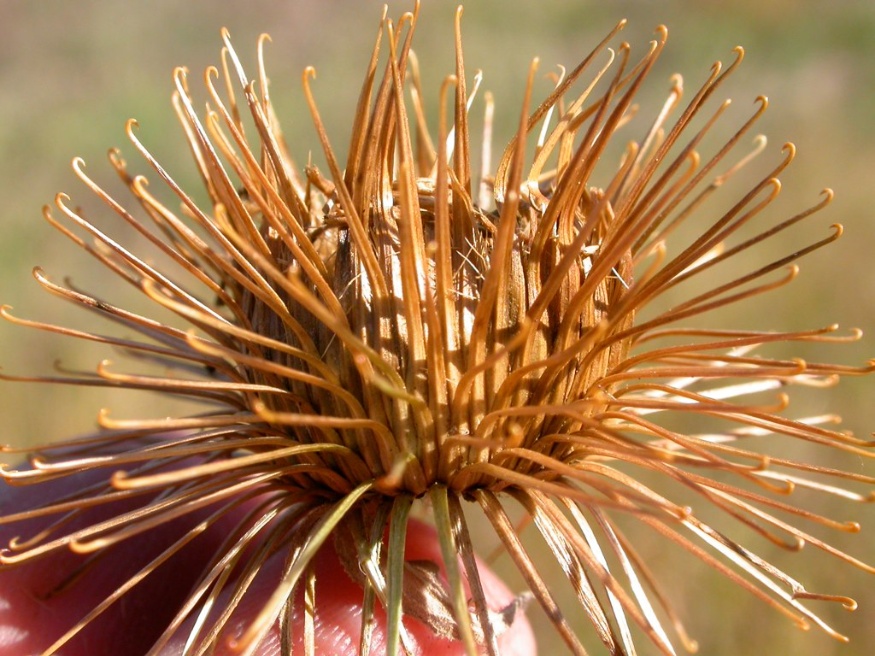
The purple thistle-like flowers develop into round burs that cling easily to fur and clothing, aiding in seed dispersal. This simple natural mechanism famously inspired the invention of Velcro. Burdock thrives in disturbed soils, along roadsides, and in open fields where it grows vigorously.
Beneath the soil, the plant produces a long taproot that has been valued as both a food and medicinal herb. In many cultures, particularly in East Asia, burdock root is cultivated as a nutritious vegetable. Its deep roots help break up compacted soil, making it a useful plant in regenerative gardening.
With its bold form and long history of use, burdock is a plant that bridges wild landscapes, traditional food systems, and herbal medicine.
Traditional Use
Folk Use
Chinese Medicine
Combinations
Precautions
| Medicinal Species | Arctium lappa |
|---|---|
| Tastes | bitter, sweet |
| Organ Systems | digestive, immune/lymphatic, integumentary (skin, hair, nails) |
| Thermal Nature | cool |
| Moisture | moistening |
| Parts Used | roots, seeds |
| Preparations | decoction, tincture |
| Organs and Tissue | liver, blood |