About This Plant
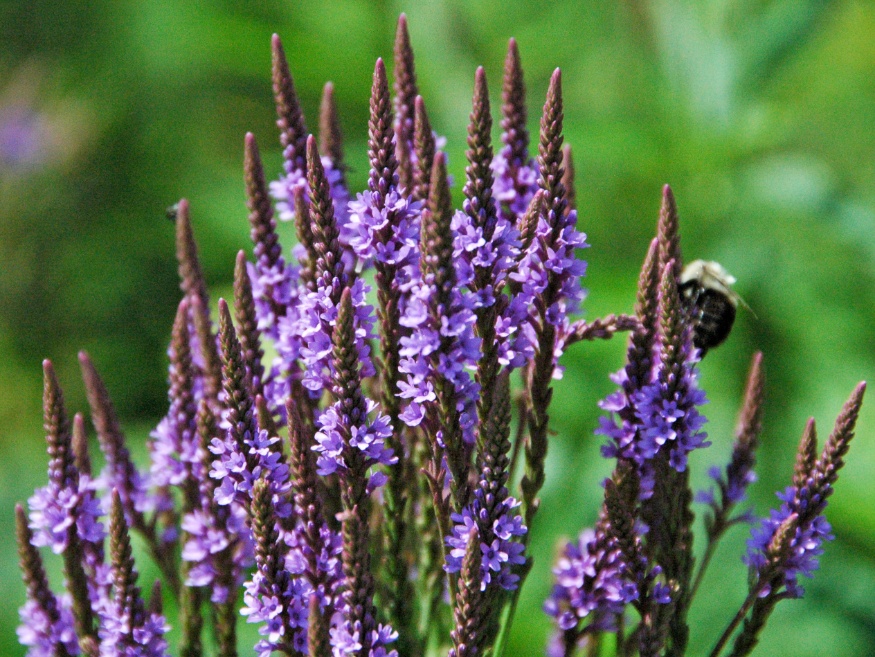
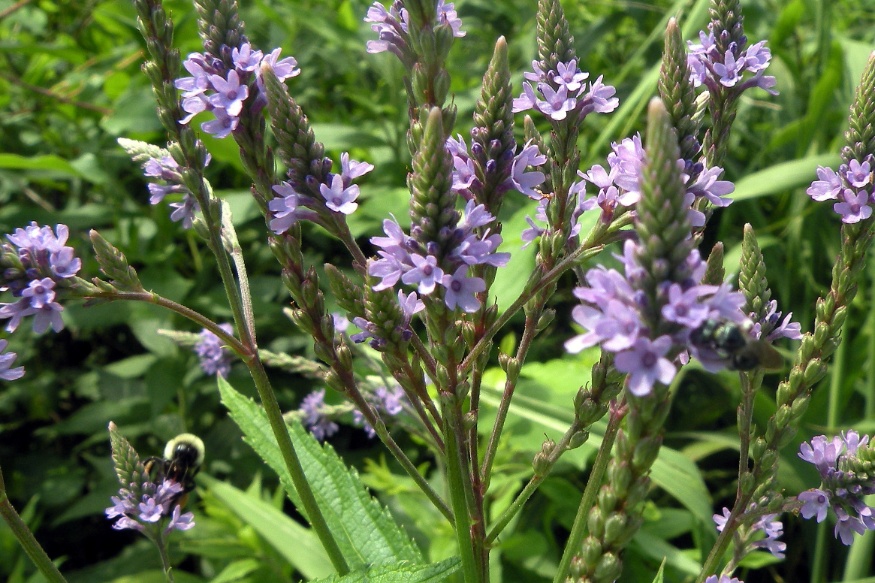
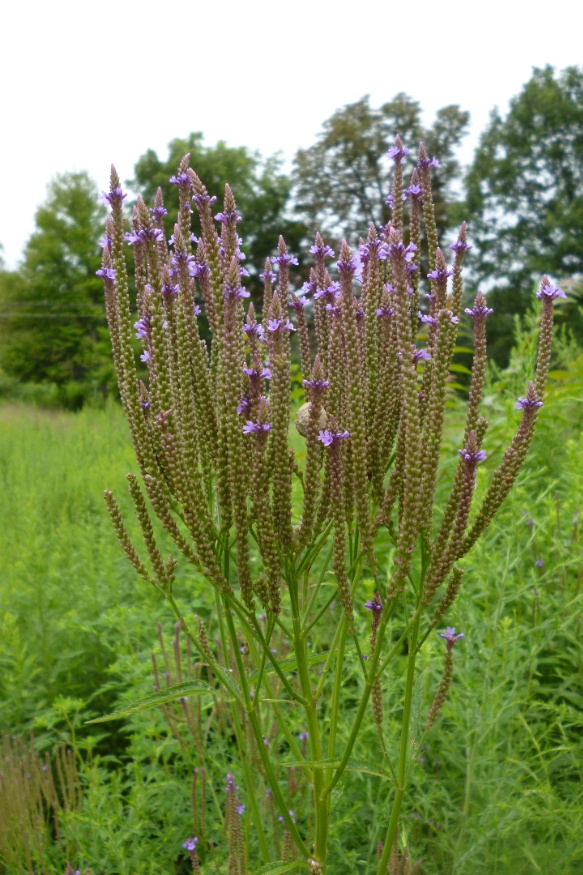
Blue vervain (Verbena hastata) is a tall, upright perennial herb native to North America, often found in moist meadows, along streams, and in wetland edges. It is known for its slender spikes of small blue-purple flowers that bloom in mid to late summer.
The plant can reach over a meter in height and has lance-shaped leaves arranged oppositely along the stem. It thrives in moist soils and sunny locations, often forming colonies in suitable habitats.
Historically, blue vervain has been used in traditional medicine for its calming and restorative properties. It was valued as a nervine and digestive aid.
While not commonly used as food, it has a strong medicinal presence and is often compared to herbs like skullcap.
Traditional Use
Folk Use
Blue vervain has been used traditionally as a calming herb for stress and nervous tension. It was often prepared as a tea or tincture.
It was also used for digestive support and to reduce fevers.
In herbal traditions, it is sometimes combined with skullcap for nervous system support.
Chinese Medicine
Special Chemistry
Blue vervain contains iridoid glycosides and bitter compounds that contribute to its calming and digestive effects.
It is often combined with herbs like lemon balm.
Large doses may cause nausea, so moderate use is recommended.
Combinations
Precautions
| Medicinal Species | Verbena hastata |
|---|---|
| Tastes | bitter |
| Organ Systems | digestive, nervous, reproductive |
| Thermal Nature | cool |
| Moisture | drying |
| Parts Used | leaves, flowers |
| Preparations | tea/infusion, tincture |
| Organs and Tissue | liver |
Growing Guide
Blue vervain prefers moist soil and full sun. It is well suited to rain gardens or wetland edges.
Seeds can be sown in fall or spring, often benefiting from cold stratification.
Following guidance like preparing to grow wild plant seeds can improve germination.