Skullcap: The Herb of Modern Depression
In an age when many of us carry invisible burdens of stress, anxiety, and fatigue, it can feel as if our nervous system is on constant alert. The search for gentle allies from the plant world draws many to herbs that nourish calm and restore balance. Among these allies stands skullcap, a member of the mint family that's found its way into traditional cultures and modern herbal medicine as a friend for the weary spirit.
Skullcap, belonging to the genus Scutellaria, has a history as old as herbal healing itself. Native to temperate regions of North America and Eurasia, it was known to Indigenous peoples long before Europeans gave it a name. These early healers observed how Skullcap encouraged rest and soothed tension, helping the mind settle after a demanding day of living close to the land.
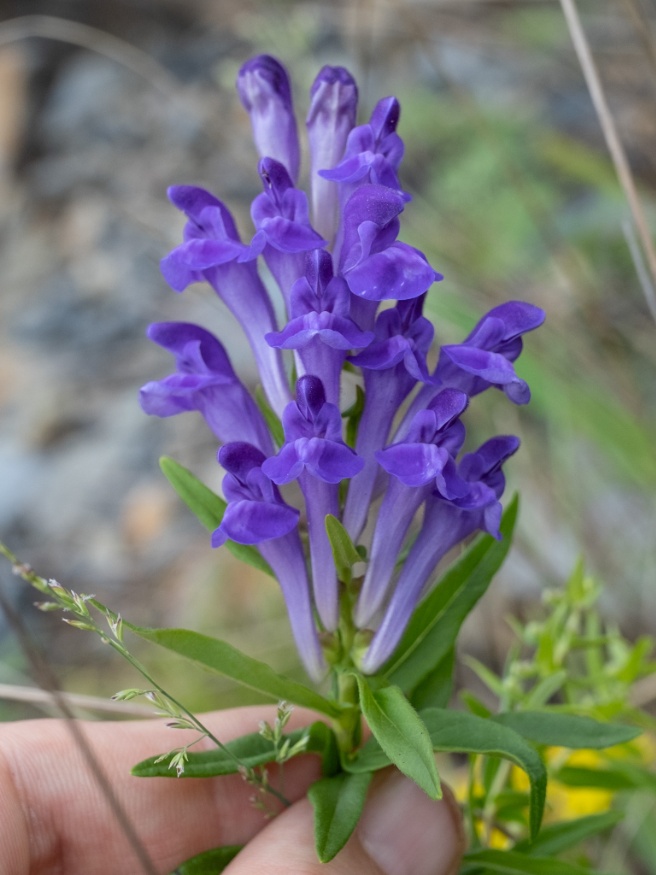
As settlers came to North America, European herbalists began to work with this plant, attracted to its delicate blue flowers and its gentle effect on the nerves. Meanwhile in the East, Traditional Chinese Medicine honored a close cousin called Huang Qin, Scutellaria baicalensis. Although these plants share a botanical lineage, they are not identical and their gifts are used in different ways. The Chinese herb is stronger, more focused on clearing heat, supporting liver and digestive harmony, and easing inflammation, while the North American Scutellaria lateriflora speaks more softly to the nervous system.
Finding Skullcap in the Wild and in the Garden
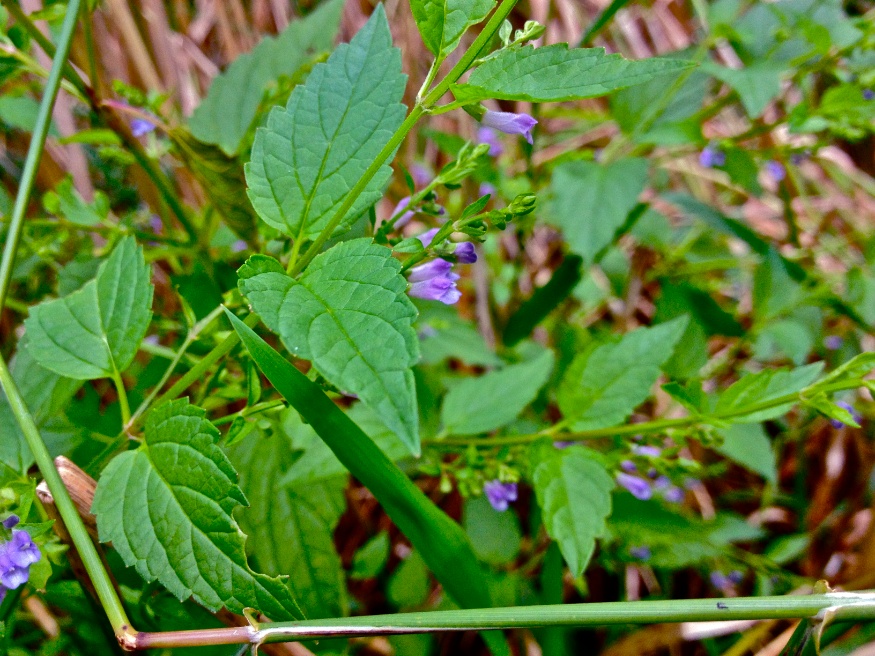
You will know Skullcap once you learn its form. Its stems are squared as is common in the mint family, and its leaves grow in opposite pairs, oval and lightly serrated. The flowers bloom along the stem in tender shades of blue and violet. It grows along moist woodland edges, stream banks, and shaded meadows, but adapts easily to a tended garden bed.
Unlike many of its mint family relatives, Skullcap is not aromatic. It does not fill the air with strong fragrance like mint or basil. Its character is quieter, suited to its soothing nature.
Western Herbalism and the Nervous System
In Western folk herbalism, Skullcap became well known for its role as a nervine, an herb that strengthens and calms the nervous system. Herbalists often reach for it for people who feel overwhelmed, unsettled, or pulled in too many directions. It is often used when anxiety blends with exhaustion, when sleep is broken and the mind refuses to let go of the day.
People choose Skullcap for:
- Stress that has worn the body down
- Depression rooted in exhaustion and chronic tension
- Restless thoughts at night
- Emotional imbalance from the pace of modern life
Unlike stronger calming agents, Skullcap does not force the body into submission. It reminds the nervous system how to settle itself, much like sitting beside a river and listening until your breathing deepens without being asked.
Its TCM Cousin: Not the Same Herb
Traditional Chinese Medicine works mainly with Scutellaria baicalensis, Huang Qin, used to clear heat, purge irritation, and support the liver system. It may be part of formulas for digestive imbalance, skin irritation, or respiratory heat. While both herbs belong to the same family, their healing voices differ. Western Skullcap nourishes the nervous system like a blanket and a soft pillow at the end of a long day, while Huang Qin works more like a breeze that cools fevered states in the body.
Different from Other Mint Family Herbs
Though part of the mint family, Skullcap stands apart. Peppermint energizes, lemon balm brightens and uplifts, basil activates the appetite and mind. Skullcap instead moves inward and downward, inviting the spirit to unclench. It is the herbalist’s companion for those who cannot rest not because they do not want to, but because their nervous system has forgotten how.
A Classic Herbal Preparation
One of the most cherished preparations is a simple tea. Skullcap Evening Tea Ingredients:- One to two teaspoons dried Skullcap leaf and flower
- One cup of recently boiled water
- Place Skullcap in a cup or teapot
- Pour hot water over it
- Cover and steep ten to fifteen minutes
- Strain and drink
This tea is ideal in the late afternoon or evening, especially during seasons of high stress or emotional heaviness. Some herbalists blend Skullcap with oatstraw for deep nourishment or with lemon balm for a brighter calming effect.
Safety Considerations
Begin with small doses and notice your body’s response, and choose high quality sources that clearly identify Scutellaria lateriflora, as some commercial products have been adulterated. Pregnant or breastfeeding individuals, those taking sedatives or mood medications, and people with significant medical concerns should consult a trained herbalist or practitioner before use. Skullcap may cause drowsiness in sensitive individuals, so avoid taking it before activities that require alertness and offer smaller amounts to children or the elderly.
A Plant For Our Times
Skullcap holds a message for modern people: there is strength in slowing down. When stress begins to shape your mood, when your shoulders stiffen and your thoughts tangle, let a cup of Skullcap tea be a pause, a return to yourself. For those who seek natural ways to care for themselves and their families, Skullcap offers companionship for the journey back to balance. If you're interested in further reading about how to grow and harvest skullcap feel free to check out this short article: Growing and Harvesting Skullcap