About This Plant
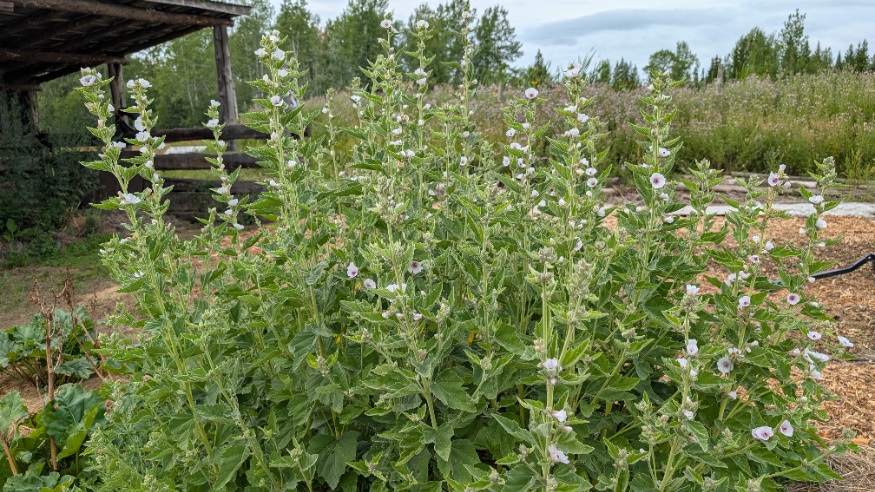
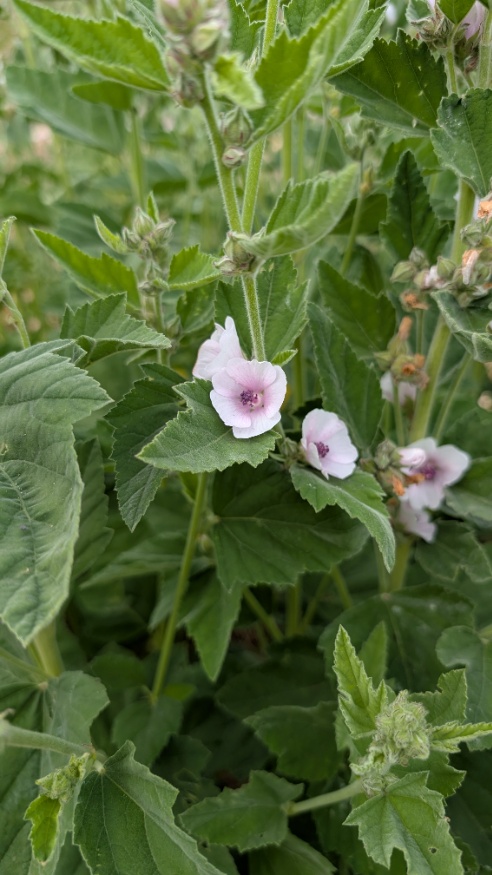
Marshmallow (Althaea officinalis) is a perennial herb native to Europe, western Asia, and parts of North Africa. It is commonly found in marshes, wetlands, and along riverbanks where the soil remains consistently moist. The plant grows upright with soft, velvety leaves and produces pale pink to white flowers during the summer months.
This plant is best known for its mucilaginous roots, which have been used historically in both food and medicine. The roots, leaves, and flowers all contain high levels of mucilage, giving the plant its characteristic soothing and demulcent properties. Marshmallow has a long history of cultivation and use in traditional herbal practices.
In addition to its medicinal value, marshmallow contributes to wetland ecosystems by helping stabilize soil and providing habitat for pollinators. Its flowers attract bees and other insects, while its deep root system helps maintain soil structure in moist environments.
Historically, marshmallow root was used in early confectionery, and modern marshmallows were originally derived from this plant. Today, it remains an important herb in herbalism for supporting mucous membranes and soothing irritated tissues throughout the body.
Traditional Use
Folk Use
Marshmallow has been widely used in traditional herbal medicine for its soothing and demulcent properties. The root, in particular, is valued for its ability to coat and protect irritated mucous membranes in the digestive, respiratory, and urinary systems.
It has traditionally been used in teas, decoctions, and syrups to help relieve sore throats, coughs, and digestive discomfort. The leaves and flowers are also used, though the root contains the highest concentration of mucilage. Preparations are often made by cold infusion to preserve the mucilaginous compounds.
In folk practices, marshmallow has been used externally as a poultice or compress for skin irritations, burns, and inflammation. Its gentle nature makes it suitable for use in both adults and children as a supportive, soothing remedy.
Chinese Medicine
Marshmallow is not a traditional Chinese materia medica herb, but it shares functional similarities with herbs used to moisten dryness and support fluids within the body. In conceptual alignment with TCM principles, it may be viewed as a moistening and harmonizing herb.
Herbs with similar properties in TCM are often used to nourish yin and relieve dryness affecting the lungs and digestive tract. Marshmallow’s mucilaginous nature aligns with these roles, helping to soothe irritation and support mucosal tissues.
While not commonly included in classical formulas, marshmallow can be used in modern integrative herbalism alongside TCM-inspired approaches to support hydration and tissue protection.
Special Chemistry
Marshmallow root contains high levels of mucilage polysaccharides, which are responsible for its thick, gel-like consistency when prepared in water. These compounds form a protective coating over mucous membranes, contributing to its demulcent effects.
In addition to mucilage, marshmallow contains flavonoids, pectins, and small amounts of phenolic compounds. These constituents contribute to its mild antioxidant and soothing properties.
The plant is generally considered very safe and well tolerated. Its gentle action makes it suitable for long-term use in many herbal preparations, particularly those aimed at supporting the respiratory and digestive systems.
Signature
Combinations
Precautions
| Medicinal Species | Althaea officinalis |
|---|---|
| Tastes | sweet, bland |
| Organ Systems | digestive, respiratory, urinary, integumentary (skin, hair, nails) |
| Thermal Nature | cool |
| Moisture | moistening |
| Parts Used | roots, leaves, flowers |
| Preparations | decoction, salve, tea/infusion, tincture, powder, syrup |
| Organs and Tissue | lungs, stomach, kidneys, bronchioles, mucosa |
Growing Guide
Marshmallow prefers full sun and thrives in moist, rich, well-drained soils. It is well-suited to areas that retain consistent moisture, such as near ponds, streams, or in irrigated garden beds. While it can tolerate a range of soil types, it performs best in loamy soils with good organic content.
Propagation is typically done from seed, which benefits from a period of cold stratification to improve germination rates. Seeds can be sown directly outdoors in spring or started indoors and transplanted once seedlings are established. Germination may take several weeks under the right conditions.
Once established, marshmallow requires regular watering, especially during dry periods, to maintain healthy growth. The plant can reach moderate heights and may require spacing to accommodate its mature size. It can be grown in herb gardens, wetland restoration projects, or as part of a medicinal plant collection.