About This Plant
Cardinal flower is one of the most striking native wildflowers in North America, known for its brilliant spikes of deep red blossoms that stand out vividly against green wetlands and streambanks. A member of the Lobelia genus, it brings both ecological value and visual impact to the landscapes it inhabits.
Native to much of eastern and central North America, cardinal flower thrives in moist to wet environments such as floodplains, marsh edges, and along streams. It is particularly well adapted to soils that remain consistently damp, and its presence often indicates healthy wetland ecosystems. In garden settings, it is commonly planted in rain gardens or near water features where these conditions can be replicated.
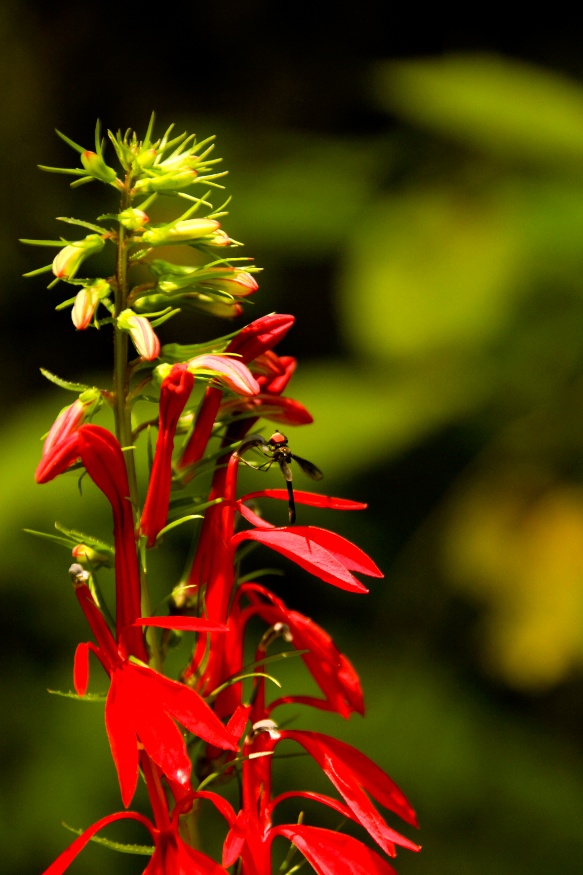
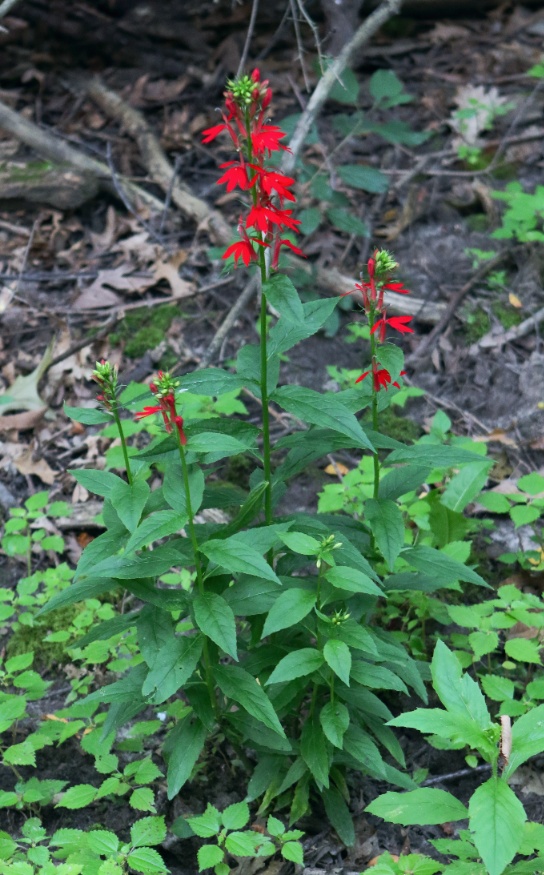
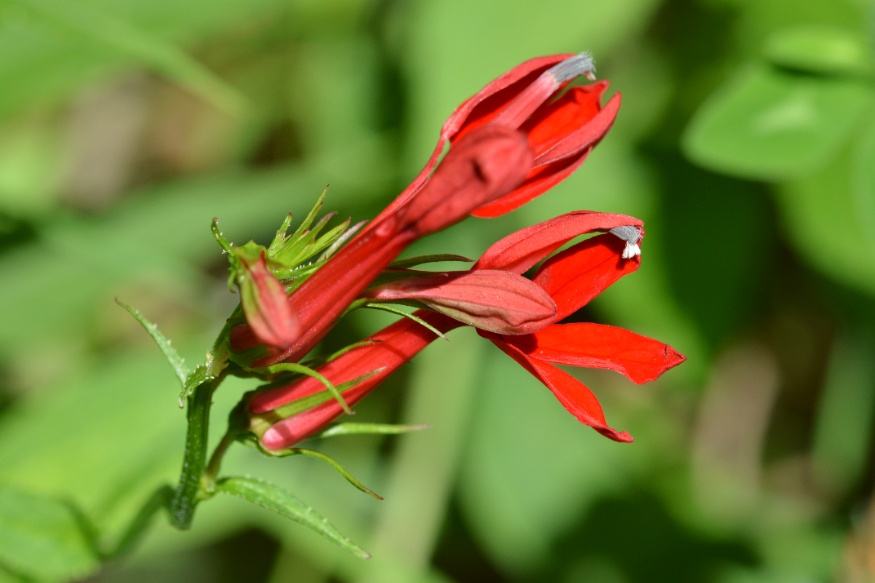
Identification is straightforward due to its tall spikes of tubular, scarlet-red flowers, which bloom from mid to late summer. The plant grows upright with lance-shaped green leaves arranged along the stem. Its vivid coloration is especially attractive to hummingbirds, making it a valuable plant for supporting pollinators.
Historically, cardinal flower has held both medicinal and cultural significance. Indigenous peoples used it sparingly due to its potency, and it was sometimes associated with ceremonial practices. Its close relative, Lobelia inflata, became more widely known in herbal medicine, but cardinal flower shares similar chemical constituents.
Medicinally, the plant is powerful and must be used with caution. It contains alkaloids that affect the respiratory system, making it historically useful for conditions involving constricted breathing. However, due to its strength and potential toxicity, it is not commonly used in modern herbal practice. Its primary role today is as an ornamental and ecological plant, admired for its beauty and contribution to wetland habitats.
Traditional Use
Folk Use
Cardinal flower has a history of use among Indigenous peoples, particularly in North America, where it was valued for respiratory and ceremonial purposes. Though less commonly used than its relative great blue lobelia, it shares similar properties in supporting breathing and lung function.
Traditionally, preparations were used in small, controlled amounts for conditions such as asthma and bronchial congestion. The plant was also used in ritual contexts, often associated with vitality and life force due to its vivid red color.
Because of its potency, cardinal flower was used cautiously. Its role in herbalism remains limited today, but it is recognized as part of the broader Lobelia group of strong, stimulating respiratory herbs.
Chinese Medicine
Cardinal flower is not part of traditional Chinese medicine, though its actions can be loosely compared to herbs that open the lungs and move stagnant qi. Its pungent and warming nature suggests an ability to stimulate respiration and disperse obstruction.
In a modern comparative framework, it might be viewed as a strong, dispersing herb used in cases of acute stagnation or constriction, particularly in the respiratory system. Its intensity would require careful balancing with gentler, moistening herbs.
While not traditionally used, its energetic qualities align with herbs that act quickly and powerfully on the lungs and nervous system.
Special Chemistry
Cardinal flower contains alkaloids, including lobeline, which have strong physiological effects on the respiratory and nervous systems. These compounds contribute to its stimulating and expectorant properties.
Signature
The brilliant red flowers rising from moist environments suggest a strong connection to circulation, vitality, and the movement of life force, particularly through the lungs and blood.
Combinations
Due to its potency, cardinal flower is rarely used alone. It may be combined cautiously with gentler herbs like mullein to moderate its intensity in respiratory formulations.
Precautions
This is a potent plant and can be toxic if misused. It should only be used in very small amounts under experienced guidance. Large doses may cause nausea, vomiting, or more serious adverse effects.
| Medicinal Species | Lobelia cardinalis, Lobelia inflata |
|---|---|
| Tastes | bitter, acrid/pungent |
| Organ Systems | respiratory, nervous |
| Thermal Nature | warm |
| Moisture | drying |
| Parts Used | leaves, flowers |
| Preparations | extract, tincture |
| Organs and Tissue | lungs, brain |
Growing Guide
Cardinal flower thrives in consistently moist to wet soils, making it an excellent choice for rain gardens, pond edges, and low-lying areas. Seeds are very small and benefit from cold moist stratification before sowing. Surface sowing is recommended, as light helps trigger germination.
This plant prefers full sun in cooler climates but benefits from partial shade in hotter regions to prevent drying out. Maintaining consistent moisture is key, as drought conditions can quickly stress or kill the plant. Adding organic matter can improve water retention and overall plant vigor.
Cardinal flower may self-seed in ideal conditions, though individual plants are often short-lived. Allowing seed production ensures continued presence in the garden. It can also be propagated by division, though care should be taken due to its somewhat delicate root system.