About This Plant
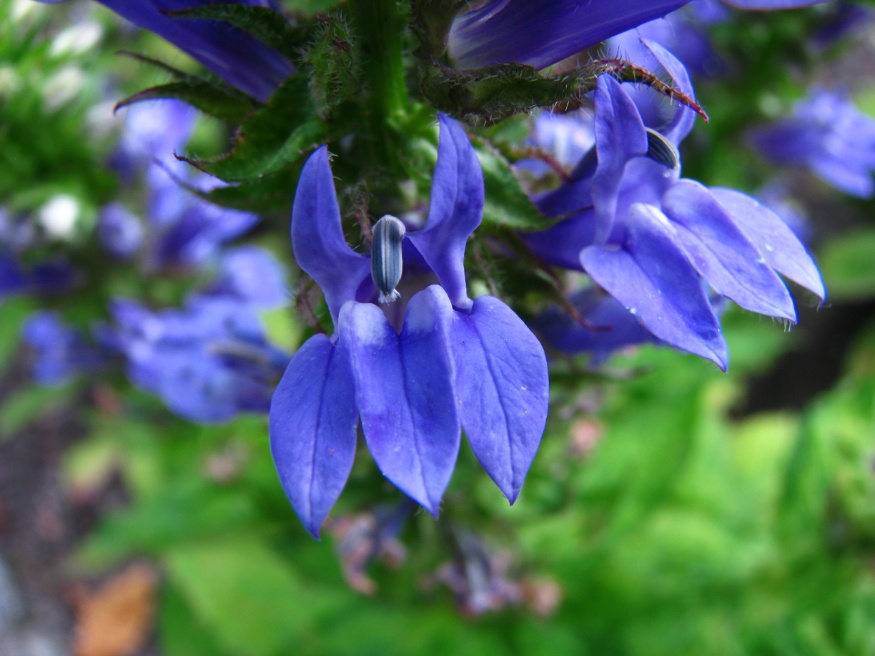
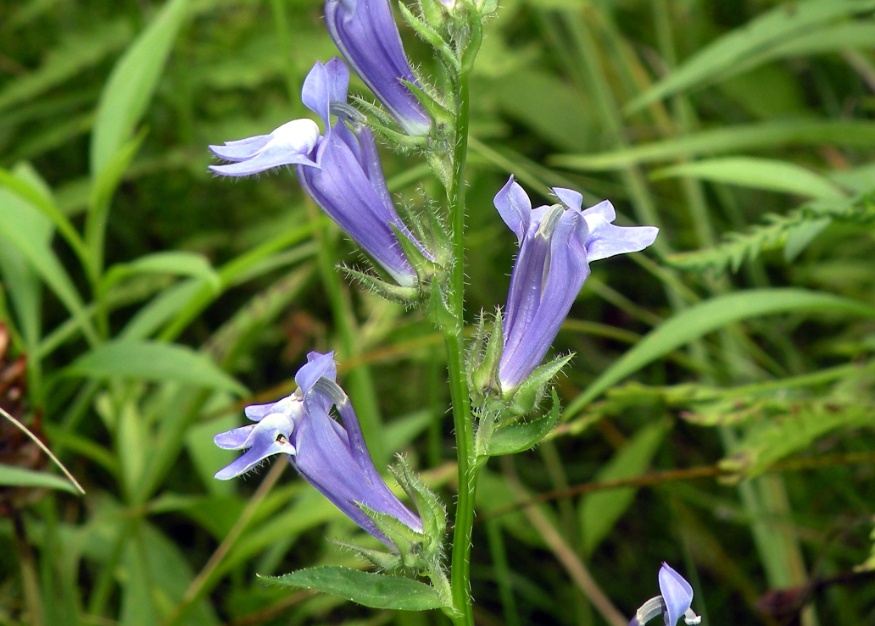
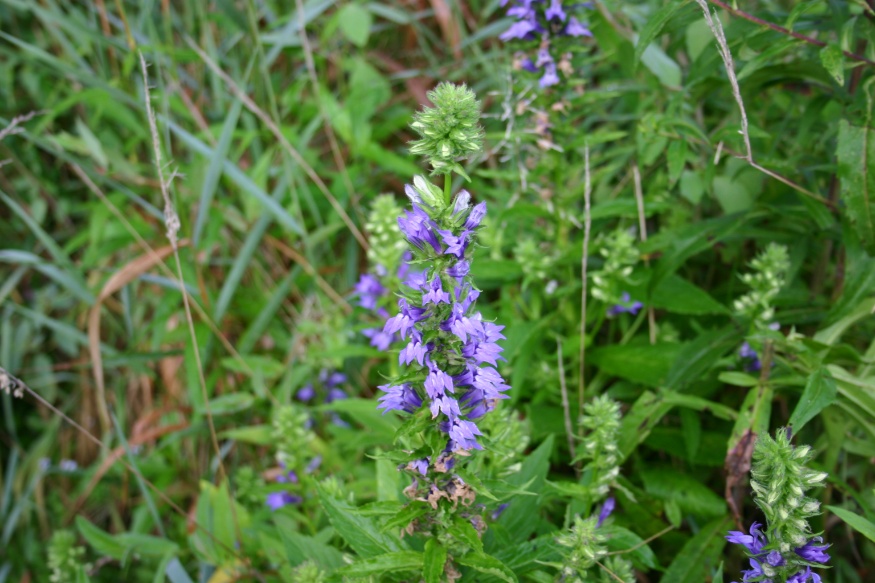
Great blue lobelia is a striking native perennial known for its tall spikes of vivid blue flowers that bloom in late summer. Its upright form and intense coloration make it a standout in wetland environments, where it often grows among grasses and other moisture-loving plants. The flowers are tubular and arranged along a central stem, attracting pollinators such as bees and hummingbirds.
Native to eastern North America, this plant thrives in wetlands, along stream banks, and in moist meadows. It prefers consistently damp soils and can often be found in partially shaded environments where moisture is abundant. Its presence is often an indicator of healthy, undisturbed wetland ecosystems.
Identification is relatively easy due to its height, flower color, and growth habit. The plant produces lance-shaped leaves along a sturdy stem, culminating in the distinctive flowering spike. It is closely related to other Lobelia species, though its blue flowers distinguish it from the red-flowered cardinal flower.
Historically, great blue lobelia was used by Indigenous peoples and early settlers for medicinal purposes, though it was generally considered less potent than other species in the genus. Its name reflects a historical use that is no longer widely practiced.
Today, it is primarily appreciated as an ornamental and ecological plant. While it retains some medicinal interest, its potential toxicity means it is used cautiously. Its role in supporting pollinators and enhancing wetland habitats makes it a valuable addition to naturalized landscapes.
Traditional Use
Folk Use
Great blue lobelia has a history of use among Indigenous peoples and early herbalists, though it is generally considered milder than its relative lobelia (Lobelia inflata). It was traditionally used for respiratory conditions and as a cleansing herb.
The plant was sometimes used externally for skin conditions and internally in small amounts for respiratory support. However, its use has always been approached with caution due to the potency associated with the genus.
Though not widely used today, it remains of historical interest as a medicinal plant with similar, though gentler, properties compared to other Lobelia species.
Chinese Medicine
Lobelia species are not part of traditional Chinese medicine, but their strong action on the respiratory system can be loosely compared to herbs that clear heat and resolve phlegm.
Great blue lobelia may be viewed as influencing lung function, helping to clear congestion and support breathing. However, its energetic classification is less defined compared to established Chinese herbs.
Due to limited traditional use in this system, it is generally considered outside the scope of classical Chinese herbal practice.
Special Chemistry
Lobelia species contain alkaloids such as lobeline, which affect the nervous and respiratory systems. These compounds contribute to both therapeutic effects and potential toxicity.
Signature
The tall spikes of vivid blue flowers rising from wet environments suggest a strong upward and clearing action, particularly related to breath and expression.
Combinations
Due to its potency, great blue lobelia is rarely combined in formulas and is typically used alone or in very small amounts alongside gentler respiratory herbs.
Precautions
Use with caution, as Lobelia species can be toxic in higher doses. May cause nausea, vomiting, or more serious effects if misused. Should only be used under knowledgeable guidance.
| Medicinal Species | Lobelia siphilitica, Lobelia inflata |
|---|---|
| Tastes | bitter, acrid/pungent |
| Organ Systems | respiratory, nervous |
| Thermal Nature | neutral |
| Moisture | drying |
| Parts Used | leaves, flowers, seeds |
| Preparations | tea/infusion, tincture |
| Organs and Tissue | lungs, brain |
Growing Guide
Great blue lobelia grows best in consistently moist to wet soils and is well suited for rain gardens, pond edges, and other damp environments. Seeds benefit from cold moist stratification and should be surface sown, as they require light to germinate.
This plant prefers full sun to partial shade, with some protection from intense heat in warmer climates. Maintaining consistent moisture is key, as the plant does not tolerate prolonged dryness.
It can be propagated by seed or division. Allowing plants to self-seed will help establish naturalized colonies over time. Because of its affinity for wet conditions, it pairs well with other moisture-loving native plants.