About This Plant
Alfalfa (Medicago sativa), also known as lucerne, is a perennial legume widely cultivated around the world for both agricultural and medicinal purposes. Native to southwestern Asia, it has been grown for thousands of years and is now naturalized across much of North America and Europe. It thrives in open, sunny fields and well-drained soils, commonly appearing in pastures, meadows, and disturbed ground.
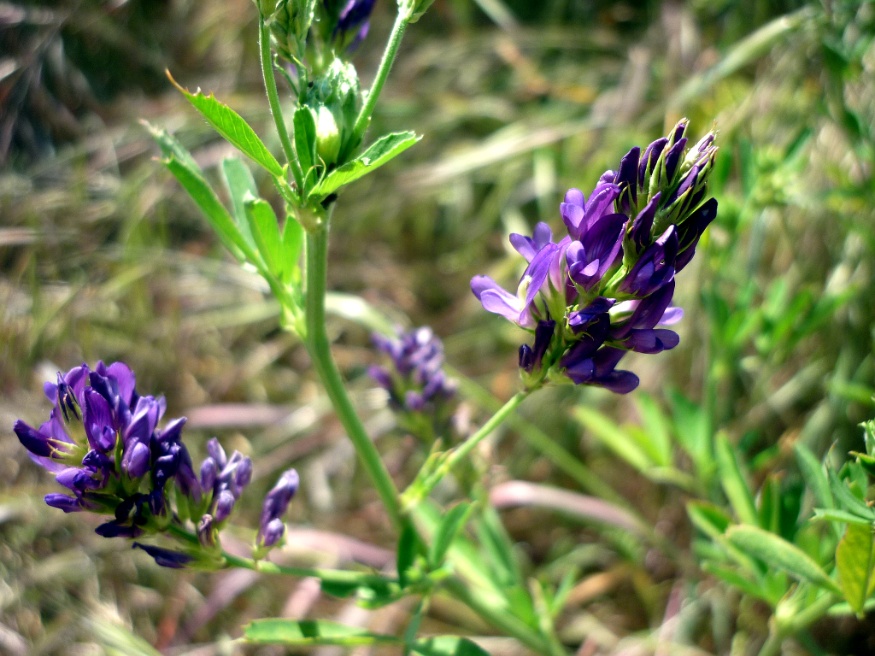
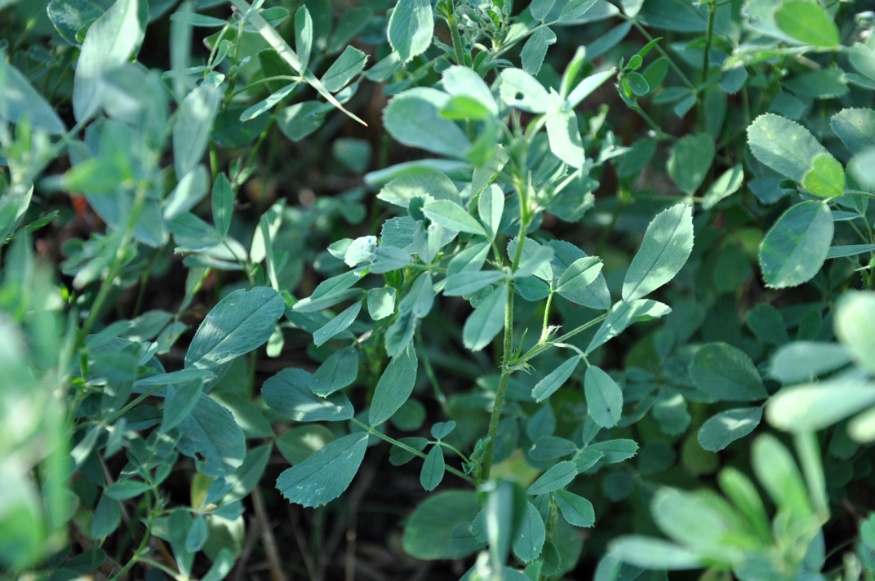
Alfalfa is easily recognized by its trifoliate leaves, upright branching stems, and small purple to blue pea-like flowers arranged in clusters. It typically grows up to about one meter in height and develops a deep taproot that allows it to access moisture and minerals far below the soil surface. Like other legumes, it forms a symbiotic relationship with nitrogen-fixing bacteria, improving soil fertility in its surroundings.
Historically, alfalfa has been valued as a highly nutritious forage crop and is sometimes referred to as the “father of all foods.” It is rich in vitamins A, C, E, and K, along with minerals such as calcium, magnesium, and iron. In herbal traditions, it is regarded as a gentle nutritive tonic that supports general vitality, digestion, and recovery. It may be consumed as tea, in powdered form, or as fresh sprouts, making it an accessible and versatile plant in both food and herbal contexts.
Traditional Use
Folk Use
Chinese Medicine
Special Chemistry
Signature
Combinations
Precautions
| Medicinal Species | Medicago sativa |
|---|---|
| Tastes | bitter, sweet |
| Organ Systems | circulatory, digestive, endocrine |
| Thermal Nature | neutral |
| Moisture | moistening |
| Parts Used | leaves |
| Preparations | tea/infusion, powder |
| Organs and Tissue | blood |