Western Goldenrod
Other Names: Elegant Goldenrod, Western Canada Goldenrod
Family: Asteraceae
Native to: Eastern North America, Interior North America, Western North America
Eco benefits: attracts pollinators, medicinal
Natural habitat: prairies, barren or disturbed ground, hillsides & uplands, forest edge
Shapes: upright
Height: 2-5ft
Unique attractions: flowers
Tolerances: soil compaction
Common uses: naturalized plantings
Light: full sun
Soil: moist and fertile, well drained, tolerates heavy clay, dry, sandy
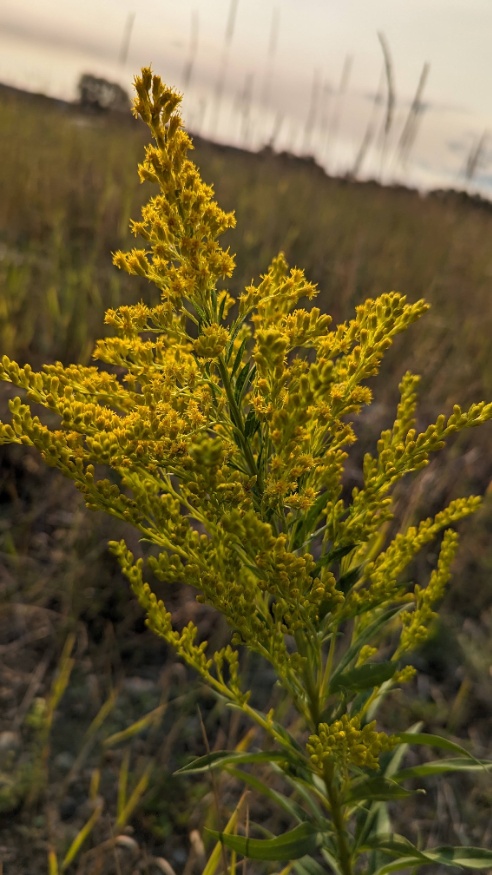
Western goldenrod is an attractive perennial wildflower native to North America, especially the west. It can be found in sunny meadows, thickets, fields, roadsides, and disturbed areas; growing up to 5 feet and spreading by rhizomes. As our western goldenrod, it's a summer favorite both for the eyes and butterflies, in landscapes and pollinator gardens.
Numerous golden yellow flower heads bloom in a pyramid shaped panicle head from July to October. They attract bumblebees and a variety of butterflies which feed on the flowers and eat the seeds. Many 3 veined, toothed to toothless leaves grow directly off the stem. In fall, flower heads fill with fluffy seeds, giving goldenrod a rustic autumn appearance.
Medicinally, a decoction of goldenrod tops or roots were used by First Nations people to treat fevers, flu, diarrhea, and for children's ailments. Goldenrod is a strong diuretic, anti-inflammatory, and antiseptic; commonly used for tooth and mouth sores, wounds, skin issues, and inflammation.