Yellow Rattle
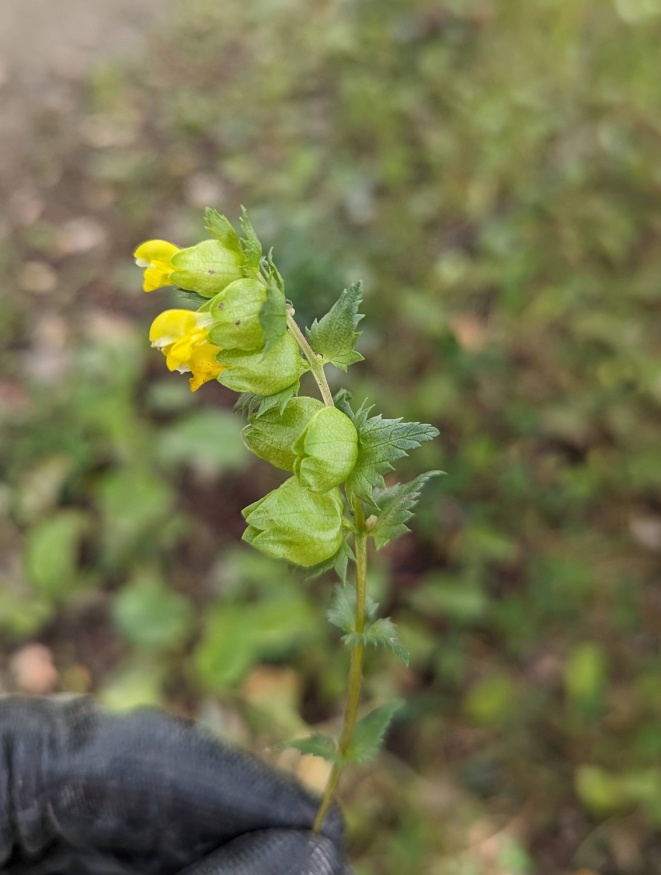
Other Botanical Names: Rhinanthus crista-galli
Family: Orobanchaceae
Native to: Eastern North America, Interior North America, Western North America, Asia, Europe
Eco benefits: attracts pollinators, improves soil
Natural habitat: prairies, barren or disturbed ground, mountains, hillsides & uplands, rocky slopes
Shapes: upright
Height: 1-2ft
Unique attractions: flowers
Common uses: naturalized plantings, ground cover
Light: full sun
Soil: moist and fertile, well drained, tolerates heavy clay, alkaline ph, dry, wet
Yellow rattle is a small annual herb, found circumpolar in the north. It grows in meadows, fields, ditches, and moist to dry grassy areas, tolerating a wide range of soil types. Yellow rattle is hemi-parasitic, relying partly on surrounding plants for nutrition. In this way it can be used in meadow restoration by suppressing dominant grasses and sequestering soil nutrition. This creates better conditions for wildflowers to thrive. Flowers bloom from May to September and are pollinated by bumblebees in the Summer. Seeds follow, and "rattle" in their dry capsule pods as the name implies. Yellow rattle is an unmistakable plant with it's saw-toothed leaves and bilaterally symmetrical yellow flowers, a unique and beneficial addition to wildflower meadows.