Twinberry
Other Names: Black Twinberry, Twinberry Honeysuckle, Black Twinberry Honeysuckle, Bearberry Honeysuckle, Four-line Honeysuckle, Californian Honeysuckle
Family: Caprifoliaceae
Native to: Eastern North America, Interior North America, Western North America
Eco benefits: attracts pollinators, erosion control
Natural habitat: waters edge, rocky slopes, forest edge
Shapes: multi-stemmed, clump, wide spreading
Height: 3-10ft
width: 3-10ft
Unique attractions: fall colour, flowers, fruit
Tolerances: air pollution, deer resistant
Common uses: hedge, landscaping, specimen, naturalized plantings, rain garden
Light: full sun, partial shade
Soil: moist and fertile, well drained, tolerates heavy clay, ph adaptable
Twinberry is an attractive erect shrub, about 3 to 10ft tall. It's native to much of North America, from the boreal forest in Canada, stretching farther south on the west coast to northern Mexico. It Grows mainly in moist forest and waters edge, in rich to sandy well drained soil.
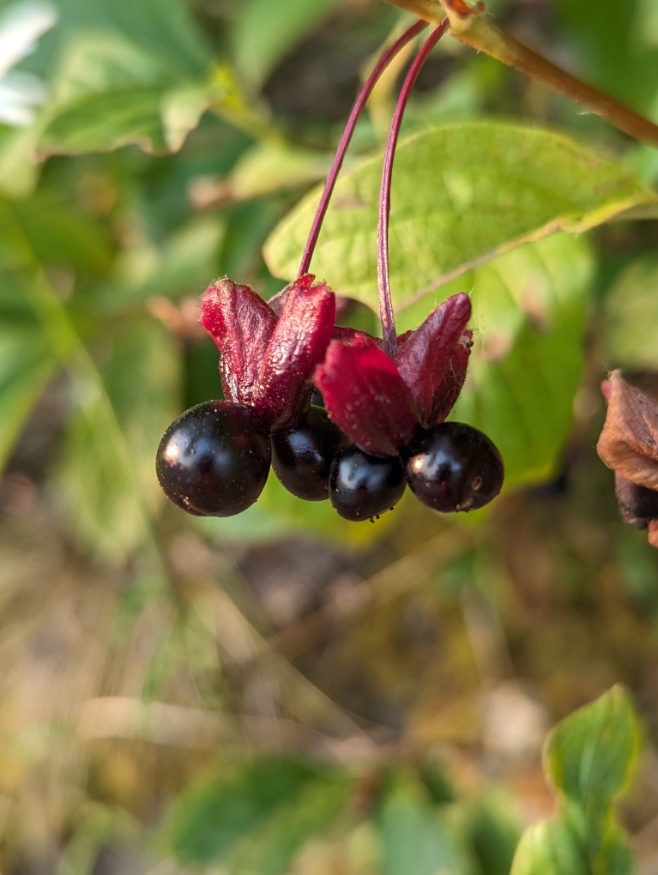
Twinberry features shinny leaves in tidy opposite pairs held by reddish brown twigs. In spring or summer, yellow-orange flowers appear, producing nectar which is food butterflies and hummingbirds. "Twin" pairs of plump dark berries follow, and are held by glossy red flower-like bracts. The berries are astringent, bitter, and mildly poisonous; best left as food for birds, bears, and small mammals.
Twinberry is easy to grow and maintain, with few pest or disease issues. It's adaptable to soil PH and air pollution; commonly used as a late blooming part shade ornamental; also useful as a border hedge, or for restoration and erosion control.