Squashberry
Other Names: Highbush Cranberry, Mooseberry, Moosewood Viburnum, Lowbush Cranberry, Few-flowered Highbush Cranberry
Family: Adoxaceae
Native to: Western North America
Eco benefits: attracts pollinators, attracts birds, edible fruit
Natural habitat: swamps & bogs, waters edge, inner forests, floodplains
Shapes: round, multi-stemmed
Height: 5-10ft
Growth rate: medium
Unique attractions: fall colour, leaves, flowers, fruit
Common uses: hedge, landscaping, naturalized plantings, rain garden
Light: full sun, partial shade
Soil: moist and fertile, tolerates heavy clay, ph adaptable, wet
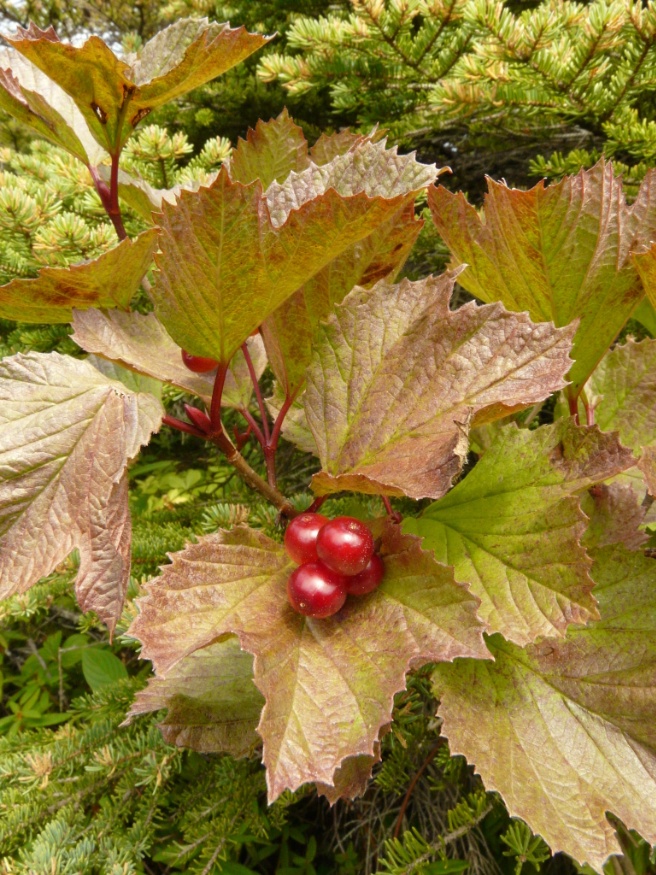
Squashberry is a deciduous shrub very similar to V. trilobum. Both are native and share the common name "Highbush Cranberry", but Squashberry is more common in wet areas of the Pacific Northwest. It's also very similar to the introduced European Highbush Cranberry. See V. trilobum for an explanation.
Squashberry grows in riparian areas such as wet forests, swamps, and waters edge. White flowers (cymes) bloom May to July and are fertile (unlike both of its cousins). The fruit starts green, turning yellow then red. Ripe berries are tasty either fresh or cooked for a sauce or jelly.