Red Elderberry
Other Names: red elder, American red elder, stinking elderberry
Family: Adoxaceae
Native to: Eastern North America, Interior North America, Western North America
Hardy to zone: 3
Eco benefits: attracts pollinators, attracts birds, edible fruit
Natural habitat: swamps & bogs, waters edge, floodplains, forest edge
Shapes: round, multi-stemmed, clump, upright
Height: 8-12ft
width: 8-15ft
Unique attractions: flowers, fruit
Tolerances: air pollution
Common uses: hedge, landscaping, specimen, naturalized plantings
Light: full sun, partial shade
Soil: moist and fertile, well drained, tolerates heavy clay, ph adaptable, acid ph, wet, sandy
Reproduction type: monoacious
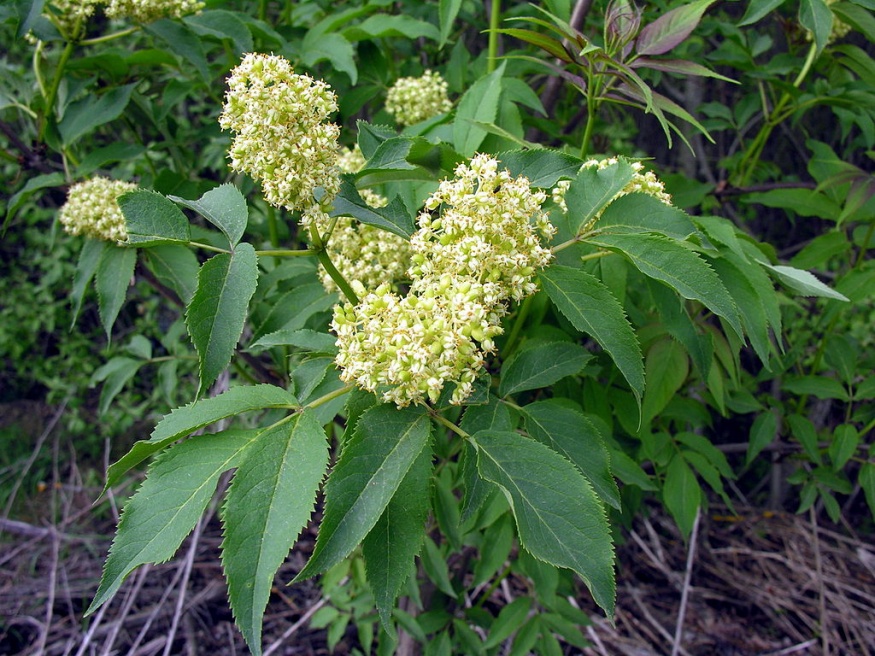
Red elderberry is a fruiting bush native to North America and Eurasia. Its usually a medium shrub but can grow into a tree up to 20ft high. Commonly found in riverbanks, moist Woodlands, thickets, or fence rows; it can be singular or form thickets, spreading by rhizomes.
Young branches are glabrous with pinnate compound leaves bearing 5 to 7 leaflets. Showy fragrant flower clusters in racemes (hence the name racemosa) appear from May to June and are pollinated by insects. Clusters Showy, edible, typically dark red Berry-like drupes follow flowering. These attract wildlife, have a bitter flavor when raw, but can be cooked and made into jams, desserts, and wine. The roots can be made into a tea and the bark, leaves, and blossoms can be used medicinally.
Red elderberry attracts birds, butterflies, tolerates air pollution, and tolerates heavy clay. It Prefers moist to wet well drained humus-loam and a neutral to slightly acidic ph. It can be vigorous once established. Some recommend hard pruning yearly in the spring for the best form and display of foliage.
References
Fire Effects Information System (FEIS). (n.d.). Sambucus racemosa. Retrieved from https://www.fs.fed.us/database/feis/plants/shrub/samrac/all.html
MICHIGAN FLORA ONLINE. A. A. Reznicek, E. G. Voss, & B. S. Walters. February 2011. University of Michigan. Web. December 8, 2020. https://michiganflora.net/species.aspx?id=12
Missouri Botanical Garden. (n.d.). Sambucus racemosa. Retrieved from http://www.missouribotanicalgarden.org/PlantFinder/PlantFinderDetails.aspx?taxonid=278937&n=1
Plants For A Future. (n.d.). Sambucus racemosa - Michx. Retrieved from https://pfaf.org/user/Plant.aspx?LatinName=Sambucus+racemosa