Pussy Willow
Other Names: glaucous willow
Family: Salicaceae
Native to: Eastern North America, Interior North America, Western North America
Hardy to zone: 5
Eco benefits: attracts birds
Natural habitat: swamps & bogs, barren or disturbed ground, waters edge
Shapes: multi-stemmed
Height: 6-15ft
width: 4-12ft
Growth rate: fast
Unique attractions: flowers, branching
Common uses: hedge, landscaping, specimen
Light: full sun, partial shade
Soil: moist and fertile, tolerates wet feet, wet
The pussy willow is a shrub to small tree in Southern Canada and north central to Eastern United States; occasionally a small tree up to 30ft but usually it is a multi-stemmed shrub. Pussy willow is normally found in wet conditions where it can become vigorous and suckering but can also be found on some dryer sites.
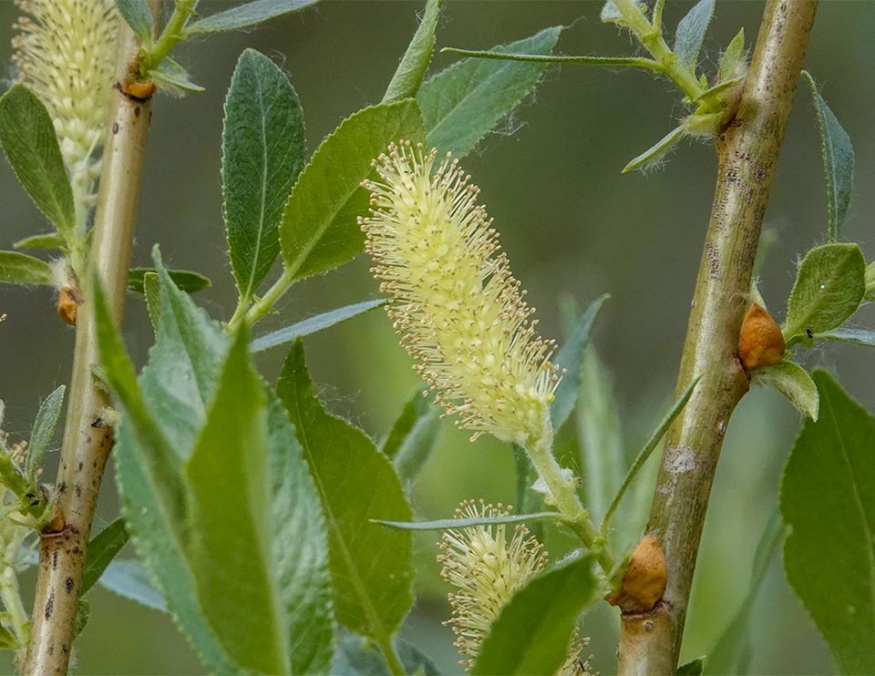
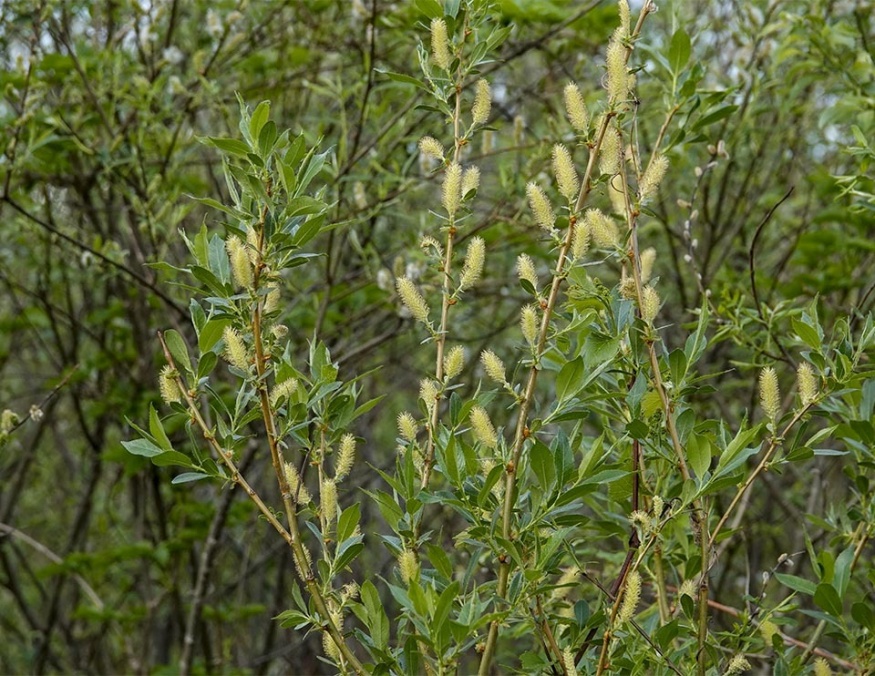
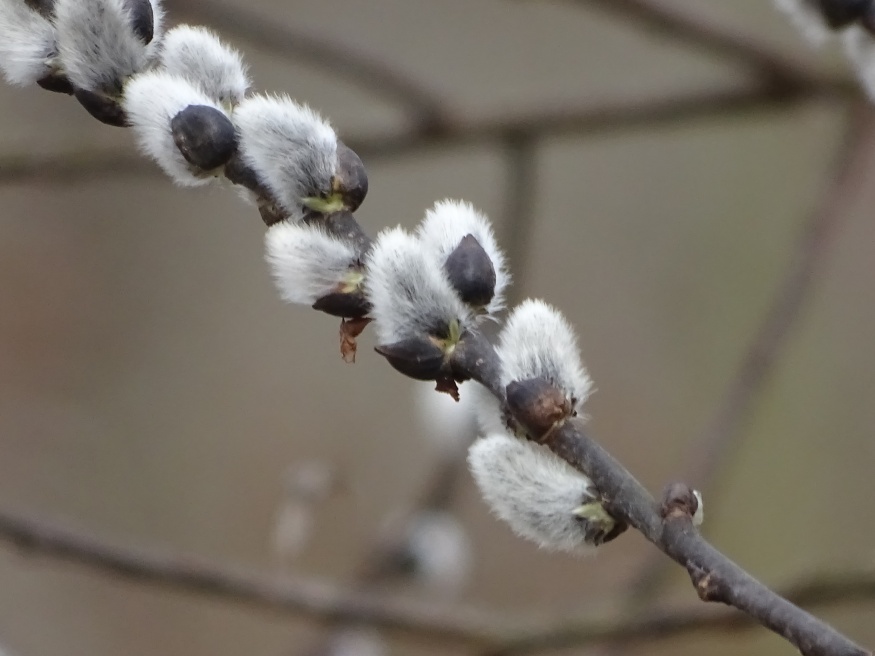
Male plants can be especially good as a specimen, hedge or in a rain garden for winter interest; though shallow roots can invade spaces and make gardening difficult. In late winter to early spring, silk textured, gray furry tufts emerge from buds (which come before the leaves). The tufts are actually flower catkins and the males ones are larger and more attractive than those of the the females. They are a considered a sign of spring as they are the first willow catkins to appear. Twigs can be cut and put in water indoors to induce flowering then dried. To preserve the shrub shape, stems should be cut back every 3-5 years.
Male stamens are golden and female pistils greenish. The Leaves are dull, medium green, and glaucous underneath; bark is dark gray and scaly. Ecological benefits include food for wild fowl, songbirds, and mammals. It also attracts butterflies, native bees, bumble bees, and honey bees.
References
Lady Bird Johnson Wildflower Center. (2012). Salix discolor. Retrieved from https://www.wildflower.org/plants/result.php?id_plant=sadi
Missouri Botanical Garden. (n.d.). Salix discolor. Retrieved from http://www.missouribotanicalgarden.org/PlantFinder/PlantFinderDetails.aspx?taxonid=286783
NC State Extension. (n.d.). Salix discolor. Retrieved from https://plants.ces.ncsu.edu/plants/salix-discolor/
United States Department of Agriculture. (n.d.). Salix discolor. Retrieved from https://www.fs.fed.us/database/feis/plants/shrub/saldis/all.html