Prickly Wild Rose
Other Names: Wild Rose, Prickly Rose, Bristly Rose
Family: Rosaceae
Native to: Eastern North America, Interior North America, Western North America
Eco benefits: attracts pollinators, attracts birds, medicinal, edible fruit, edible parts
Natural habitat: waters edge, hillsides & uplands, rocky slopes, forest edge
Shapes: multi-stemmed, clump, upright
Height: 3-10ft
Unique attractions: fall colour, flowers, fruit, winter interest
Common uses: landscaping, naturalized plantings, shade garden, rain garden
Light: full sun, partial shade, full shade
Soil: moist and fertile, tolerates heavy clay, tolerates wet feet, drought tolerant, dry, wet
Prickly Wild Rose is a small flowering shrub found nearly circumpolar and widely distributed throughout the northern hemisphere. It's commonly found in thickets, rocky slopes, and water's edge; adaptable to a variety of light and soil conditions from full sun to full shade, and dry to wet soil.
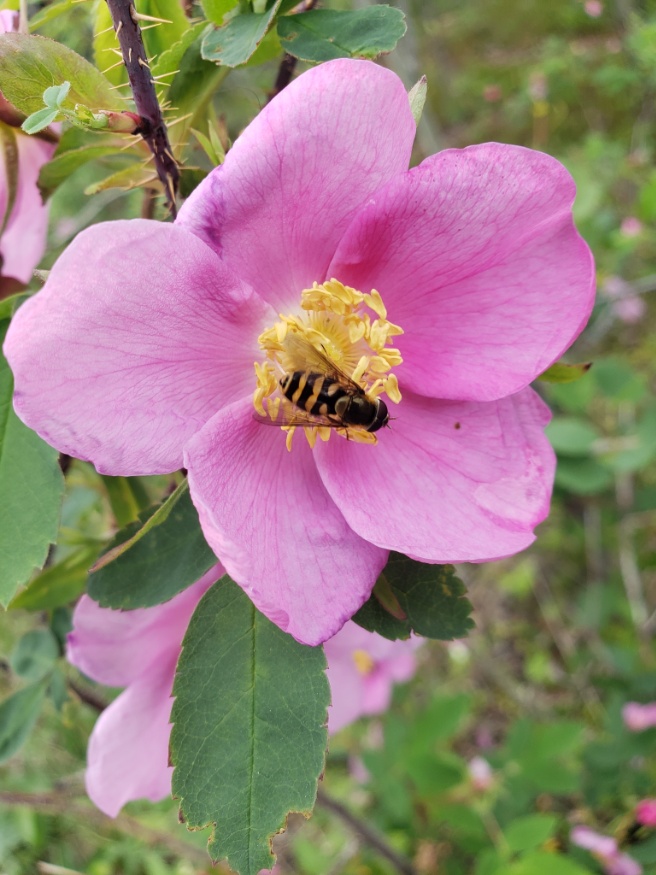
The branches are filled with sharp spines, sparse to thicket forming. Flowers are normally pink, fragrant, and with 5 petals. Ovate serrated leaves are green, turning a nice red in the fall. The edible red Rose "hips" persist on twigs through winter.
The hips are high in vitamin A and C. Nearly all parts of the plant have been used medicinally by native Americans. Prickly Wild Rise hybridizes with Woods Rose (R. woodsii) where their habitats overlap.