Narrowleaf Willow
Other Names: Coyote Willow, Sandbar Willow
Family: Salicaceae
Native to: Eastern North America, Interior North America, Western North America
Eco benefits: attracts pollinators, erosion control
Natural habitat: waters edge
Height: 4-15ft
Common uses: specimen, naturalized plantings
Light: full sun, partial shade
Soil: tolerates wet feet, drought tolerant, wet, sandy
Reproduction type: dioecious
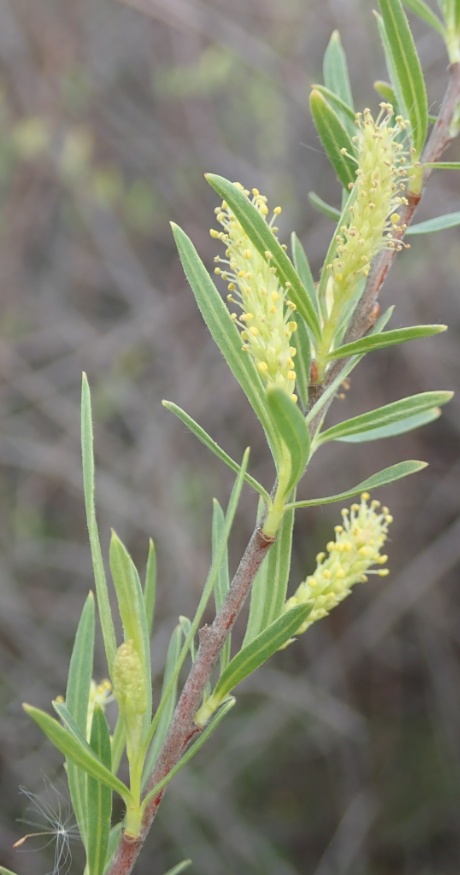
Narrowleaf Willow is a shrub to small tree, widespread in North America. It forms dense thickets on riverbanks and ditches, used as erosion control on waters edge, for naturalized, or ornamental planting. Leaves are long and narrow (lanceolate), producing silky white male or female catkins in late spring. Male catkin shrubs are pollinated by to bees and the plant is often browsed by livestock. Flexible branches were used for building, basket making and for cord by Native Americans.