Giant Indian Paintbrush
Other Names: Common Red Paintbrush, Scarlet Paintbrush, Great Red Indian Paintbrush, Dixon's Paintbrush
Family: Orobanchaceae
Native to: Interior North America, Western North America
Hardy to zone: 4
Eco benefits: attracts pollinators, attracts birds
Natural habitat: prairies, barren or disturbed ground, seaside, waters edge, hillsides & uplands, rocky slopes, floodplains, forest edge
Shapes: clump, upright
Height: 1-3ft
Unique attractions: flowers
Common uses: landscaping, specimen, naturalized plantings
Light: full sun
Transplanting: difficult
Soil: moist and fertile, well drained, wet, sandy
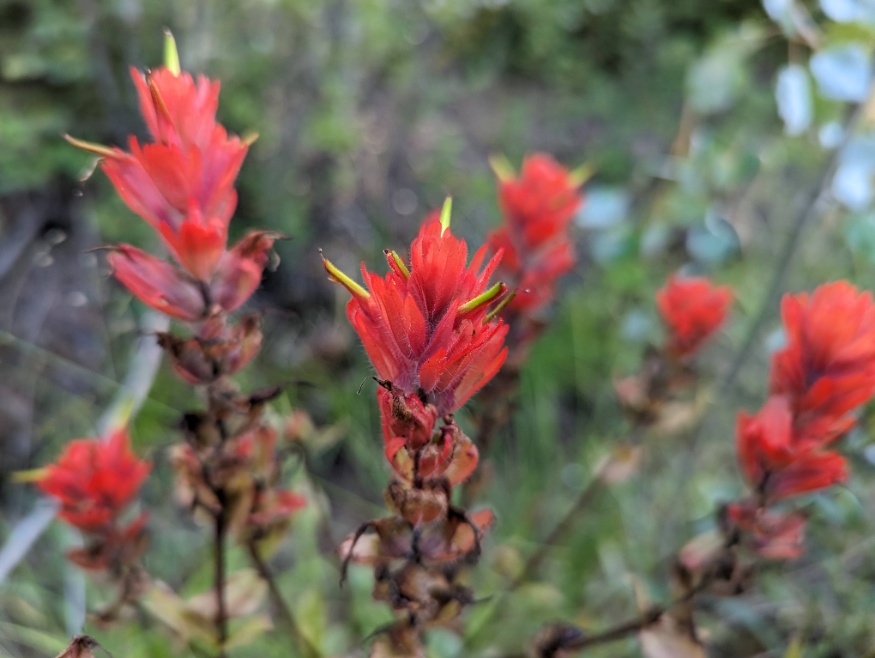
Giant Indian Paintbrush is a perennial wildflower Native to western and central North America, from Alaska throughout BC, down to California, and east to the Canadian prairies and central United States. It stands About one to three feet tall solitary or in patches; found in a variety of habitats, including wet or dry meadows, fields, grassy slopes, forest edges and clearings. Prefers moist, well drained soil.
Flower Spikes of Brilliant red, sometimes orange, and rarely yellow appear all season, from May to September. This colourful display resembling a "paint brush" is actually from showy bracts and calyx, where the green tubular flowers are more hidden. Flowers are primarily pollinated by hummingbirds since they're tucked in too deep for bees to reach. Stems are stiff and grow from a woody base, leaves are hairy and lance shaped.
Giant Indian Paintbrush is hemiparasitic, meaning it relies partially on other plants for energy. The vast roots system connects to surrounding plants to substitute for some of its nutrition; therefore should it either be grown from direct sowing in established areas with other plants (blue grama grass works well), or transplanted along with it's neighboring plants.