Engelmann Spruce
Family: Pinaceae
Native to: Western North America
Eco benefits: valuable wood, windbreak
Natural habitat: mountains, waters edge, hillsides & uplands
Shapes: conical, columnar, single trunk, upright
Height: up to 90ft
Growth rate: slow
Lifespan: 300-800 years
Unique attractions: winter interest
Common uses: reforestation, naturalized plantings
Light: full sun, partial shade
Soil: moist and fertile, well drained
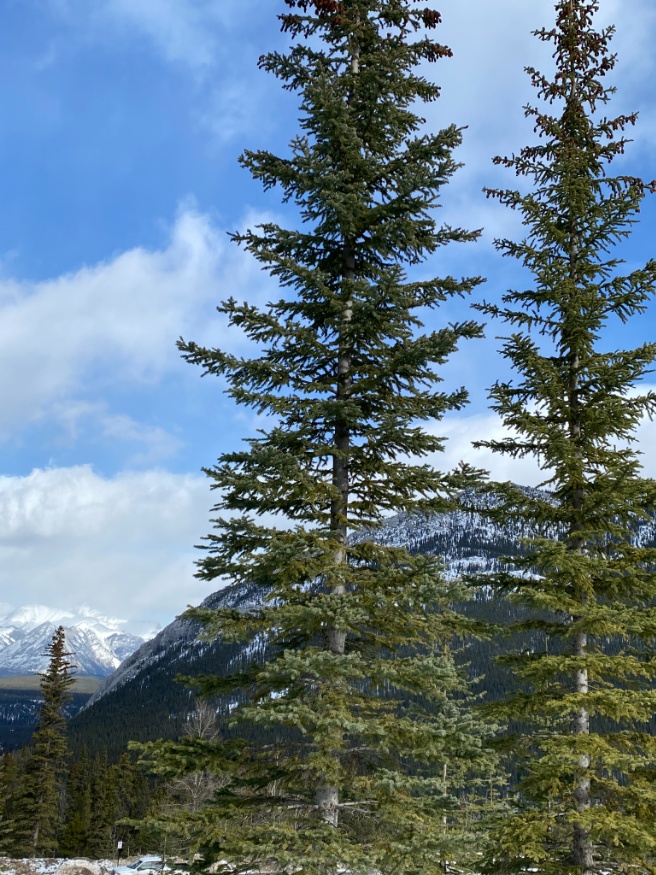
Engelmann Spruce is a medium to large evergreen tree, populating mountains or water's edge of Interior BC to Western Alberta and southward. It prefers in rich, moist soil and often grows alongside lodgepole pine, birch, aspen, subalpine fir, western larch, and western hemlock.
The crown is tall and slender with a pointed tip and branches often drooping near that bottom. The needles are flexible, bluish-green, and forward-pointing, with stripes of white dots appearing on all sides. Cones are ragged-tipped unlike its close relative the white spruce (which it interbreeds with).