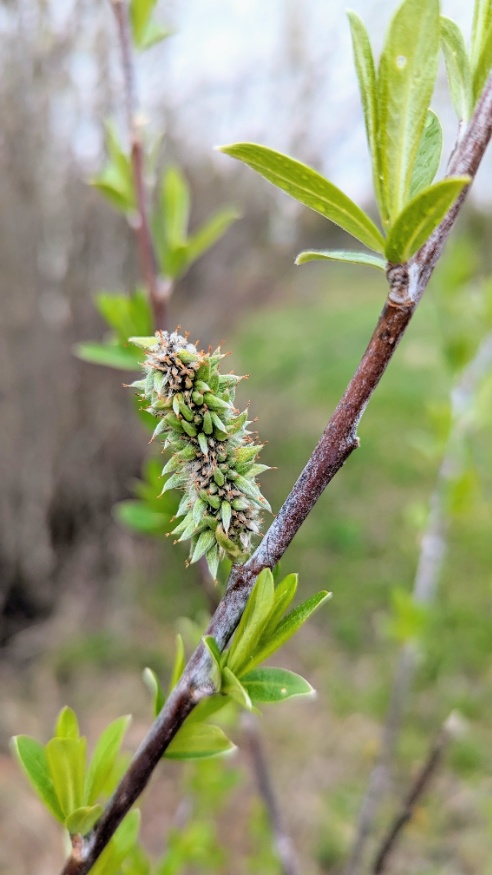
Drummond's Willow
Family: Salicaceae
Native to: Western North America
Eco benefits: erosion control, attracts birds
Natural habitat: swamps & bogs, waters edge, floodplains, forest edge
Shapes: multi-stemmed, upright
Height: up to 16ft
Common uses: reforestation, naturalized plantings, rain garden
Soil: moist and fertile, well drained, tolerates heavy clay, tolerates wet feet, ph adaptable, wet, sandy
Drummond's willow is a large multi-stemmed shrub to small tree, distinguished by its glabrous or glaucous branches, brittle at the base. Native to western North America, it occurs from the Yukon down to California and New Mexico in the United States. The tree can be found usually in wet areas like swamps and floodplains, open forest and ditches. Drummond's willow is used for native plant restoration of riparian sites, widely grazed by Moose, also used by beaver, deer, and elk. A food source for ducks and various birds.