Choke Cherry
Other Names: chokecherry, black-fruited choke cherry, wild cherry
Family: Rosaceae
Native to: Eastern North America, Interior North America
Hardy to zone: 3
Eco benefits: attracts pollinators, water filtration, erosion control, attracts birds, medicinal, edible fruit
Natural habitat: barren or disturbed ground, waters edge
Shapes: overarching
Height: 20-30ft
width: 15-20ft
Growth rate: medium
Unique attractions: fall colour, flowers, fruit
Common uses: reforestation, landscaping, specimen, naturalized plantings
Light: full sun, partial shade
Soil: moist and fertile, well drained, drought tolerant, dry
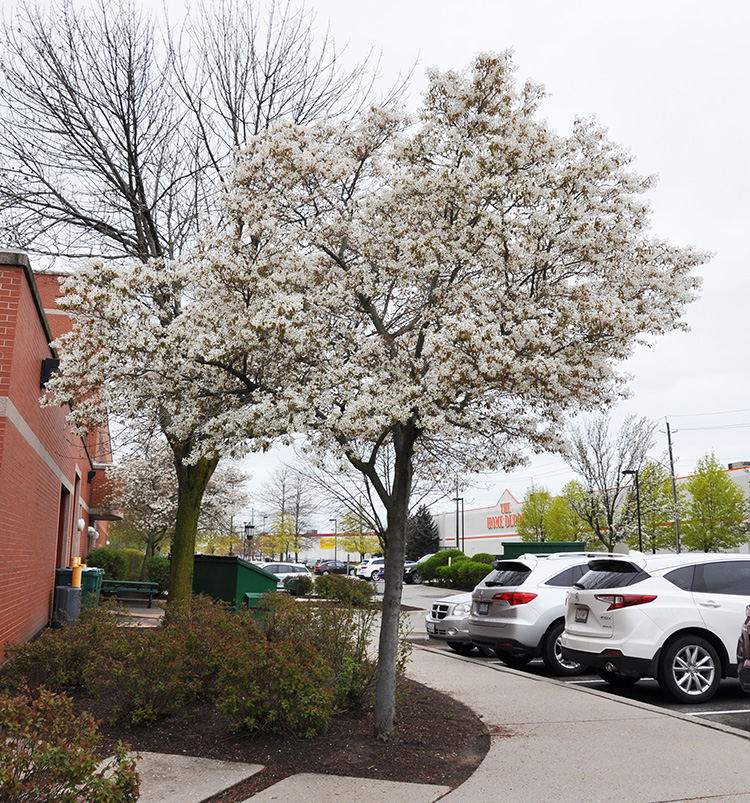
Choke cherry is a small tree in Southern Ontario, more often becoming a shrub in the north. It sometimes twists at the trunk and has an oblong to irregular shape which tends to sucker at the base. Its natural habitat spans across North America, and covers central and southern Ontario; found at forest edges and thickets, open ground and along streams. Deep roots of the choke cherry stabilize the soil, aiding in erosion control and water filtration.
Choke cherry prefers open, sunny sites, but tolerates some shade; often planted in farm borders or roadsides to prevent snow and erosion. All parts of the tree but the berry flesh contain hydrocyanic acid which is poisonous to humans.
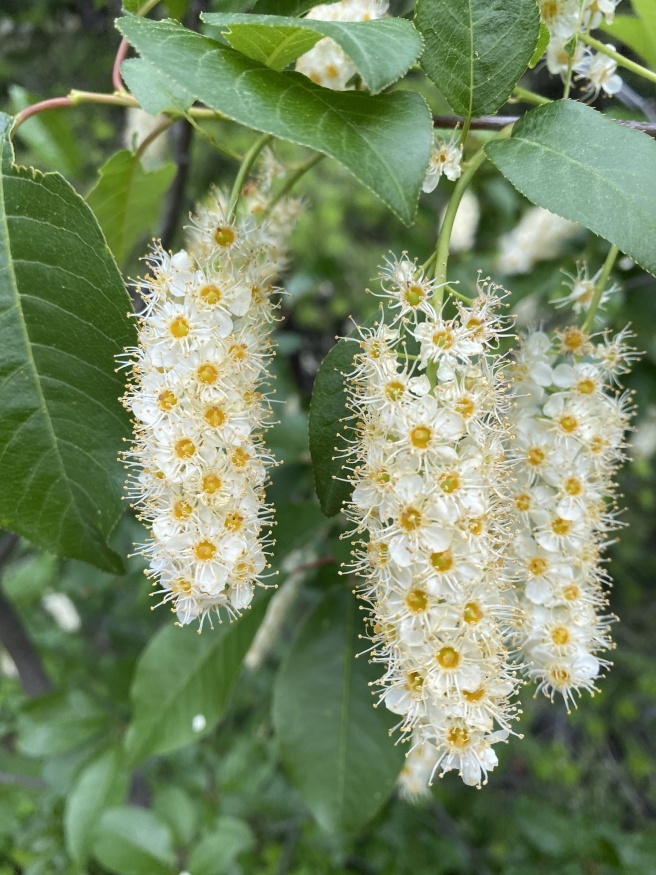
Leaves are dull, dark green to occasionally purple. The shape is broadly oval, tapering at both ends. Fine, sharply toothed margins end in a hair like point. The bark is reddish brown to greyish brown becoming near black with age.
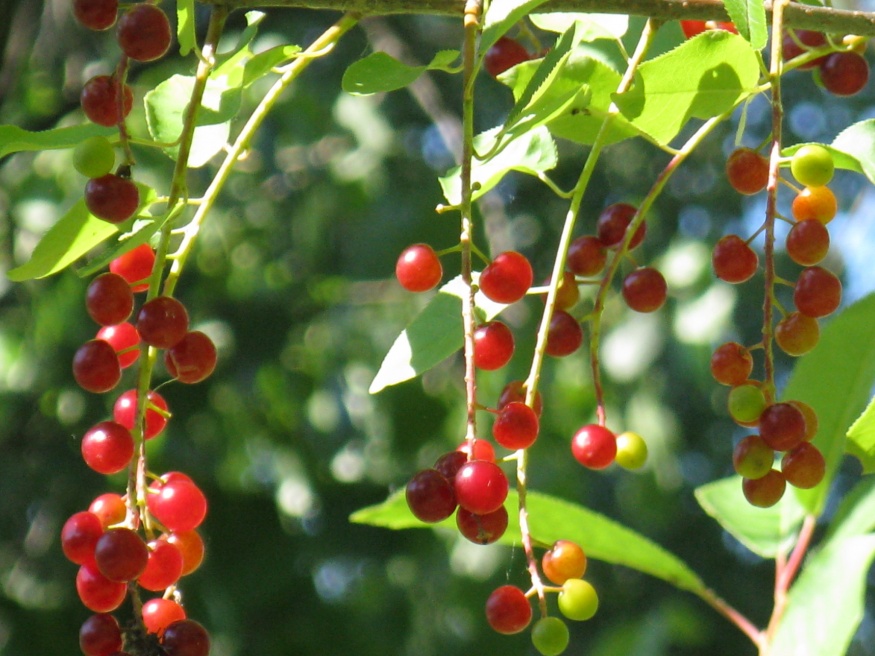
Elongated clusters of dense, fragrant white flowers resembling bottle brush appear at the ends of twigs in early June. Round, yellow, crimson, or near black fruit appear July to early September. The berries are astringent but edible and can be made into jelly, syrup or wine. The berries are an important food source for birds which eat them in the fall and winter, dispersing the seeds.
Mammals feed on the twigs in winter. Pollen and nectar from the flowers are food for insects and bees. Fruit was eaten by Aboriginal people, often collected in fall and dried. The wood was used for tool handles, and the bark for basketry and medicine.
References
Government of Canada. (2015). Choke Cherry. https://www.agr.gc.ca/eng/agriculture-and-climate/agricultural-practices/agroforestry/shelterbelt-planning-and-establishment/selecting-trees-and-shrubs-species/choke-cherry/?id=1345829513877
Missouri Botanical Garden. (n.d.). Prunus virginiana. https://www.missouribotanicalgarden.org/PlantFinder/PlantFinderDetails.aspx?taxonid=286359
Province of British Columbia. (2020). Choke cherry. https://www.for.gov.bc.ca/hfd/library/documents/treebook/chokecherry.htm
Tree Atlas - Ontario. (2020). Chokecherry. https://www.ontario.ca/page/chokecherry
University of Guelph Arboretum. (n.d.). Choke Cherry - Prunus virginiana. https://www.uoguelph.ca/arboretum/thingstosee/trees/chokecherry