Cascade Mountain-ash
Other Names: Greene's Mountain-ash
Other Botanical Names: scopulina var. Canadensis
Family: Rosaceae
Native to: Western North America
Hardy to zone: 2
Eco benefits: attracts pollinators, attracts birds, edible fruit
Natural habitat: mountains, waters edge, hillsides & uplands, rocky slopes, forest edge
Shapes: multi-stemmed, clump, upright
Height: 3-15ft
Unique attractions: fall colour, flowers, fruit, winter interest
Common uses: specimen, naturalized plantings
Light: full sun, partial shade
Soil: moist and fertile, well drained
Cascade mountain ash is a type of rowan often found growing in clumps on waters edge, hillsides, and forest openings. It's Most often a shrub, sometimes a shrubby tree. Found in the Pacific North West from Alaska to Arizona and New Mexico, it's often referred to as Greene's mountain ash to honor American botanist Edward Lee Greene who first described the tree.
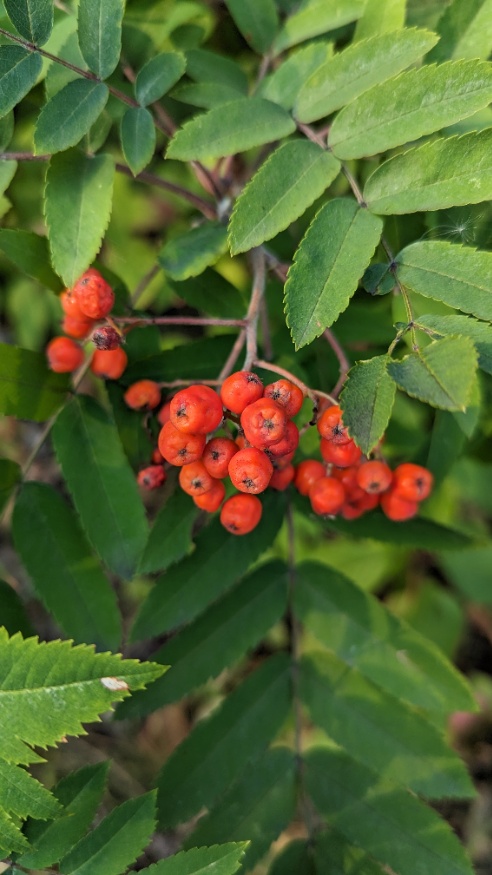
Leaves are compound with 11 to 15 leaflets, shinny green on top and paler underneath. Bark is gray to reddish and smooth. Numerous fragrant white flowers in showy flat-topped clusters appear from May to July. The flowers are pollinated by insects. From July to September, smooth orange-ish red berry-like pommes appear and persist into winter.
Cascade mountain ash makes for an attractive specimen in the landscape on many levels. The numerous white flowers provide summer interest while fall foliage turns a nice red to orange or yellow colour. The bright winter berries stand out in the winter and provide food for birds and various mammals. Berries are bitter but better after first fermented. They're sometimes cooked in pies, preserves, or used in wines. Leaves are browsed by herbivores.