Black Swamp Gooseberry
Other Names: Prickly Currant, Black Gooseberry, Bristly Swamp Currant, Black Swamp Gooseberry, Swamp Goose Current, Marsh Currant
Family: Grossulariaceae
Native to: Eastern North America, Interior North America, Western North America
Hardy to zone: 4
Eco benefits: attracts birds, medicinal, edible fruit
Natural habitat: swamps & bogs, understory, mountains, waters edge, inner forests, hillsides & uplands, rocky slopes, floodplains, forest edge
Shapes: irregular, multi-stemmed, wide spreading, prostrate, upright
Height: 3-5ft
Unique attractions: flowers, fruit
Common uses: naturalized plantings, rain garden
Light: full sun, partial shade
Soil: moist and fertile, tolerates wet feet, dry, wet
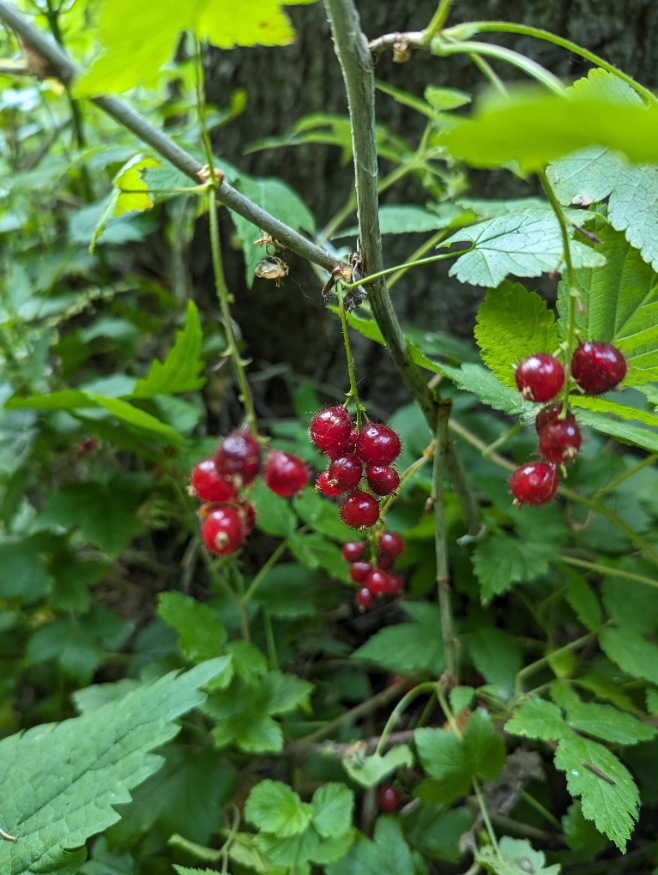
Black swamp gooseberry is a prickly perennial widespread across Canada and much of the northern United States. The plant is erect in sunny areas to spreading in shaded ones making it range in height from about 2 to 6ft tall. Black swamp gooseberry is common in riparian areas but can be found in both wet and dry locations including rich woods, waters edge, swamps, slopes, and thickets.
Unique maple-like leaves are semi-glossy with many deep indents. From early spring to late summer, drooping clusters interesting saucer-shape flowers bloom. The flowers are probably one of the most interesting features of Black swamp gooseberry. Yellow-green to reddish Calyces (sepals) cover pinkish petals, creating layers of colour and interest. Dark purple berries with glandular hairs appear in late summer. The flowers provide nectar for hummingbirds and berries are used as food for bears, birds and a wide variety of small mammals.
Black swamp gooseberry's resilience allows it to adapt to many habitats soil conditions. Provided full sun to part shade, it's well suited for naturalized gardens in wet or difficult to grow areas. The berries are edible when ripe and can be made into jams or preserves. Many indigenous tribes used the bark, roots, and berries medicinally and practically. Common uses include child birth assistance, eye washes and muscle rubs. The stringy roots were used to make reef nets and rope.