Bebb Willow
Other Names: bebb's willow, diamond willow, beaked willow
Family: Salicaceae
Native to: Eastern North America, Interior North America, Western North America
Hardy to zone: 4
Eco benefits: attracts pollinators, erosion control
Natural habitat: swamps & bogs, understory, waters edge
Shapes: clump
Height: 6-23ft
Growth rate: fast
Light: full sun
Transplanting: easy
Soil: moist and fertile, tolerates heavy clay, tolerates wet feet, wet
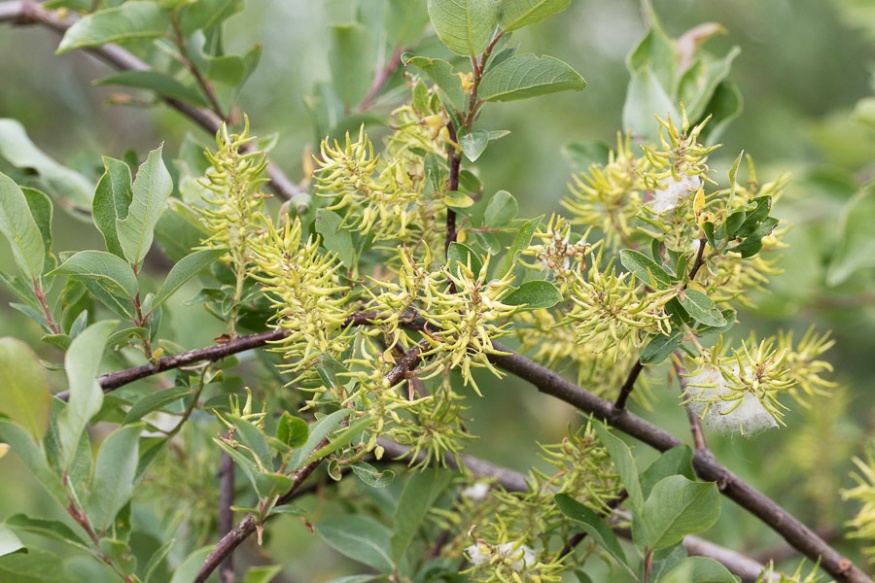
Bebb willow (or bebb's willow) is a pioneer species of shrub forming dense thickets along rivers, streams, swamps, and meadows. Native to North America, it spans coast to coast in parts of Canada and the United States.
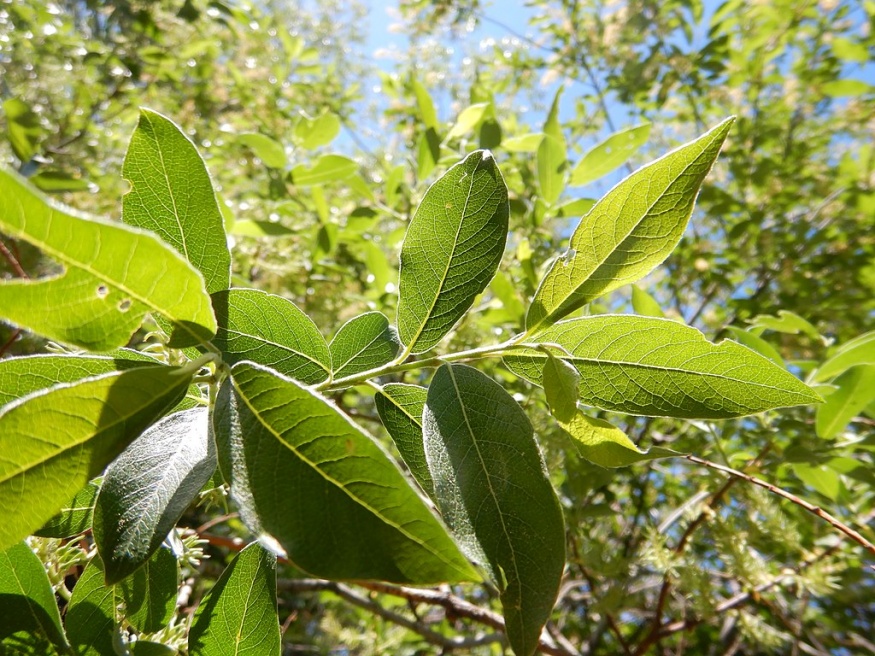
Leaves are elliptic in shape and pointed at both ends; wrinkled and sparsely hairy on top while hairy with prominent veins underneath. Young twigs and leaves are hairy. Bark colour is reddish to grayish brown when young; diamond shaped depressions appear (caused by a fungus).
Bebb willows are supporters of bees and rely on them for pollination. They are valuable browse for elk, big game, small mammals, beaver, birds, and livestock.
Medicinally, the shrub is used to heal wounds, sanitize bandages, and increase blood flow. Coppicing can be done to accumulate branches. Harvests can then be used for rope, bags, dresses, and baskets. Bebb willow wood is suitable for furniture and ornamental products.
References
Plants for a Future. (n.d.). Retrieved from https://pfaf.org/user/Plant.aspx?LatinName=Salix+bebbiana
Fire Effects Information System (FEIS). (n.d.). Retrieved from https://www.fs.fed.us/database/feis/plants/tree/salbeb/all.html
mt.gov (n.d.). Retrieved from http://fieldguide.mt.gov/speciesDetail.aspx?elcode=PDSAL020E0
Natural Resources Canada. (2015). Retrieved from https://tidcf.nrcan.gc.ca/en/trees/factsheet/463