American Red Raspberry
Other Names: American Raspberry, Grayleaf Red Raspberry
Family: Rosaceae
Native to: Eastern North America, Interior North America, Western North America
Hardy to zone: 4
Eco benefits: attracts pollinators, attracts birds, medicinal, edible fruit
Natural habitat: inner forests, hillsides & uplands, rocky slopes, forest edge
Shapes: multi-stemmed, clump, wide spreading, upright
Height: 3-6ft
width: 6-12ft
Growth rate: medium
Unique attractions: fall colour, fruit, branching
Common uses: naturalized plantings
Light: full sun, partial shade
Soil: moist and fertile, well drained, drought tolerant, sandy
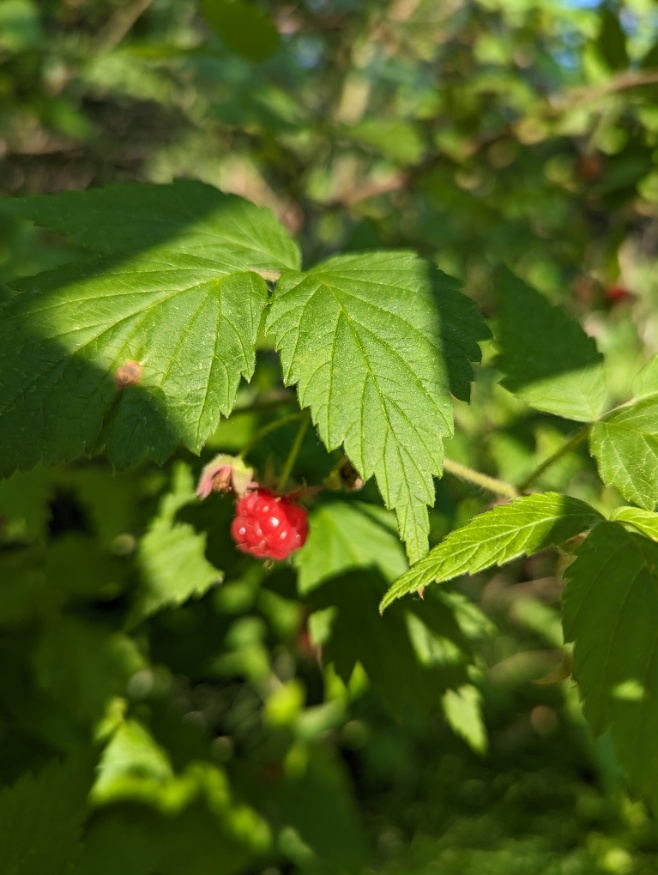
American red raspberry is an upright perennial native to much of North America, especially the boreal regions. It Grows from 3 to 6ft tall and is closely related to the European red raspberry Rubus idaeus (a hybrid of the two is used commercially). Canes spread through underground stolons, forming thickets in forest openings or disturbed areas.
Purplish-red prickly canes droop into an arch and bear fruit in the second year. It starts with racemes of Fragrant White flowers appearing in late spring to summer. Sweet, tart Red aggregate fruit follow in late summer to early autumn. Leaves turn a nice red to purple colour in the fall.
American red raspberry is easy to grow and maintain; adaptable to different soil conditions and is drought tolerant. It quickly establishes, competing with other vegetation making it useful for erosion control, or natural plantings on property edges.
The fruit is valuable forage for mammals and birds; they also provide nesting and food for native and bumble bees. Edible berries can be used for jams, pies, and other baked goods. Young shoots are edible, and the Leaves can be made into a tea, commonly used for diarrhea, utary health, or inflammation. Indigenous peoples used the fruit make a purple or Blue dye.