About This Plant
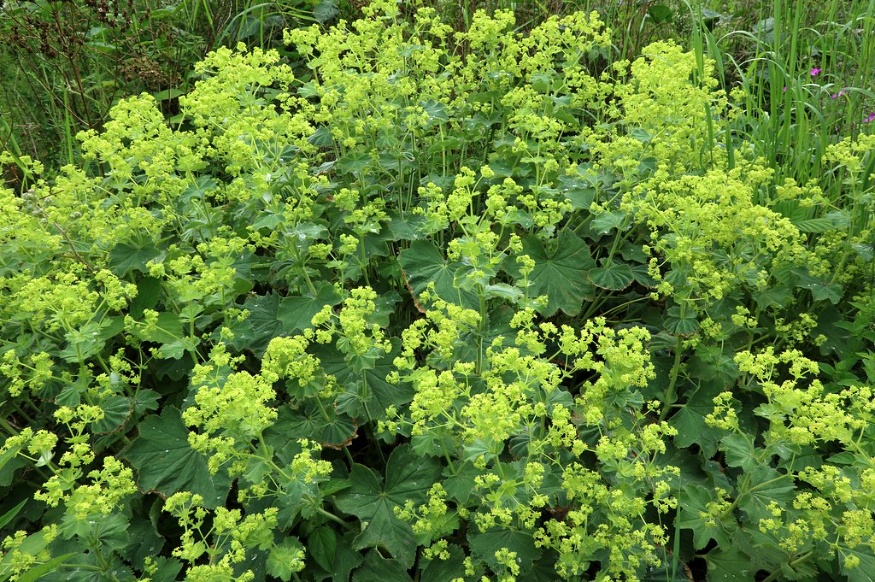
Lady’s mantle is a graceful perennial herb known for its soft, scalloped leaves and delicate sprays of yellow-green flowers. Native to Europe and parts of Asia, it has naturalized widely and is commonly found in gardens, meadows, and along woodland edges. Its understated beauty and resilience have made it a favorite in traditional and ornamental plantings alike.
In the wild, lady’s mantle thrives in moist meadows, forest margins, and upland areas where soils are fertile and well-drained. It tolerates a range of conditions but prefers moderate moisture and partial sun. The plant forms low, spreading clumps that gradually expand over time.
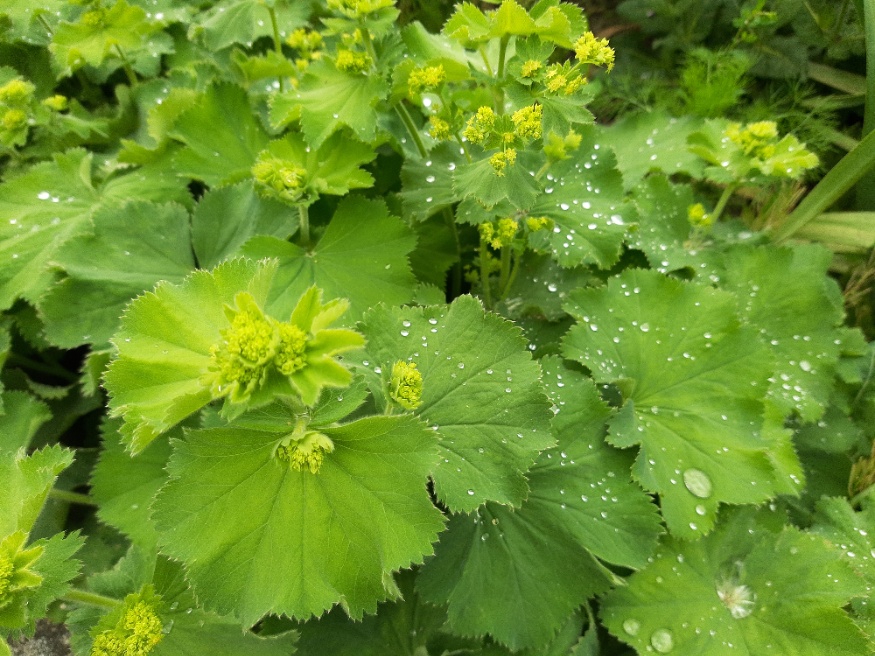
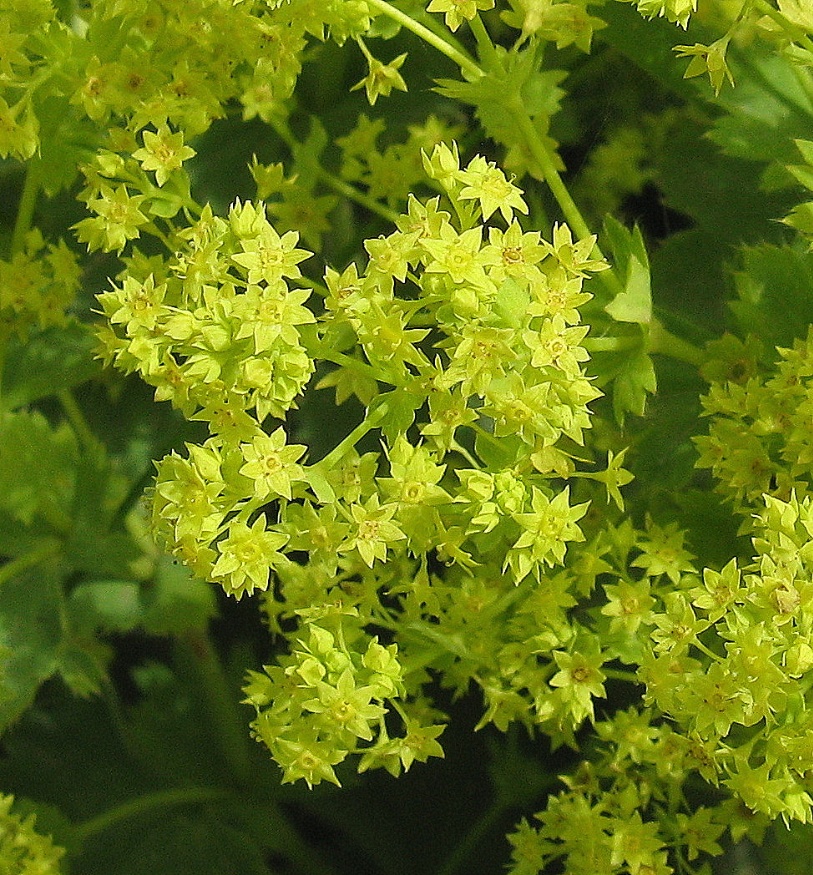
Its leaves are one of its most distinctive features—rounded, pleated, and covered in fine hairs that cause water droplets to bead and shimmer on their surface. This effect has long captured the imagination of herbalists and naturalists. Small, airy clusters of flowers appear in early to mid-summer, adding a soft texture to the landscape.
Historically, lady’s mantle was closely associated with women’s health and alchemical traditions. Herbalists valued it for its ability to tone tissues and regulate bodily fluids, while alchemists collected the dew from its leaves for symbolic and experimental purposes.
Medicinally, lady’s mantle is best known for its astringent and toning properties. It supports the reproductive system, helps regulate menstruation, and aids in healing wounds and digestive imbalances. Though not commonly used as a food plant, its gentle yet effective medicinal qualities have secured its place as a trusted herb in traditional European medicine.
Traditional Use
Folk Use
Lady’s mantle has long been used in European herbal traditions, particularly for women’s health. It was considered a primary herb for regulating menstruation, easing cramps, and supporting recovery after childbirth.
The plant’s astringent properties made it useful for treating diarrhea, wounds, and excessive bleeding. It was often applied externally as a wash or compress for cuts and skin irritations.
In folk medicine, it was also associated with alchemical traditions, where dew collected on its leaves was believed to have special properties.
Chinese Medicine
N/A
Special Chemistry
Lady’s mantle contains tannins, flavonoids, and salicylic acid derivatives, contributing to its astringent, anti-inflammatory, and mild analgesic effects.
Signature
The way water beads and collects on the leaves reflects its ability to gather, tone, and contain fluids within the body.
Combinations
Often combined with raspberry leaf for reproductive support and with yarrow for wound healing.
Precautions
High tannin content may cause digestive discomfort if taken in large amounts. Use in moderation.
| Medicinal Species | Alchemilla vulgaris |
|---|---|
| Tastes | bitter, astringent |
| Organ Systems | circulatory, digestive, reproductive |
| Thermal Nature | cool |
| Moisture | drying |
| Parts Used | leaves, flowers |
| Preparations | tincture, compress |
| Organs and Tissue | gonad, mucosa, blood |
Growing Guide
Lady’s mantle is easily grown from seed or division. Seeds benefit from cold moist stratification and can be sown outdoors in fall or stratified artificially before spring planting. It prefers moist, well-drained soils rich in organic matter.
Choose a location with full sun to partial shade. In hotter climates, partial shade helps prevent leaf scorch. Space plants about 12–18 inches apart to allow for spreading growth.
Water regularly during establishment, and maintain consistent moisture for best growth. Once established, lady’s mantle is relatively low maintenance and can self-seed readily in favorable conditions.
Cutting back spent flowers can encourage fresh growth and prevent excessive spreading. It is a hardy, adaptable plant suitable for borders, cottage gardens, and naturalized plantings.