About This Plant
Horsetail is an ancient and distinctive genus of plants that has remained largely unchanged for millions of years, offering a glimpse into prehistoric plant life. Belonging to the genus Equisetum, species such as Equisetum arvense and Equisetum hyemale are commonly found in temperate regions across the globe. These plants thrive in moist soils, often colonizing wetlands, riverbanks, and disturbed ground where their extensive rhizome systems allow them to spread efficiently.
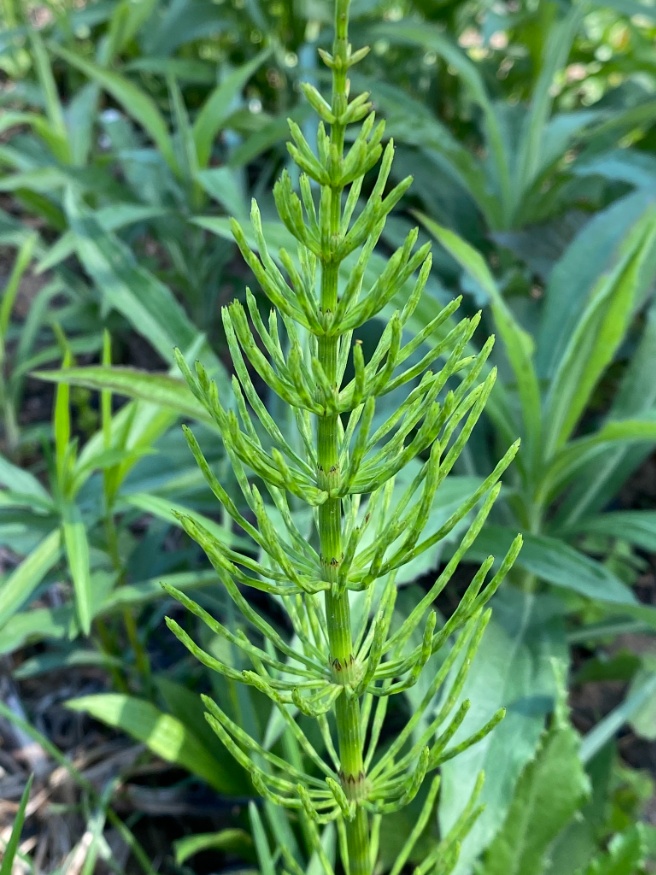
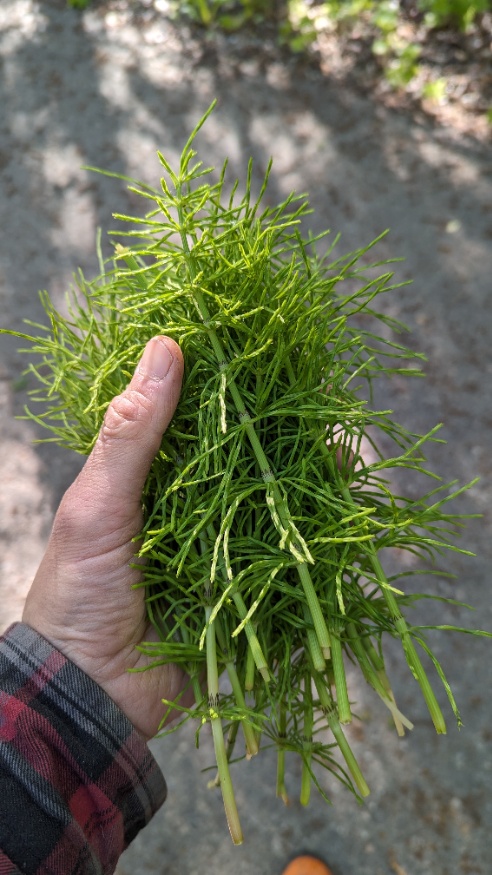
Unlike most modern plants, horsetail does not produce flowers. Instead, it reproduces via spores and is easily recognized by its hollow, jointed stems and brush-like appearance. The stems are rich in silica, giving them a rough texture that was historically used for polishing wood and metal surfaces.
Horsetail's resilience and persistence have made it both valued and, at times, challenging in cultivated landscapes. Its ability to thrive in poor, compacted soils speaks to its evolutionary adaptations and ecological niche.
Medicinally, horsetail is best known for its strengthening effects on connective tissues. Its high silica content supports bone health, hair growth, and skin integrity. It is also used as a gentle diuretic, helping to support the urinary system. While not a primary food plant, its medicinal value has ensured its continued use in herbal traditions around the world.
Traditional Use
Folk Use
Horsetail has a long history of use as a strengthening and restorative herb, particularly for bones, hair, and connective tissue. It was traditionally used to support wound healing and to stop bleeding due to its astringent properties.
It has also been used as a diuretic, helping to flush the urinary system and support kidney function. In European herbal traditions, horsetail was often taken as a tea to strengthen weakened tissues and support recovery from injury.
Externally, it has been used in washes and compresses for wounds and skin conditions, reflecting its tightening and restorative qualities.
Chinese Medicine
In Chinese medicine, horsetail (Mu Zei) is used to clear heat from the liver and improve vision. It is also applied in cases of eye inflammation and certain skin conditions.
Its cooling and drying nature aligns with herbs that remove excess heat and moisture from the upper body.
Special Chemistry
Horsetail contains high levels of silica, along with flavonoids and alkaloids. The silica content is particularly associated with its strengthening effects on connective tissue and bone.
Signature
The segmented, jointed stems resemble bones and connective structures, reflecting its affinity for strengthening the skeletal system and structural integrity of the body.
Combinations
Often combined with mineral-rich herbs like Stinging nettle for bone and tissue support.
Precautions
Long-term use should be approached cautiously, as some species contain small amounts of thiaminase. Proper identification is important, as certain species may be toxic.
| Medicinal Species | Equisetum arvense, Equisetum hyemale |
|---|---|
| Tastes | bitter, astringent |
| Organ Systems | urinary, skeletal, integumentary (skin, hair, nails) |
| Thermal Nature | cool |
| Moisture | drying |
| Parts Used | stems |
| Preparations | decoction, tea/infusion, tincture, powder |
| Organs and Tissue | kidneys, bone |
Growing Guide
Horsetail is most commonly propagated through division of its extensive rhizome system rather than by spores. It thrives in consistently moist to wet soils and is often found along streams, wetlands, and compacted ground where few other plants compete well.
This plant spreads aggressively once established, forming dense colonies through underground runners. Because of this, it is best grown in controlled areas or where containment is not a concern. It tolerates a wide range of soil types but performs best in nutrient-poor, damp conditions.
Full sun to partial shade is ideal. Once established, horsetail requires little care and is highly resilient, though it can be difficult to remove due to its deep and persistent root system.