About This Plant
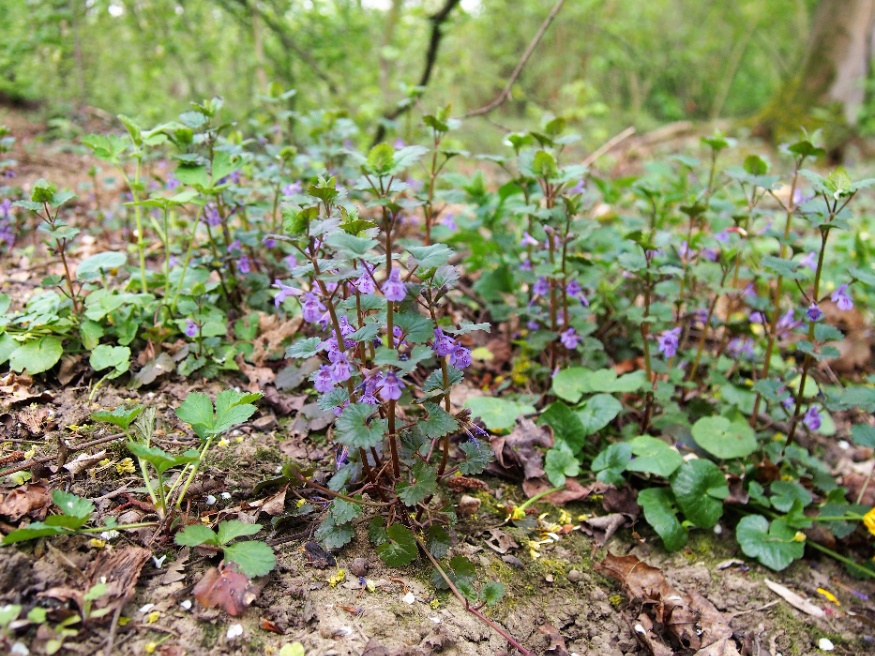
Ground ivy (Glechoma hederacea) is a low-growing, aromatic perennial that spreads across the ground in dense mats, often forming a carpet of rounded leaves in shaded or moist environments. Though frequently considered a lawn weed, it is a resilient and historically valued plant with both ecological and medicinal significance.
Native to Europe and widely naturalized in North America, ground ivy thrives in forest edges, shaded lawns, and disturbed soils. It prefers moist, fertile conditions but adapts readily to a wide range of environments, including compacted soils. Its creeping stems root easily at the nodes, allowing it to spread quickly and dominate ground space.
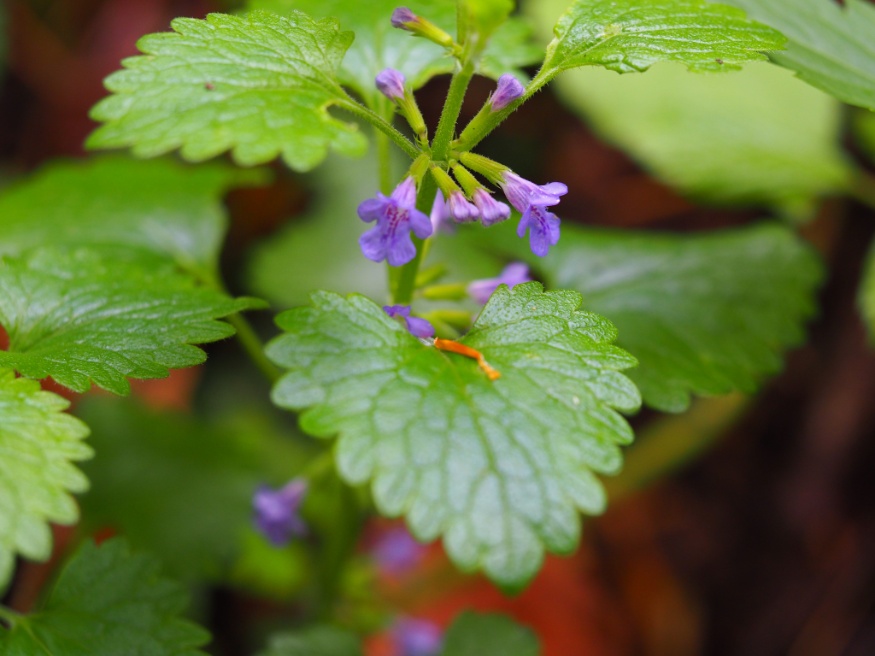
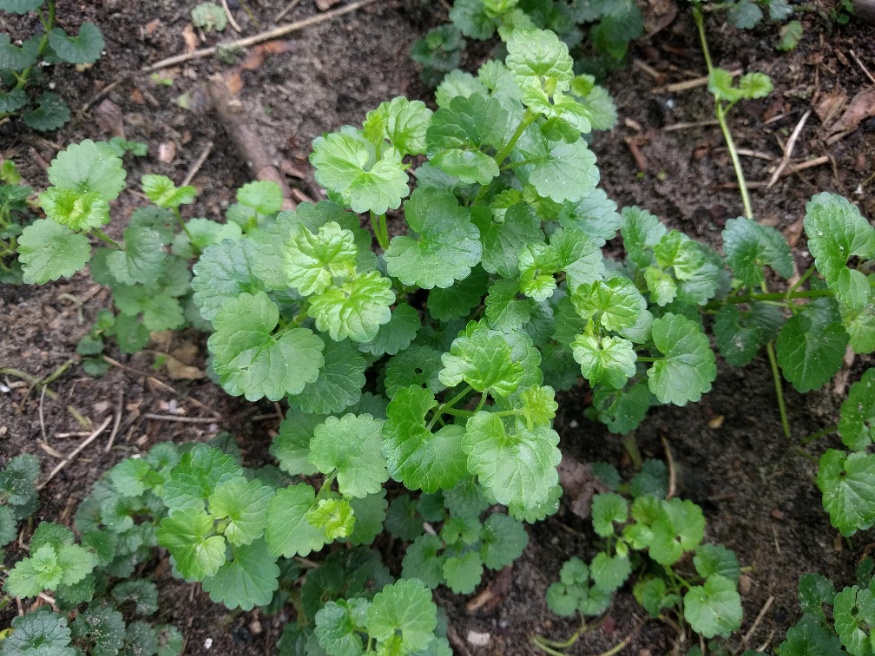
Identification is relatively easy. The plant has square stems typical of the mint family, opposite kidney-shaped leaves with scalloped edges, and small bluish-purple tubular flowers that appear in spring. When crushed, the leaves release a mild, somewhat minty aroma.
Historically, ground ivy was used in herbal medicine and even in brewing, where it served as a bittering and clarifying agent before the widespread use of hops. It was valued for its ability to support the lungs and digestive system, particularly in cases of congestion or sluggish digestion.
Medicinally, ground ivy is known for its gentle expectorant and anti-inflammatory properties. It is commonly used to help clear mucus from the respiratory system and to soothe mild digestive discomfort. The leaves and stems are typically prepared as a tea or tincture, and it can also be used externally for minor skin issues. While often overlooked, it remains a useful and accessible medicinal herb.
Traditional Use
Folk Use
Ground ivy has a long history in European folk medicine as a remedy for respiratory and digestive complaints. Traditionally, it was used to clear mucus from the lungs and sinuses, making it valuable for colds, coughs, and congestion.
It has also been used to support digestion, particularly where there is sluggishness or mild inflammation. Its slightly bitter nature stimulates digestive function while its aromatic qualities help move stagnation.
Externally, it has been applied as a poultice or wash for minor wounds and skin irritations. Historically, it was also used in brewing before hops became dominant, valued for both flavor and preservation.
Chinese Medicine
Ground ivy is not a traditional Chinese medicinal herb, but it shares similarities with herbs that clear heat and resolve dampness. It is slightly cooling and drying, helping to relieve congestion in the lungs and damp conditions in the body.
Its affinity for the lungs and urinary system makes it useful for mild respiratory and urinary complaints, particularly where there is inflammation or excess moisture.
Special Chemistry
Ground ivy contains volatile oils, tannins, and flavonoids that contribute to its anti-inflammatory and astringent properties. These compounds support its traditional use in respiratory and digestive conditions.
Signature
The creeping, spreading nature of ground ivy reflects its ability to move through stagnant conditions in the body, particularly in the lungs and sinuses.
Combinations
Ground ivy combines well with thyme for respiratory support and with peppermint for digestive relief.
Precautions
Ground ivy should be used in moderation, as excessive intake may cause irritation. It is generally safe in small amounts but should be avoided in large doses, especially during pregnancy.
| Medicinal Species | Glechoma hederacea |
|---|---|
| Tastes | bitter, acrid/pungent |
| Organ Systems | digestive, respiratory, urinary, nervous |
| Thermal Nature | cool |
| Moisture | drying |
| Parts Used | stems, leaves |
| Preparations | tea/infusion, tincture, wash, compress |
| Organs and Tissue | lungs, stomach, kidneys, mucosa |
Growing Guide
Ground ivy is an aggressive, low-growing perennial that spreads readily by creeping stems that root at the nodes. It thrives in moist, fertile soils but is highly adaptable, tolerating clay soils and partial shade. It is often found in lawns, woodland edges, and disturbed areas.
Propagation is most easily done by division or by transplanting rooted runners in spring or fall. It can also be grown from seed, though vegetative spread is far more reliable. Once established, it requires little care and can quickly form dense mats.
Because of its vigorous growth, it can become invasive in garden settings. Regular trimming or containment may be necessary. Despite this, it can be useful as a living ground cover in difficult shaded areas.