
About This Plant
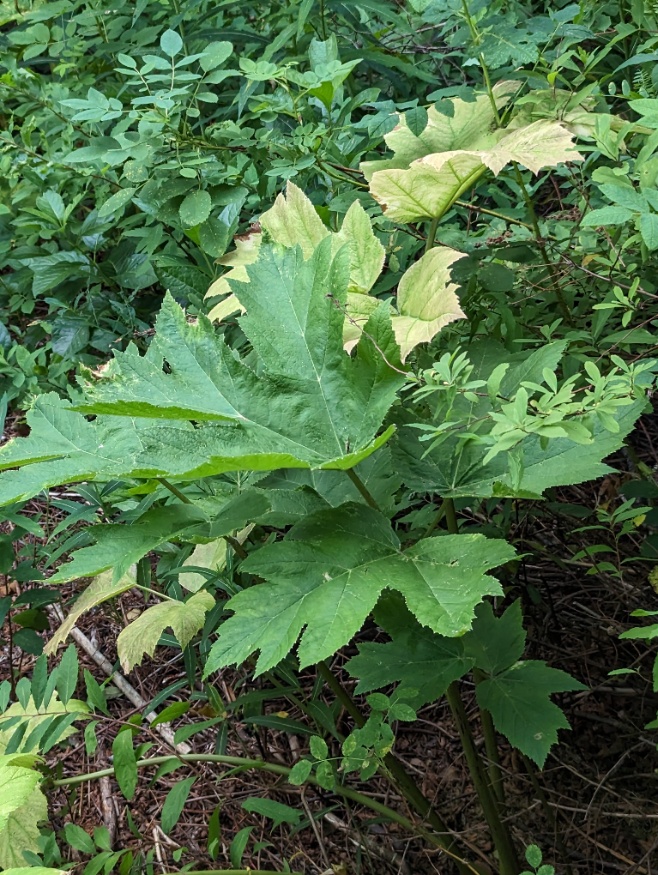
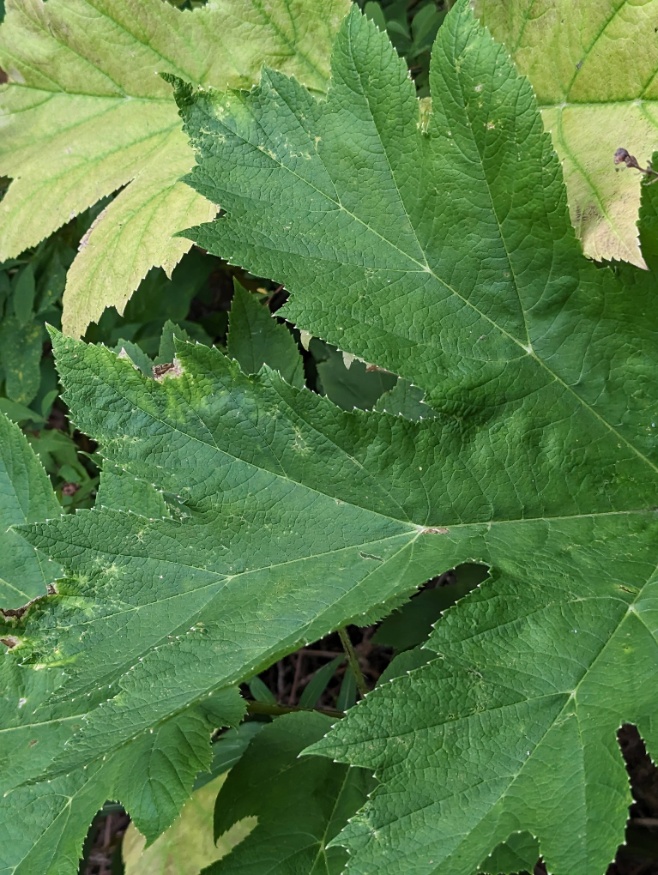
Cow parsnip is a large herbaceous plant of the carrot family, widely distributed throughout moist areas of North America. It's Known for its large dissected leaves and hairy hollow stems, which are sometimes mistaken for Devils Club in appearance.
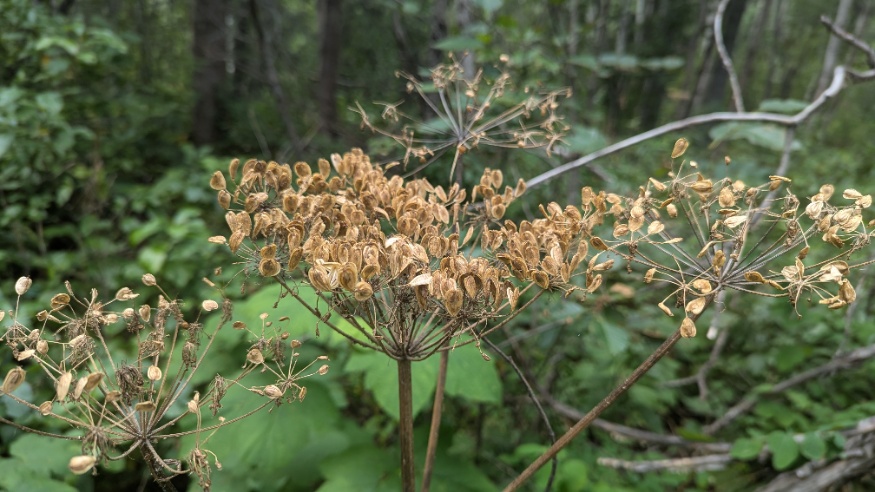
Flat topped umbels of white flowers bloom late summer to fall, attracting birds and butterflies (a larval host of the Anise Swallowtail). These give way to a large brown display of seed heads. The plant is a good food source for many wild and cultivated animals.
Peeled or cooked stems were widely used by Indigenous North Americans like celery. Roots were used to treat swelling, and flowers as an insect repellant. Though a useful edible and medicinal plant, caution is needed. Careful not to confuse it for the poisonous water hemlock. Also the outer skin of cow parsnip can cause a skin irritation and rash when exposed to light.
Traditional Use
Folk Use
Cow parsnip has a long history of use among Indigenous peoples of North America. The young shoots and stems were commonly harvested as a spring vegetable, while roots and seeds were used medicinally.
The plant was traditionally used as a digestive aid and mild respiratory support. Poultices were sometimes applied externally for aches and pains. Its warming and aromatic qualities made it useful in cold conditions and for stimulating sluggish digestion.
Despite its usefulness, care was always taken due to its phototoxic sap, which can cause burns when exposed to sunlight.
Chinese Medicine
Not traditionally used in Chinese medicine, though its warming and dispersing qualities resemble herbs that stimulate circulation and relieve cold stagnation.
Special Chemistry
Cow parsnip contains furanocoumarins, which are responsible for its phototoxic effects. It also contains aromatic compounds contributing to its pungent taste and medicinal activity.
Signature
The large, expansive leaves and towering height reflect its strong, outward-moving energy and ability to influence the body's surface and circulation.
Combinations
Often used alone traditionally, but may be conceptually paired with warming digestive herbs like Angelica.
Precautions
Fresh plant sap can cause severe skin irritation and burns when exposed to sunlight. Proper handling is essential.
| Medicinal Species | Heracleum maximum |
|---|---|
| Tastes | bitter, acrid/pungent |
| Organ Systems | digestive, respiratory |
| Thermal Nature | warm |
| Moisture | drying |
| Parts Used | roots, stems, seeds |
| Preparations | decoction, tincture, compress |
| Organs and Tissue | lungs, stomach |
Growing Guide
Cow parsnip grows best in moist, nutrient-rich soils and is commonly found along rivers, forest edges, and damp meadows. Seeds require cold moist stratification to germinate and are typically sown outdoors in fall or stratified artificially before spring planting.
This plant prefers full sun to partial shade and benefits from consistent moisture. It can grow quite large, so spacing is important. Transplanting mature plants can be difficult due to their deep taproots, so direct seeding is often preferred.
Care should be taken when handling, as the sap can cause skin irritation when exposed to sunlight. Once established, cow parsnip is vigorous and can form impressive stands in suitable habitats.