About This Plant
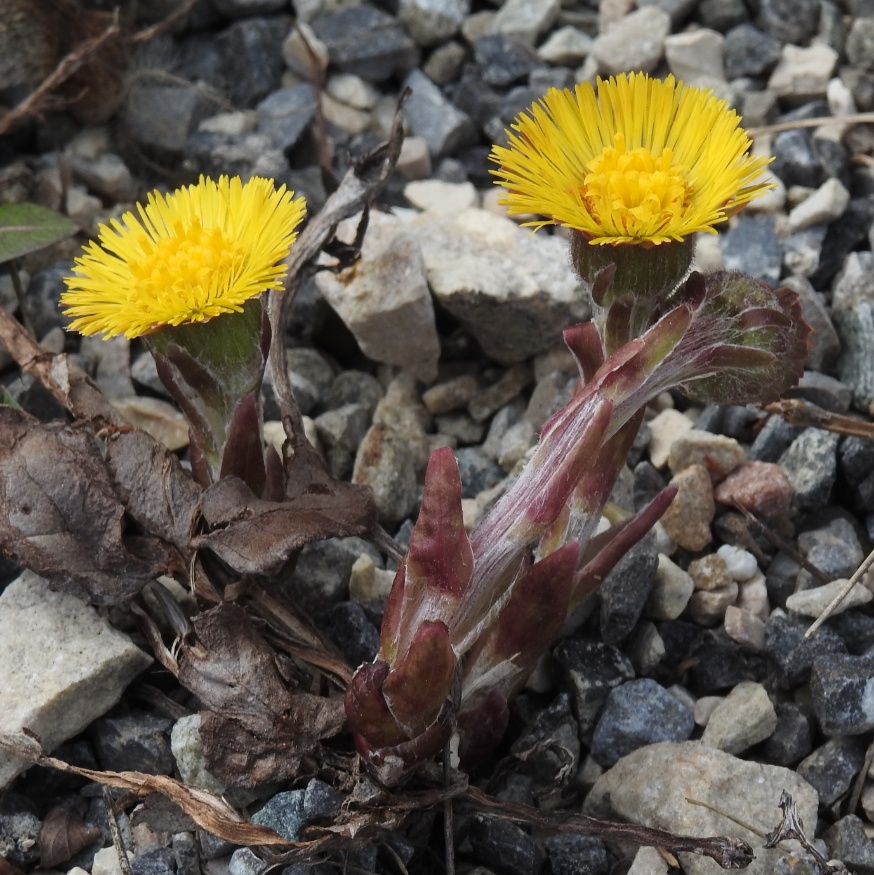
Coltsfoot is a hardy perennial herb known for its early spring flowers, which often appear before its leaves. Native to Europe and Asia but widely naturalized in North America, Tussilago farfara thrives in disturbed soils, roadsides, and damp ground where few other plants establish easily.
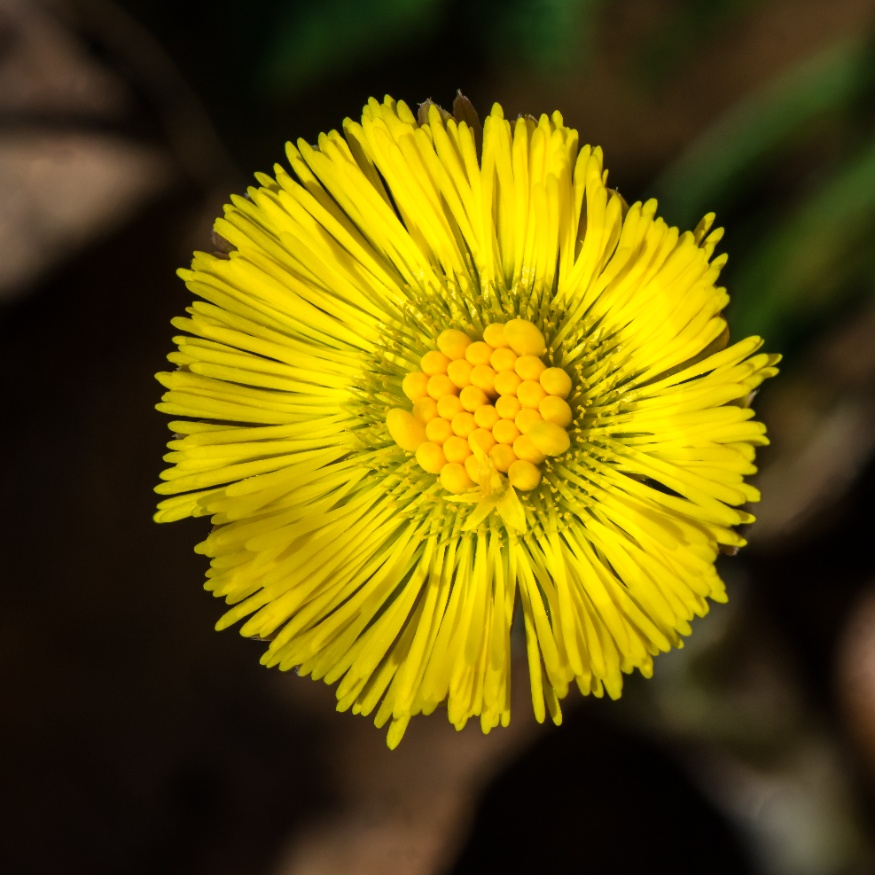
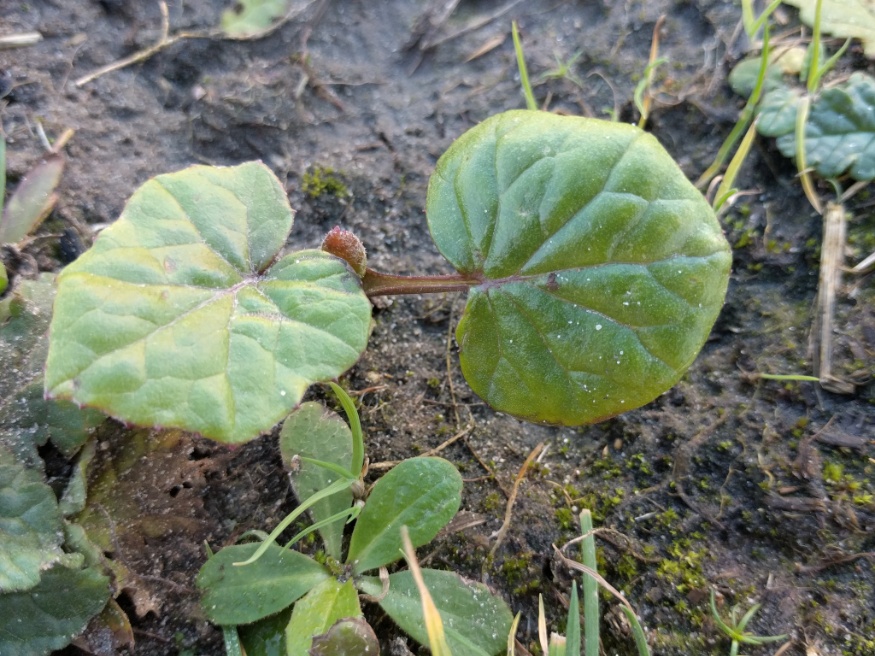
The bright yellow flowers resemble small dandelions and emerge on scaly stems, followed later by the appearance of large, hoof-shaped leaves. These leaves are soft and slightly fuzzy, contributing to the plant's distinctive appearance and common name.
Historically, coltsfoot has been closely associated with respiratory health. Its Latin name reflects this use, with “tussis” meaning cough. It was widely used in both European and Asian traditions as a remedy for lung conditions, particularly those involving dryness and irritation.
Medicinally, coltsfoot is valued for its ability to soothe and protect mucous membranes. It is often used in teas and syrups to ease coughs and support lung function. While effective, its use is balanced with caution due to certain compounds it contains, making it best suited for short-term support rather than long-term use.
Traditional Use
Folk Use
Coltsfoot has a long-standing reputation as a primary herb for respiratory conditions. Traditionally, it was used to soothe coughs, bronchitis, and throat irritation, often prepared as teas or syrups.
The leaves and flowers were both used, with the plant valued for its ability to calm dry, irritated tissues and promote gentle expectoration. It was a common remedy for chronic coughs and was even historically smoked for respiratory relief.
Its soothing and moistening qualities made it especially useful in conditions of dryness and irritation in the lungs.
Chinese Medicine
In Chinese medicine, coltsfoot (Kuan Dong Hua) is used to stop cough and transform phlegm. It is particularly indicated for chronic cough and wheezing, often combined with other lung-supporting herbs.
It is considered slightly warm in traditional classification, though its moistening effects align it with herbs that ease dryness in the lungs.
Special Chemistry
Coltsfoot contains mucilage, flavonoids, and pyrrolizidine alkaloids. The mucilage contributes to its soothing effects on mucous membranes.
Signature
The soft, broad leaves resemble the shape of a hoof and evoke its traditional use for grounding and soothing respiratory irritation.
Combinations
Often combined with Mullein and Marshmallow for lung support.
Precautions
Contains pyrrolizidine alkaloids, which may be harmful to the liver with prolonged use. Use in moderation and avoid long-term consumption.
| Medicinal Species | Tussilago farfara |
|---|---|
| Tastes | bitter, sweet |
| Organ Systems | respiratory |
| Thermal Nature | cool |
| Moisture | moistening |
| Parts Used | leaves, flowers |
| Preparations | tea/infusion, tincture, syrup |
| Organs and Tissue | lungs, bronchioles |
Growing Guide
Coltsfoot spreads readily through creeping rhizomes and is often easier to propagate by division than by seed. It thrives in moist soils and can tolerate heavy clay and disturbed ground, making it well suited to challenging environments.
Seeds can be sown on the surface in early spring, as light aids germination. However, the plant is more commonly managed through its underground growth. It prefers full sun to partial shade and will spread aggressively once established.
Because of its vigorous nature, coltsfoot is best planted in contained areas or naturalized settings where its spreading habit is beneficial rather than problematic.