.jpg)
.JPG)
About This Plant
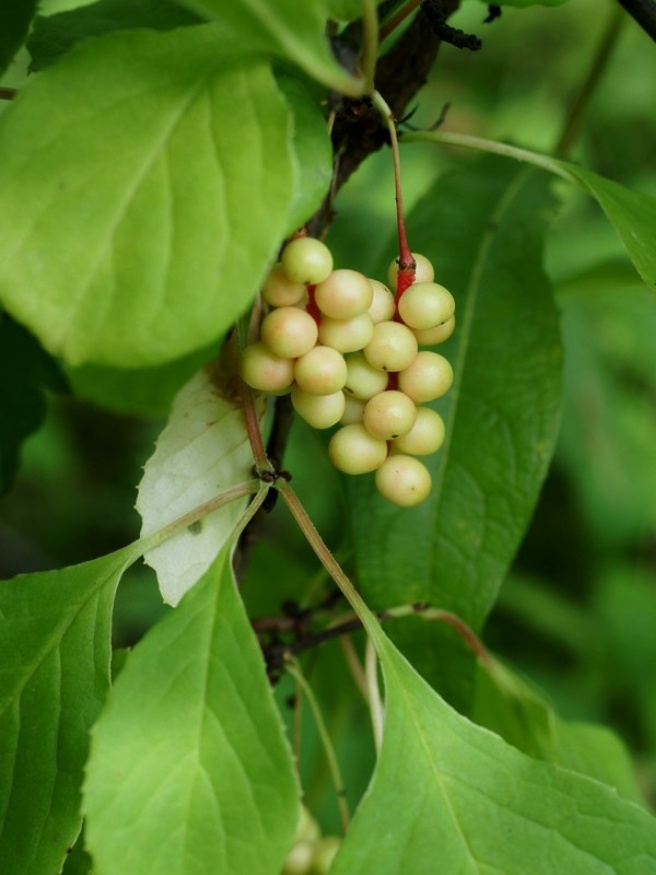
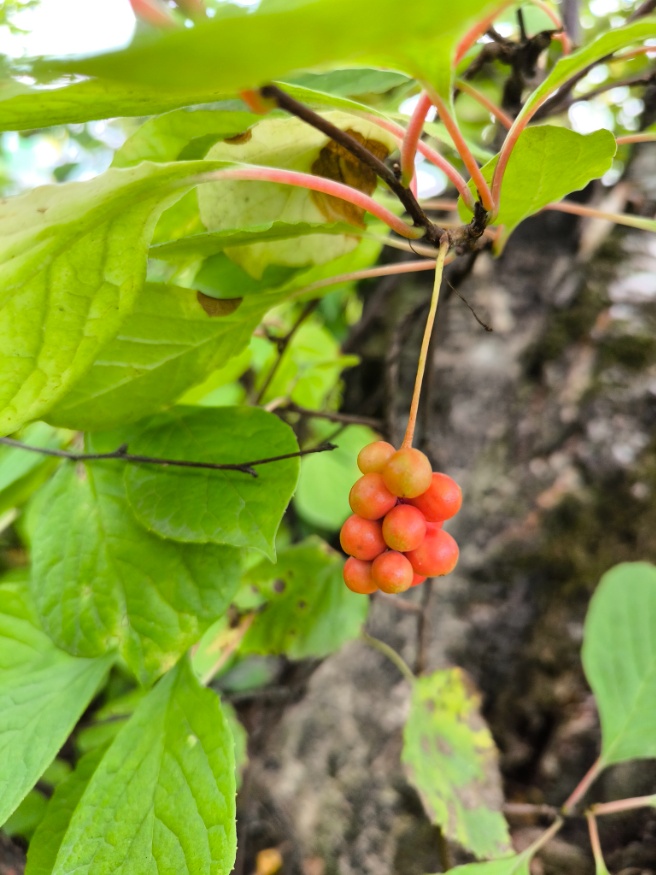
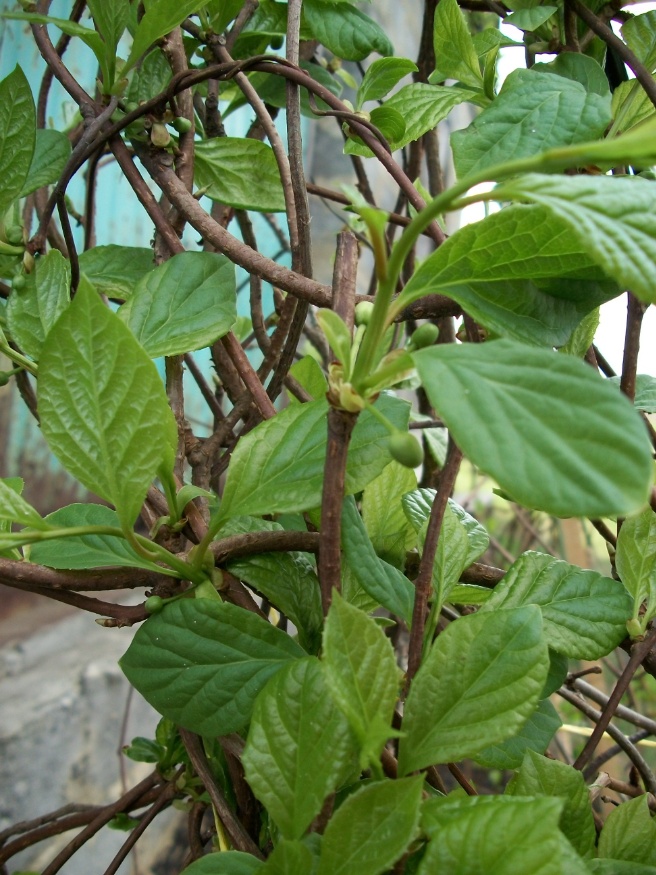
Schisandra (Schisandra chinensis) is a climbing vine native to the cool forests of northeastern Asia. Its slender stems wind through shrubs and small trees, producing glossy green leaves that form a lush curtain of foliage during the growing season. In late spring, delicate white or pale pink flowers appear, releasing a subtle fragrance that attracts pollinators. By late summer and autumn, clusters of bright red berries hang from the vine like strings of small jewels.
The fruit of schisandra is famous for its complex flavor profile: sweet, sour, salty, bitter, and pungent, earning the plant its traditional name "five-flavor berry." In herbal traditions throughout China, Korea, and Russia, these berries are prized as an adaptogenic tonic believed to strengthen the body's resistance to stress and fatigue.
Beyond its medicinal reputation, schisandra adds ornamental value to woodland gardens and edible landscapes. The vines grow vigorously when provided with support and dappled light, producing abundant berries under favorable conditions. As both a functional herb and a graceful climbing plant, schisandra bridges the worlds of ornamental horticulture and traditional medicine, offering beauty as well as a long history of cultural use.
Traditional Use
Folk Use
Chinese Medicine
Combinations
Precautions
| Medicinal Species | Schisandra chinensis |
|---|---|
| Tastes | bitter, sweet, salty, sour, acrid/pungent |
| Organ Systems | hepatobiliary (liver & gallbladder), respiratory, immune/lymphatic, nervous |
| Thermal Nature | warm |
| Moisture | moistening |
| Parts Used | berries, seeds |
| Preparations | extract, tea/infusion, tincture, powder |
| Organs and Tissue | lungs, liver, blood |