About This Plant

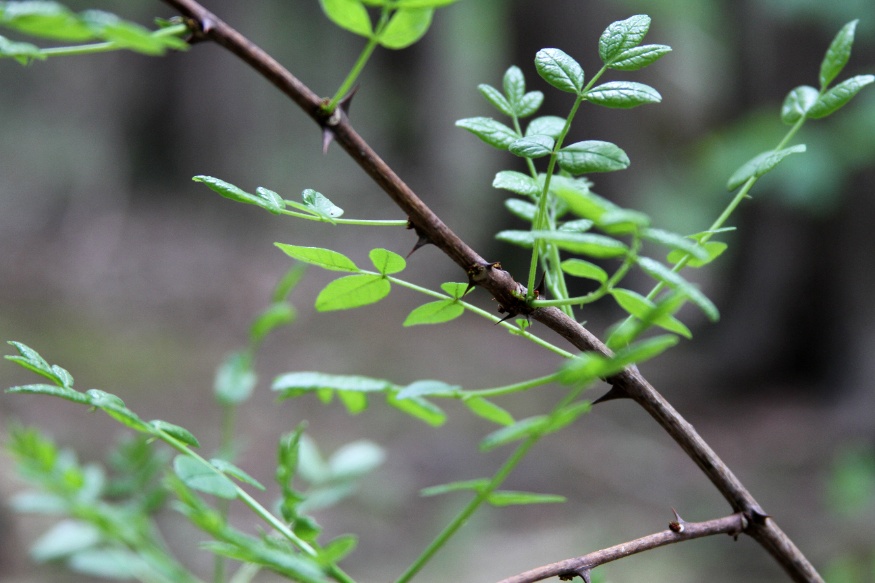
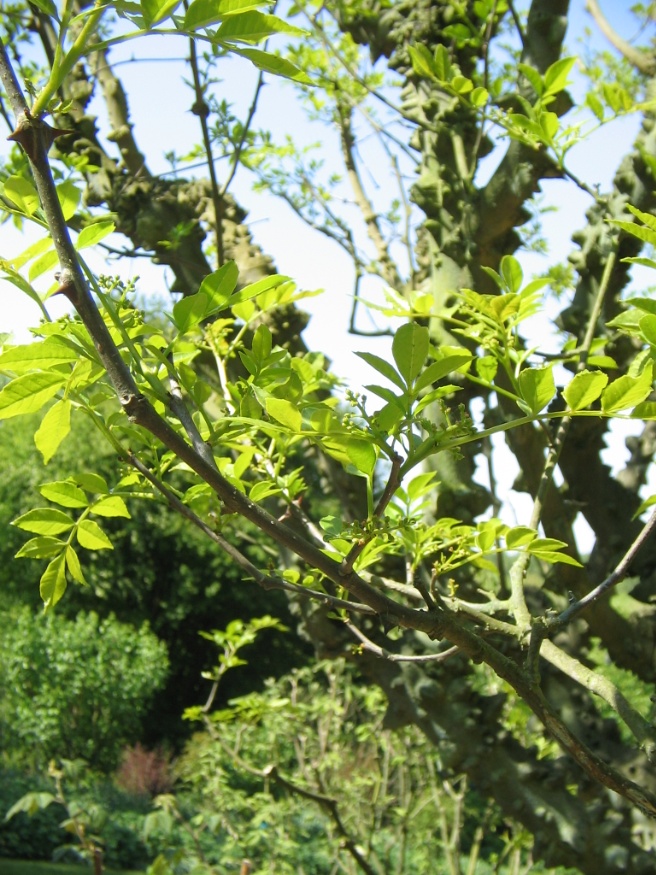
Prickly ash (Zanthoxylum americanum) is a spiny shrub native to woodlands and open slopes of eastern North America. Branched stems are lined with sharp prickles, giving the plant its common name, and aromatic leaves release a citrus-tinged scent when crushed. In late spring and early summer, clusters of small greenish flowers appear, followed by round, yellow-orange berries that hang like tiny ornaments well into autumn.

The bark, berries, and leaves of prickly ash have long been used in traditional medicine. Early settlers and Indigenous peoples brewed teas from the bark for digestive discomfort and circulatory support. The berries were sometimes chewed or steeped to relieve toothache. Ecologically, prickly ash provides nectar for pollinators and food for birds that eat the berries. Its sturdy form and seasonal interest make it a valuable addition to naturalized gardens or open woodlands. Though its spines require careful handling, many appreciate prickly ash for its rugged beauty and historical importance.

Traditional Use

Folk Use

Prickly ash has a long history as a digestive and circulatory stimulant. Native peoples chewed the bark or leaves to relieve toothache and oral discomfort, giving the plant its common name "toothache tree." Decoctions of bark or berries were taken for indigestion, colic, and mild circulation problems. The spicy, pungent properties were also used externally in poultices for joint pain or muscular soreness. Folk traditions emphasized its warming, stimulating qualities for people with cold extremities or sluggish circulation.

Chinese Medicine

Modern TCM interprets prickly ash as warm, acrid, and slightly bitter, acting on the Liver, Stomach, and Heart channels. It is used to stimulate circulation, relieve digestive stagnation, and ease mild nerve or muscular pain. Decoctions of the bark and berries are sometimes combined with warming herbs to improve circulation and reduce cold sensations.

Combinations

Often paired with ginger, cinnamon bark, ginseng, or black pepper to enhance circulation and digestion. External applications may combine prickly ash with cayenne or comfrey for musculoskeletal pain relief. Digestive formulas can also include fennel or cardamom.

Precautions

Avoid in pregnancy or breastfeeding in large amounts. Can cause skin irritation in sensitive individuals. Excessive internal use may overstimulate circulation or digestion. Not for children without supervision.

Medicinal SpeciesZanthoxylum americanum
Tastesbitter, acrid/pungent
Organ Systemscirculatory, digestive, nervous
Thermal Naturewarm
Moisturemoistening
Parts Usedinner bark, leaves, berries
Preparationsdecoction, extract, tea/infusion, tincture, powder
Organs and Tissuestomach, blood

Growing Guide

Prickly ash grows well in full sun to partial shade with well-drained soil. It tolerates a range of soil types, including sandy or clay soils, and is hardy in cold climates. Seeds benefit from cold stratification, and planting in spring gives best establishment. Prickly ash can also be propagated by semi-hardwood cuttings. Mulching helps retain moisture during dry spells. Once established, plants are relatively low-maintenance and form attractive multi-stemmed shrubs that support both wildlife and pollinators.