About This Plant
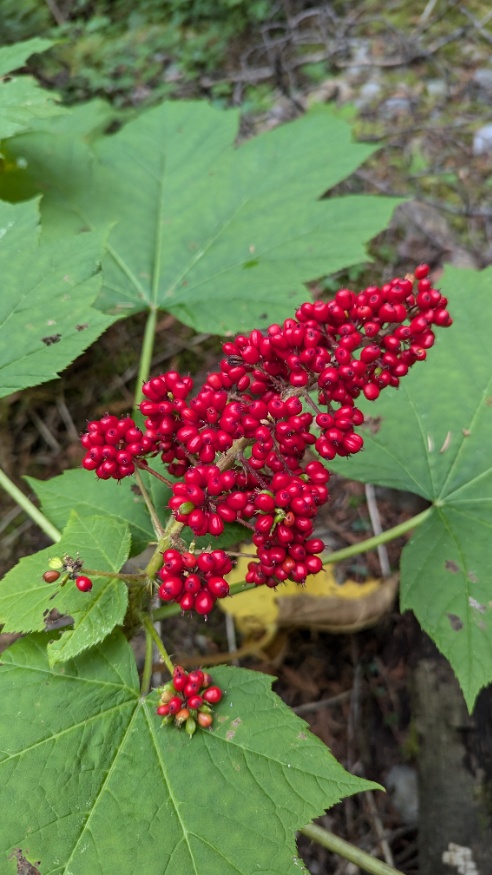
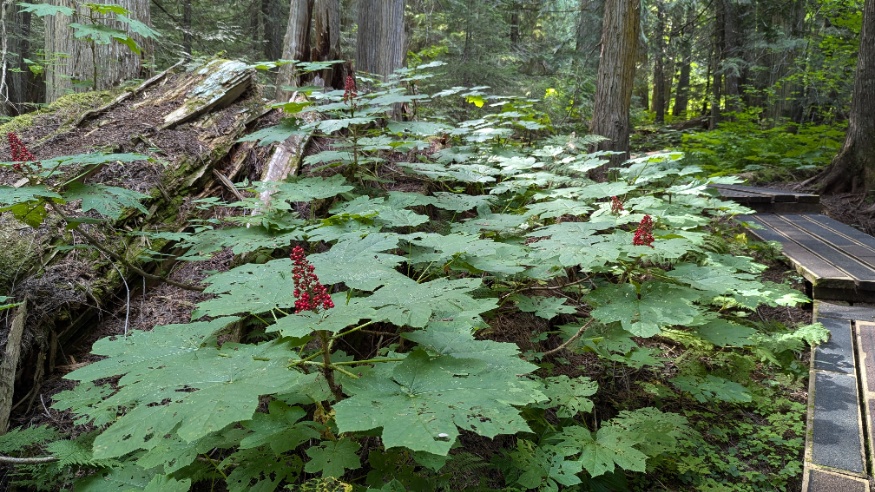
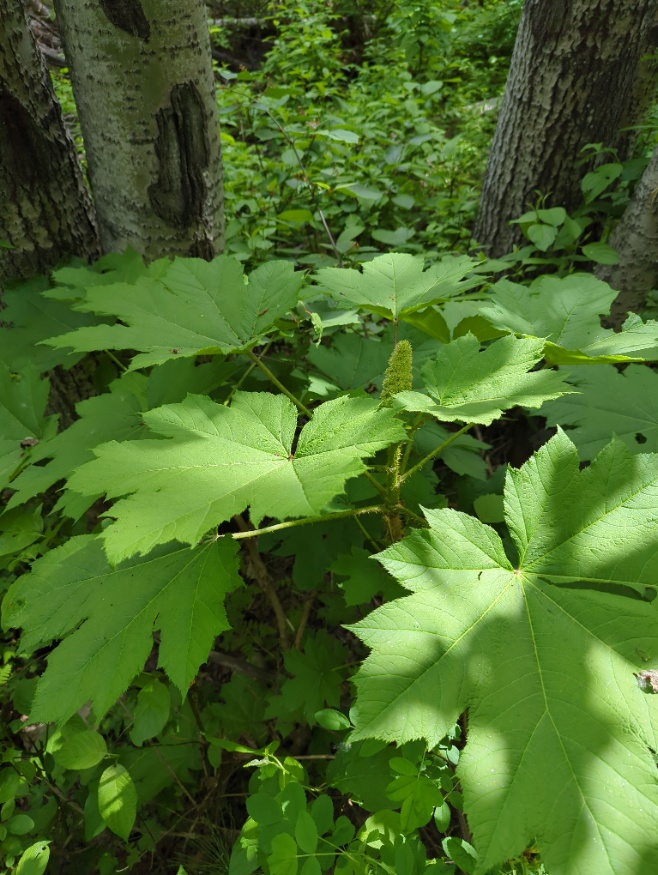
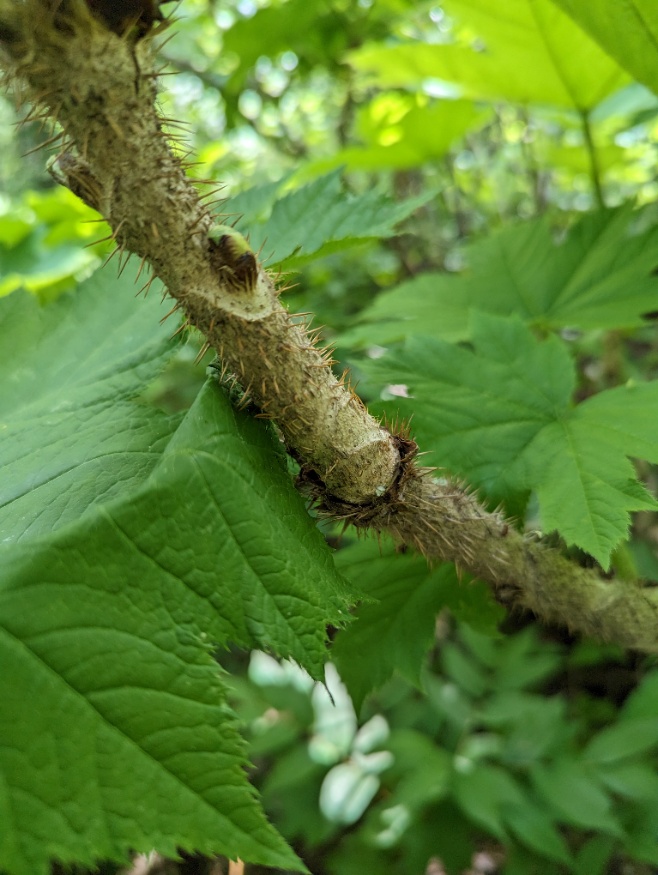
Devil's club (Oplopanax horridus) is a striking shrub native to the moist forests of western North America. It grows upright from thick stems that are densely covered with sharp yellowish spines. The large maple-like leaves can grow more than a foot across and create a dramatic tropical look in shaded forest understories. In summer the plant produces clusters of small greenish flowers that later develop into bright red berries. Devil's club thrives in cool, humid forests where soils remain rich in organic matter. The inner bark of the stem and roots has long been valued as a powerful medicinal material.
Traditional Use
Folk Use
Devil's club has long been one of the most important medicinal plants among Indigenous peoples of the Pacific Northwest and coastal Alaska. The inner bark and root bark were traditionally prepared as decoctions or strong teas used to treat a wide range of illnesses. It was particularly valued for respiratory infections, colds, tuberculosis-like symptoms, digestive complaints, and general weakness. In many traditions it was considered a powerful strengthening tonic similar in reputation to ginseng.
Chinese Medicine
Although devil's club is not part of the classical Chinese pharmacopeia, many modern herbalists compare its actions to adaptogenic tonic herbs used in Chinese medicine. Its warming, stimulating qualities are thought to strengthen qi and support overall vitality. Within a TCM framework it can be interpreted as supporting the Lung and Spleen systems while helping circulate blood and strengthen defensive qi.
Special Chemistry
Devil's club contains polyynes, glycosides, polyphenols, and essential oils that contribute to its antimicrobial, anti-inflammatory, and metabolic effects. Research has shown potential blood-sugar-modulating properties as well as immune-supportive activity.
Signature
The plant's fierce covering of spines creates a strong visual impression of protection and defense. Some herbalists interpret this as symbolic of the plant's role in strengthening the body's defenses and guarding against illness.
Combinations
Often combined with other immune or adaptogenic herbs such as eleuthero, licorice, or medicinal mushrooms. For respiratory conditions it may be used with herbs like wild cherry bark or mullein.
Precautions
The strong inner bark can irritate mucous membranes if used in excessive amounts. Because of its stimulating properties it should be used cautiously in people with high blood pressure or during pregnancy unless supervised by a practitioner.
| Medicinal Species | Oplopanax horridus |
|---|---|
| Tastes | bitter, acrid/pungent |
| Organ Systems | circulatory, digestive, respiratory, immune/lymphatic, constitution |
| Thermal Nature | warm |
| Moisture | drying |
| Parts Used | roots, stems, inner bark |
| Preparations | decoction, extract, tincture, capsule, powder, wash |
| Organs and Tissue | lungs, stomach, spleen, blood |
Growing Guide
Devil's club grows best in cool, moist forest conditions similar to its native habitat along the Pacific Northwest coast and interior mountain forests. It prefers rich, humus-filled soils that remain consistently moist but well drained. The plant thrives in deep shade or partial shade and does poorly in hot, exposed sites. Seeds benefit from cold moist stratification and may germinate slowly. Propagation is often easier by dividing root suckers or rhizomes from established plants. Because the stems are heavily armed with sharp spines, careful handling is required when planting or maintaining the plant.