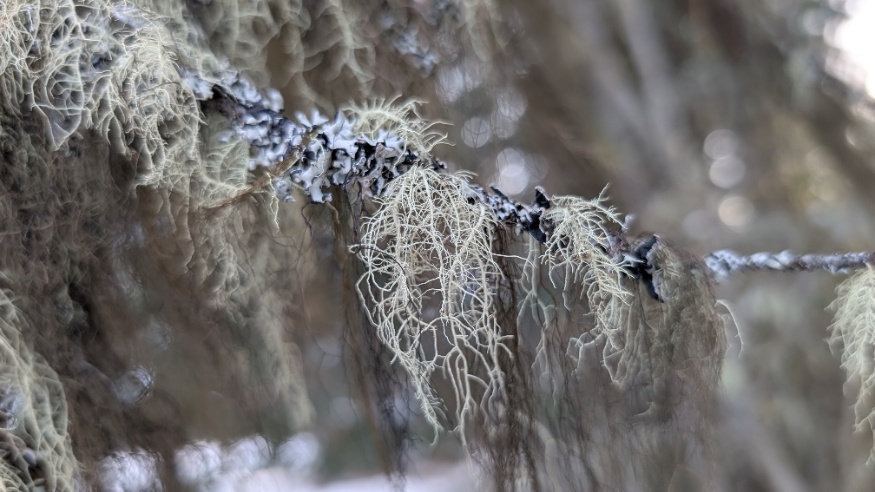
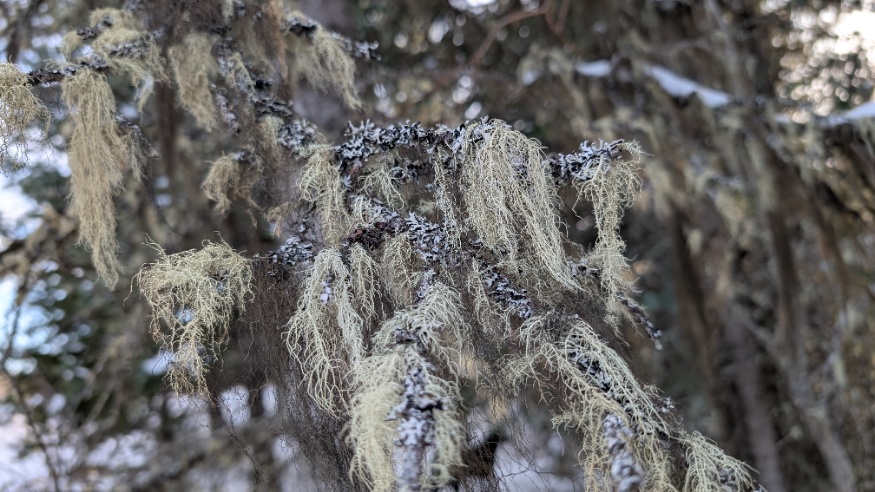
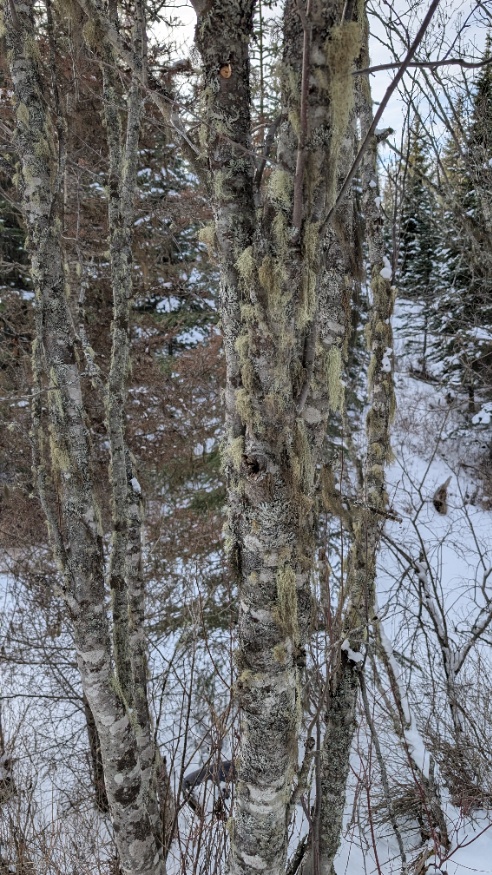
Usnea is a group of fruticose lichens found growing on tree branches throughout temperate and boreal forests of the world. Rather than being a true plant, it is a symbiotic organism composed of a fungus living in partnership with photosynthetic algae. This relationship allows it to grow slowly on bark and branches without drawing nutrients directly from the host tree.
The lichen forms pale green to gray-green strands that often hang in long beard-like clusters from branches, giving rise to the common name "old man's beard." A distinctive feature of Usnea species is the thin elastic core running through the center of each strand, which can be revealed by gently pulling the lichen apart.
Usnea species grow very slowly and are highly sensitive to pollution, making them important indicators of clean air and healthy forests. They are commonly found in cool, moist woodland environments where humidity and airflow support their growth.
For centuries Usnea has been valued as a medicinal lichen due to its remarkable antimicrobial activity. It has traditionally been used for respiratory infections, wound care, and immune support, and continues to be widely used by modern herbalists as a natural antibacterial and antifungal remedy.
Usnea has been widely used in traditional herbal medicine across Europe, Asia, and North America. The lichen was commonly gathered from trees and used both internally and externally as a powerful antimicrobial remedy. In many European traditions it was used to treat wounds, infections, and ulcers, often applied as a poultice or wash. Because of its strong action against bacteria and fungi, it was also used for sore throats, lung infections, and chronic coughs. Some herbal traditions prepared decoctions or tinctures to support respiratory health or address digestive infections. Indigenous peoples of North America used various Usnea species as wound dressings, recognizing their ability to help prevent infection and promote healing. The lichen was also used as an emergency bandage because its fibrous texture could absorb blood and protect damaged tissue.
Usnea is not a classical herb of ancient Chinese materia medica, but modern practitioners sometimes incorporate it into herbal practice due to its strong antimicrobial properties. In energetic terms it is considered bitter and cooling, helping to clear heat and toxins from the body. It is particularly valued for infections involving the lungs, throat, and skin. Herbalists may use it to help resolve heat-related respiratory conditions such as sore throat, bronchial irritation, or lung infections. It is also used topically to clear toxic heat from the skin and assist healing of infected wounds. From a functional perspective it supports the immune system while directly inhibiting microbial growth. In modern integrative herbal practice it is sometimes used in formulas addressing chronic infections, fungal conditions, or inflammatory respiratory disorders.
Usnea contains usnic acid, a well-known antimicrobial compound with strong antibacterial and antifungal properties. It also contains lichen acids, polyphenols, and polysaccharides that contribute to antioxidant, immune-modulating, and anti-inflammatory activity.
The long, beard-like strands hanging from tree branches resemble hair or connective tissue, suggesting its traditional use for skin, wounds, and respiratory passages. Its growth in clean forests has also symbolized purification and protection from infection.
Usnea is commonly combined with echinacea, goldenseal, oregano, thyme, or elderberry in antimicrobial formulas. For respiratory conditions it may be paired with mullein, licorice root, or elecampane to support lung health and soothe irritated tissues.
Usnea is potent and should not be used in excessive doses. Some concentrated extracts containing isolated usnic acid have been associated with liver toxicity when misused. Whole-herb preparations are generally safer but should still be used with caution. Avoid during pregnancy and breastfeeding unless guided by a qualified practitioner.
| Medicinal Species | Usnea barbata, Usnea longissima, Usnea filipendula, Usnea hirta, Usnea subfloridana |
|---|---|
| Tastes | bitter, astringent |
| Organ Systems | digestive, respiratory, immune/lymphatic, integumentary (skin, hair, nails) |
| Thermal Nature | cool |
| Moisture | drying |
| Preparations | decoction, extract, salve, tea/infusion, tincture, powder, wash, compress |
| Organs and Tissue | lungs, stomach, mucosa, blood |
Usnea is a lichen—a symbiotic partnership between a fungus and algae—and cannot be cultivated in the same way as plants or typical fungi. It grows naturally on tree branches in clean, unpolluted forest environments with good air circulation and moderate humidity. Most species grow slowly on conifers and hardwoods, especially spruce, fir, pine, birch, and oak. Because lichens are extremely slow growing and sensitive to pollution, harvesting should be done sparingly. Sustainable gathering focuses on collecting pieces that have fallen naturally during storms or from dead branches rather than removing large quantities from living trees.