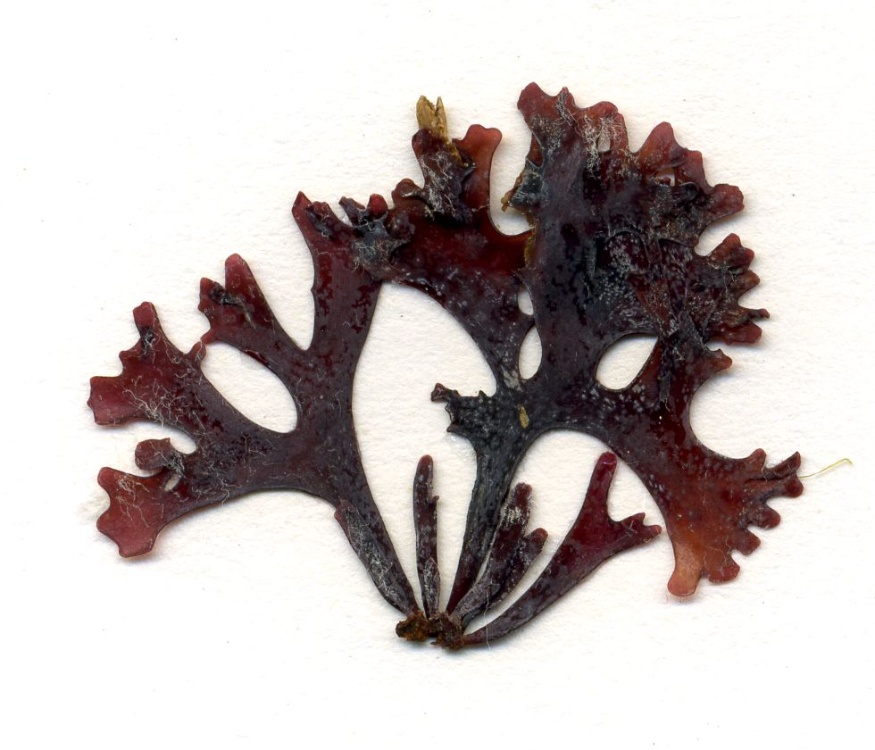
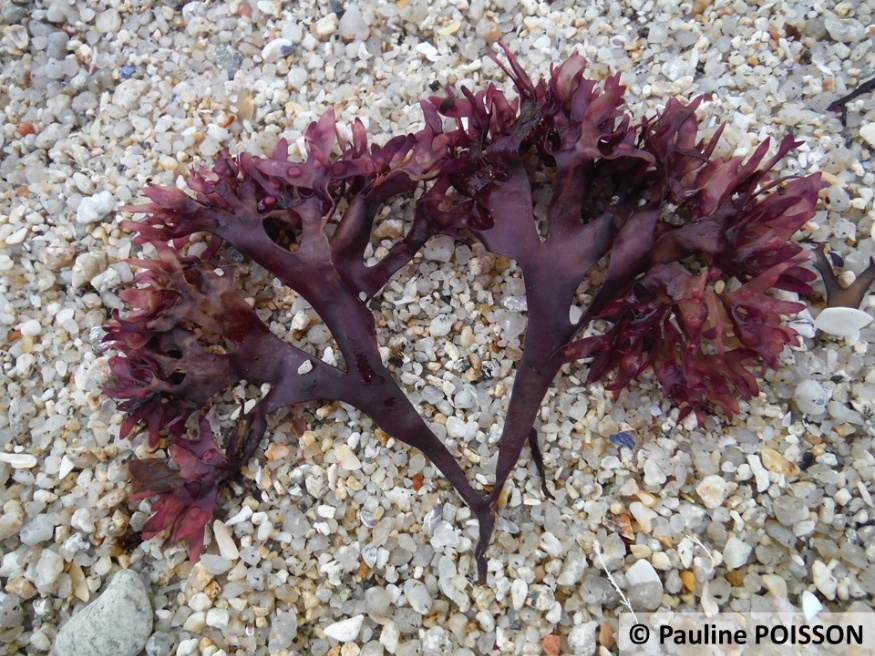
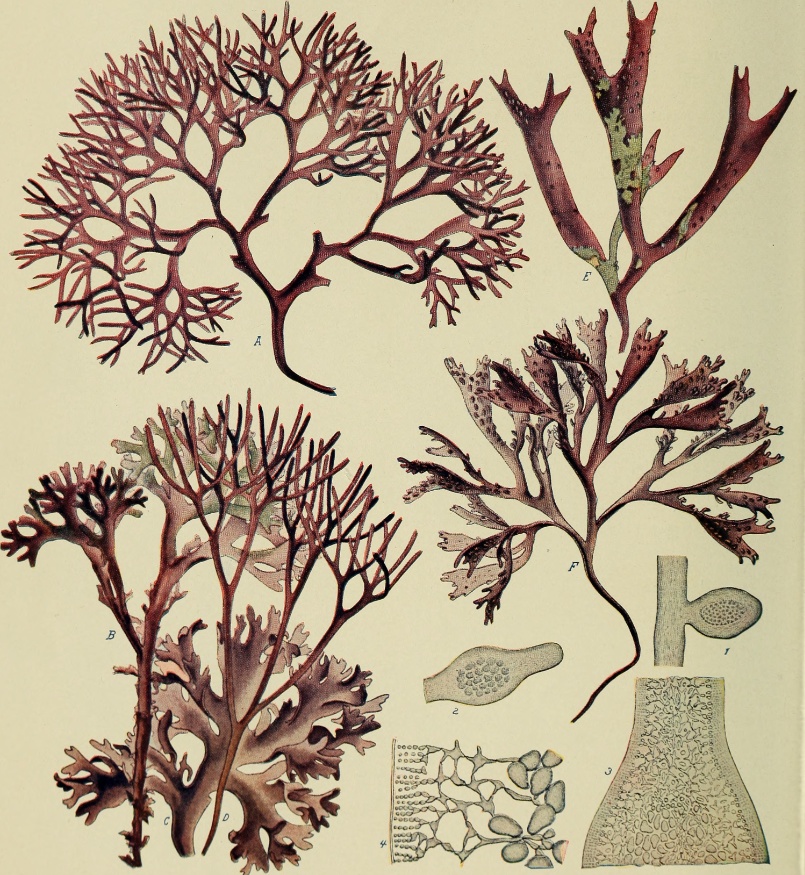
Irish moss (Chondrus crispus) is a red seaweed native to the rocky coasts of the North Atlantic, including parts of Europe and North America. It grows in intertidal and shallow subtidal zones, firmly attached to rocks where it is exposed to tidal fluctuations. The plant forms dense mats of branching, frond-like thalli that range in color from deep red to purplish green depending on light and water conditions.
Unlike typical land plants, Irish moss is a non-vascular alga that absorbs nutrients directly from seawater. Its thick, gelatinous fronds allow it to retain water and provide a protective layer, both for itself and for small marine organisms that shelter within its mats. Growth is slow, and mature plants can persist for several years under stable conditions.
Historically, Irish moss has been valued as a food source, a medicinal herb, and a functional ingredient in foods and remedies due to its carrageenan content. It is commonly harvested for use in gels, thickeners, and soothing decoctions. Its combination of resilience, nutritional richness, and gentle medicinal properties makes it a notable seaweed in both traditional folk and modern herbal applications.
Irish moss has a long history of use in coastal communities of Ireland, Scotland, and North America as both a food and medicinal remedy. Traditionally, the seaweed was boiled to create a thick gelatinous preparation used to soothe coughs, sore throats, and bronchial irritation. It was also consumed as a nourishing food during times of scarcity, valued for its mineral content, particularly iodine. Irish moss was used externally as a poultice or wash to protect and heal skin irritations, wounds, and burns due to its mucilaginous texture. Its gentle, moistening properties made it a traditional remedy for digestive discomfort, supporting the stomach and intestines, and helping alleviate mild constipation or irritation. Folk preparations often included drying and powdering the seaweed to be added to porridges, broths, or tonics.
In modern Chinese herbal practice, Irish moss is considered a cooling, moistening herb with mild nutritive and soothing properties. It is used primarily to support the Lung and Stomach systems, helping to moisten mucous membranes and relieve dryness or irritation. Its gentle action supports respiratory health, soothing coughs and phlegm, while its mucilaginous nature can aid digestion and protect the intestinal lining. Externally, it may be applied to promote skin hydration and help heal minor burns, rashes, or irritations. Though not a classical herb, Irish moss is valued for its rich mineral content, particularly iodine, and its general tonic qualities for strengthening and restoring bodily fluids.
Irish moss contains carrageenan, a polysaccharide that forms a thick gelatin when boiled, along with other sulfated polysaccharides, minerals, and trace vitamins. These compounds contribute to its mucilaginous, soothing, and water-retaining properties, making it useful both internally and externally for protective and medicinal applications.
The red, branching fronds resemble delicate lace or a soft mat, symbolizing its traditional use to soothe and protect tissues. Its growth on harsh rocky shores reflects resilience and the ability to thrive in challenging environments.
Irish moss is commonly combined with licorice root, marshmallow root, or slippery elm in respiratory formulas. In skin preparations it may be blended with aloe, oatstraw, or comfrey for moistening and soothing effects. In nutritional tonics, it is sometimes paired with seaweeds like kelp or bladderwrack for mineral enrichment.
Generally safe when used as food or in herbal preparations. Excessive ingestion may affect iodine-sensitive individuals or those with thyroid disorders. People with seafood allergies should exercise caution. Overharvesting wild populations should be avoided to preserve natural stands.
| Medicinal Species | Chondrus crispus |
|---|---|
| Tastes | sweet, salty, bland |
| Organ Systems | digestive, urinary, integumentary (skin, hair, nails) |
| Thermal Nature | cool |
| Moisture | moistening |
| Preparations | decoction, extract, tea/infusion, bath, powder, wash, syrup |
| Organs and Tissue | stomach, kidneys, mucosa |
Irish moss (Chondrus crispus) is a red seaweed that grows naturally along the rocky coasts of the North Atlantic. It thrives in intertidal zones where it is exposed to both seawater and air, attached firmly to rocks or other hard surfaces. Cultivation requires cool, clean saltwater environments with good water flow. It spreads by natural fragmentation and can also be propagated in aquaculture setups by attaching small pieces to ropes or submerged substrates. Growth is slow, and plants are harvested sustainably to ensure continued population health. Optimal conditions include moderate light, regular tidal exchange, and protection from strong wave impact during establishment.