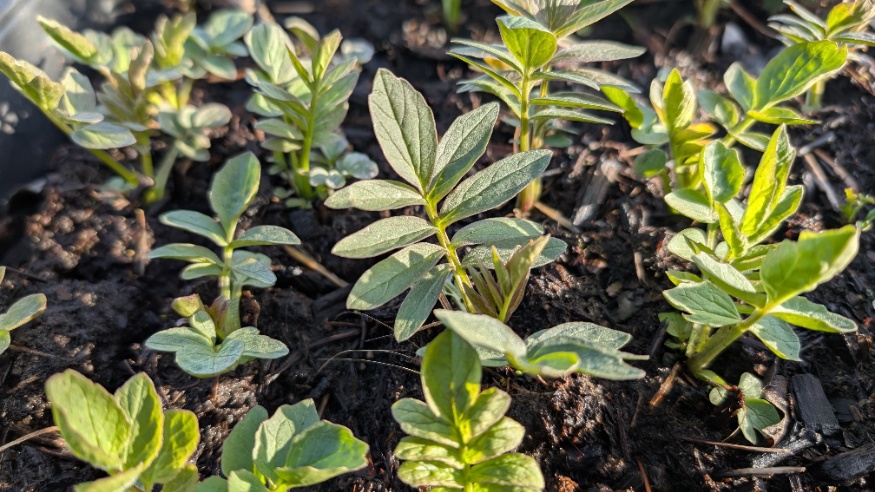
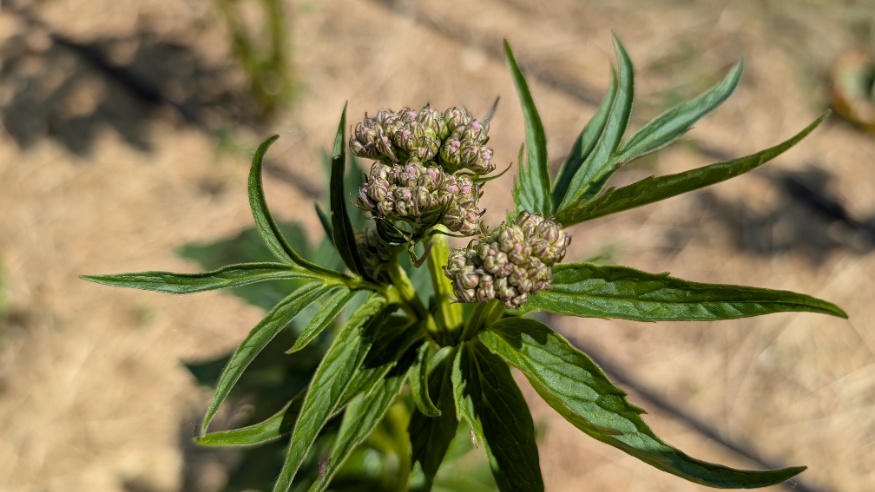
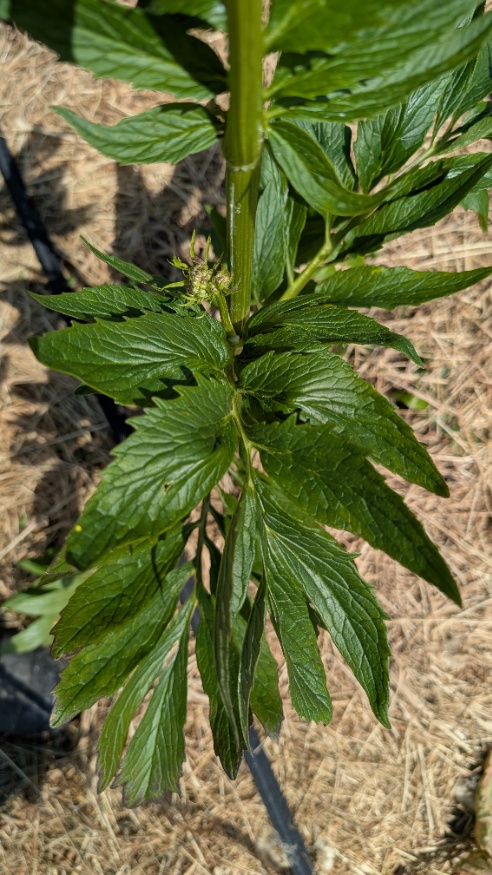
About This Plant
Valerian (Valeriana officinalis) is a tall perennial herb known for its clusters of soft white to pale pink flowers and its strong, distinctive root aroma. The plant forms upright stems with divided leaves, creating a light and airy appearance in the garden. During summer, its flower clusters attract pollinators and add a subtle visual presence.
It grows naturally in moist meadows and along stream edges, thriving in soils that retain consistent moisture. Once established, valerian can spread through self-seeding and may form loose colonies over time.
The root of valerian is the most valued part of the plant and has a long history of use in traditional herbal practices. Its strong scent becomes more pronounced when dried, a characteristic often associated with its calming properties.
Valerian has been widely used to support relaxation and rest, making it a well-known herb for the nervous system. Its combination of delicate flowers and potent roots reflects the balance between its gentle appearance and its deeply grounding effects.
Traditional Use
Folk Use
Chinese Medicine
Combinations
Precautions
| Medicinal Species | Valeriana officinalis |
|---|---|
| Tastes | bitter, acrid/pungent |
| Organ Systems | nervous |
| Thermal Nature | warm |
| Moisture | drying |
| Parts Used | roots |
| Preparations | tea/infusion, tincture, capsule |
| Organs and Tissue | brain |