About This Plant
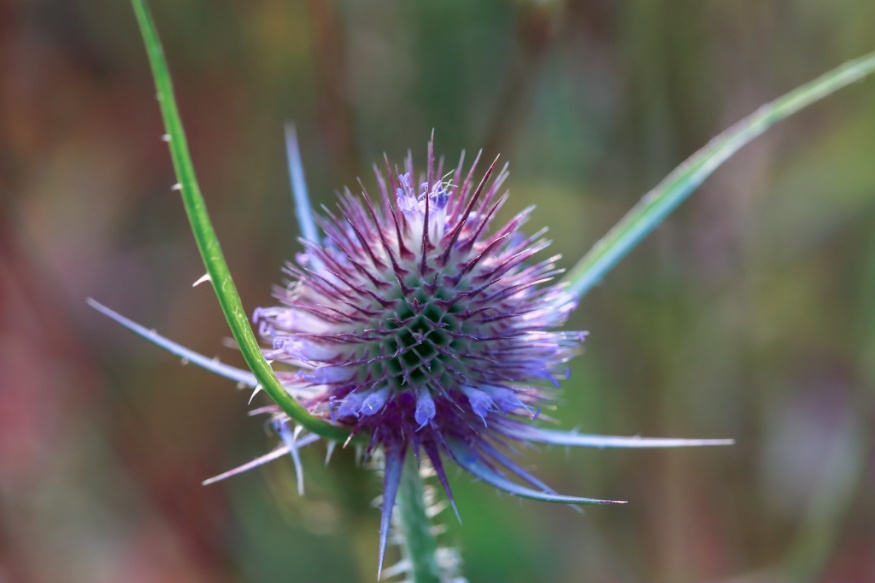
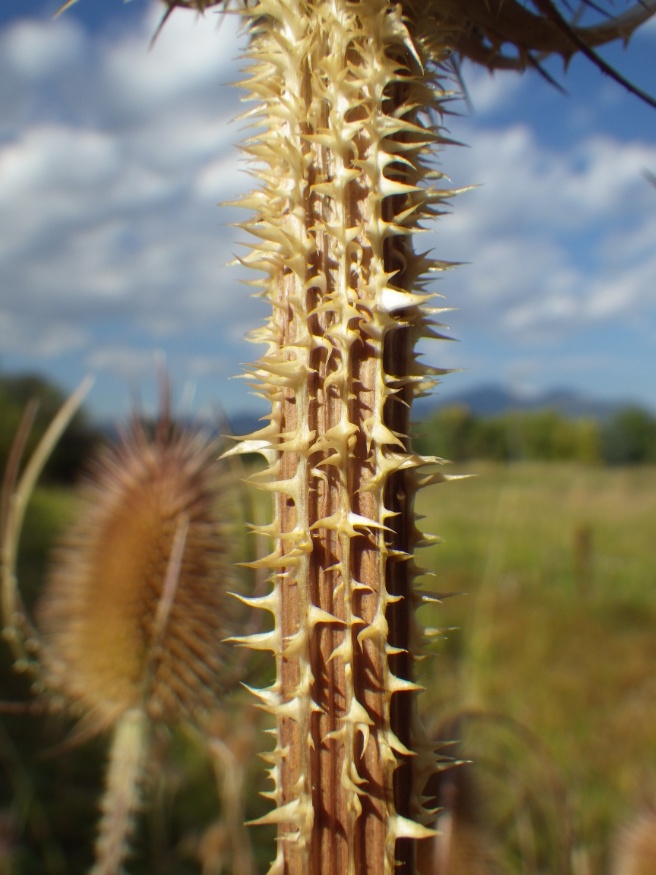
Teasel (Dipsacus fullonum) is a striking biennial plant known for its tall stature and distinctive seed heads. In its first year, the plant forms a low rosette of leaves close to the ground. During the second year, it sends up a strong, spiny stem that can reach several feet in height, topped with oval flower heads covered in tiny purple blossoms.
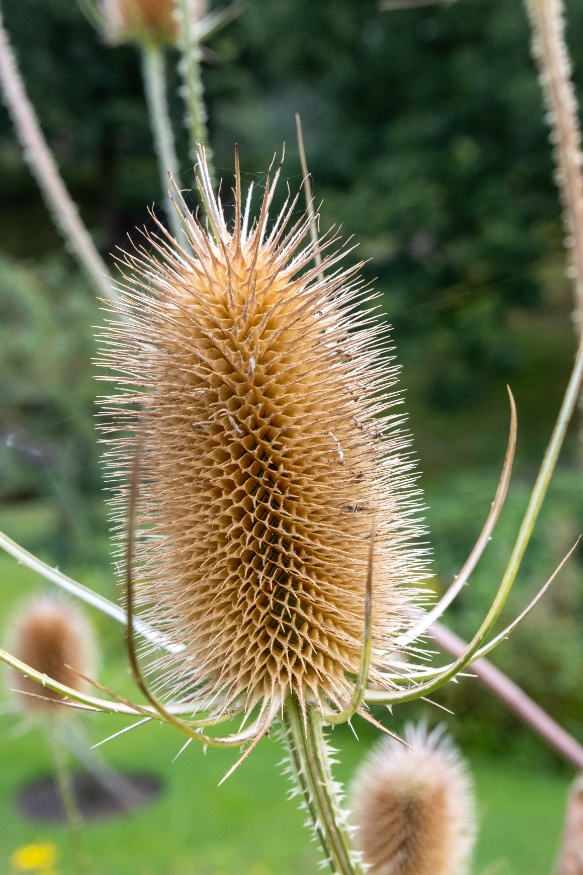
The flowers bloom in bands that move gradually along the head, creating a unique visual effect. As the plant matures, the seed heads dry into rigid, bristled structures that have historically been used in textile processing to raise the nap of wool cloth.
Teasel thrives in open, sunny environments and often appears along roadsides and in disturbed soils. Its tall stems provide structure in the landscape, while the flowers attract pollinators and the seeds feed birds later in the season. Although sometimes considered invasive in certain regions, teasel remains a plant of interest for its ecological role and long history of practical and medicinal use.
Traditional Use
Folk Use
Chinese Medicine
Combinations
Precautions
| Medicinal Species | Dipsacus fullonum |
|---|---|
| Tastes | bitter |
| Organ Systems | immune/lymphatic, skeletal |
| Thermal Nature | neutral |
| Moisture | drying |
| Parts Used | roots |
| Preparations | decoction, tincture |
| Organs and Tissue | muscle & connective tissue |