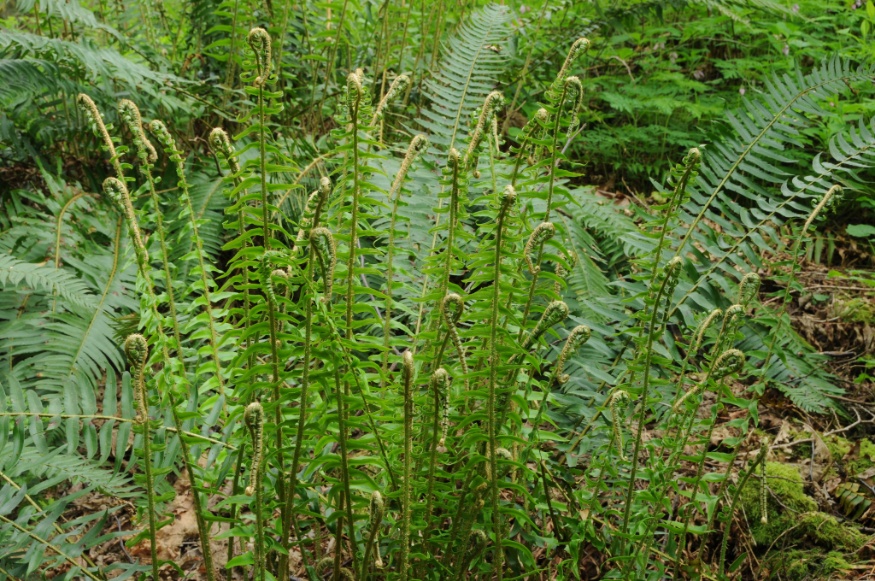
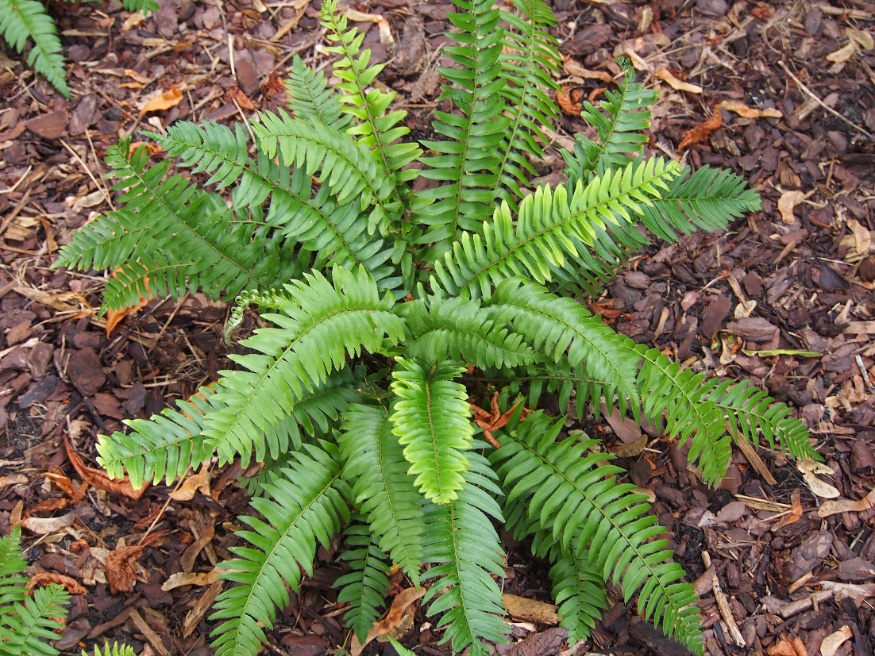

Sword fern (Polystichum munitum) is a large evergreen fern native to the moist forests of western North America. It is one of the most recognizable understory plants of Pacific coastal forests, often forming dense colonies beneath towering conifers such as Douglas fir, western red cedar, and hemlock.
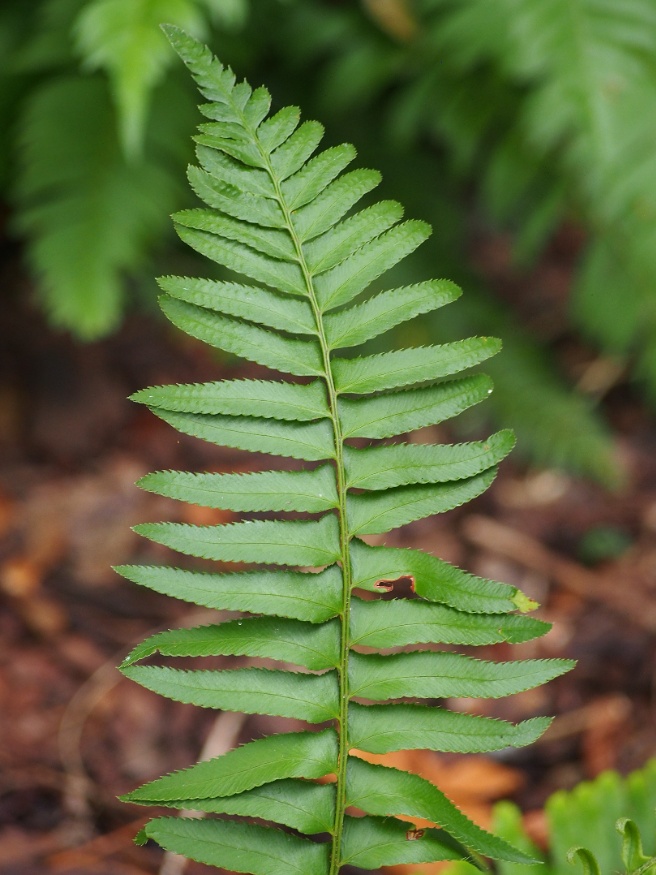
The plant grows from a central rhizome that produces long arching fronds arranged in a circular clump. Each frond is composed of many small pointed leaflets that resemble the shape of tiny swords, giving the plant its common name. Mature fronds may reach several feet in length and remain green throughout the year, providing important winter structure in forest landscapes.
Sword fern thrives in shaded environments with rich organic soil and consistent moisture. In natural forests it often grows among mosses, fallen logs, and deep leaf litter, where it helps stabilize soil and maintain forest floor humidity.
Because of its elegant form and tolerance of shade, sword fern is widely used in woodland gardens and naturalized landscapes. Its evergreen foliage provides year-round texture while also supporting ecological health in forest ecosystems.
Sword fern has been used traditionally by several Indigenous peoples of the Pacific Northwest for both practical and medicinal purposes. The fronds were widely used as bedding, insulation, and food storage wrapping due to their durability and moisture resistance. Medicinally, the rhizomes were sometimes prepared as a decoction to address digestive discomfort and internal inflammation. The astringent qualities of the plant made it useful for mild stomach ailments and diarrhea. Poultices made from crushed fronds or root preparations were occasionally applied to wounds, sores, or skin irritations to help cleanse and protect the affected area. Some traditions also used preparations of the fern to reduce minor swelling or inflammation. While sword fern was not among the most potent medicinal plants of the region, it served as a readily available and versatile remedy in forest environments.
Sword fern is not a traditional herb in classical Chinese medicine, but its mild astringent and cooling qualities resemble certain herbs used to clear heat and soothe inflamed tissues. Energetically, it can be considered slightly bitter and cooling, helping to calm irritated mucous membranes and reduce mild digestive inflammation. Its astringent nature suggests an ability to stabilize tissues and reduce excessive discharge or irritation in the digestive tract. In a functional sense it may support the Stomach and Spleen by gently tightening tissues and moderating digestive disturbances. Externally, its cooling and cleansing qualities can help calm inflamed skin and promote recovery of irritated tissues. In modern herbal interpretations, sword fern is viewed as a mild supportive herb rather than a primary medicinal, often used in gentle formulas aimed at soothing inflammation and supporting tissue repair.
Sword fern contains tannins, bitter compounds, and various phenolic substances that contribute to its mild astringent and anti-inflammatory effects. Like many ferns, it also contains protective secondary metabolites that help defend the plant from pests and environmental stress.
The strong upright fronds resemble blades or protective shields, suggesting resilience and protection. Growing in dense forest shade, the plant symbolizes stability and endurance in cool, sheltered environments.
Sword fern is sometimes combined with plantain, yarrow, or comfrey in topical preparations intended for skin irritation, minor wounds, or inflammation. In mild digestive formulas it may be paired with chamomile or blackberry leaf for gentle astringent support.
Large internal doses of fern roots may cause digestive irritation. Some fern species contain compounds that can be toxic if consumed in significant quantities, so sword fern should be used in moderation and primarily under knowledgeable guidance.
| Medicinal Species | Polystichum munitum, Polystichum acrostichoides |
|---|---|
| Tastes | bitter, astringent |
| Organ Systems | digestive, integumentary (skin, hair, nails) |
| Thermal Nature | cool |
| Moisture | drying |
| Parts Used | roots, leaves |
| Preparations | decoction, powder, wash, compress |
| Organs and Tissue | stomach, mucosa, blood |
Sword fern grows best in moist woodland soils rich in organic matter. It prefers partial to full shade and thrives under the canopy of trees in forest gardens or shaded landscapes. Provide well-drained soil that retains moisture but does not remain waterlogged. Mulching with leaf litter or compost helps mimic its natural forest habitat and supports healthy growth. Plants can be propagated by dividing mature clumps in spring or fall. Spores can also be collected and propagated, though this method is slower and more specialized. Once established, sword fern is hardy and requires little maintenance.