About This Plant
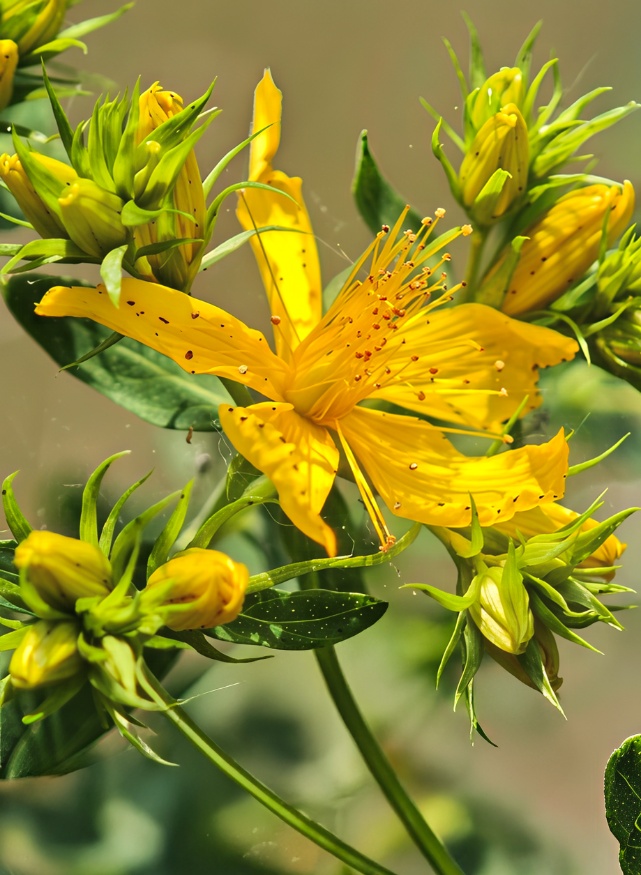
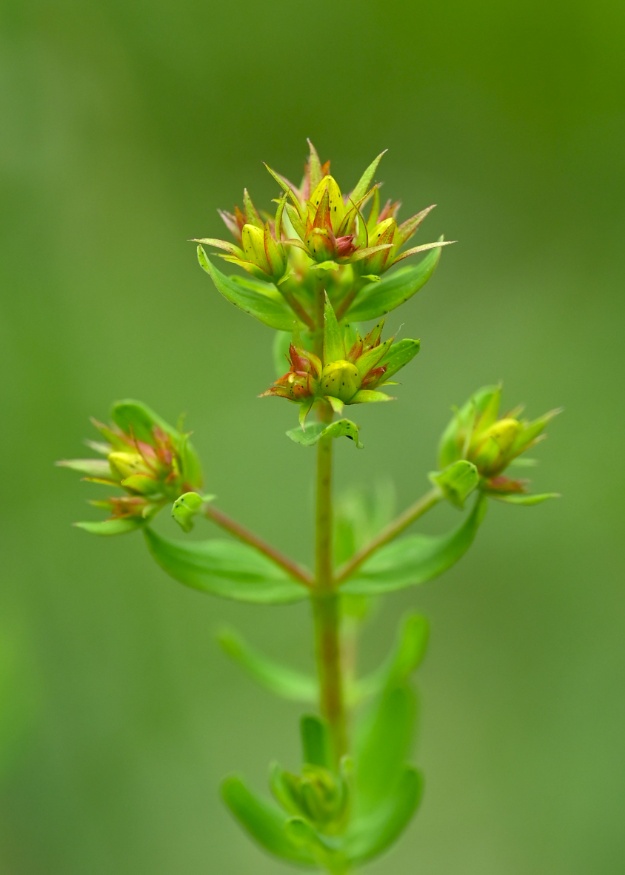
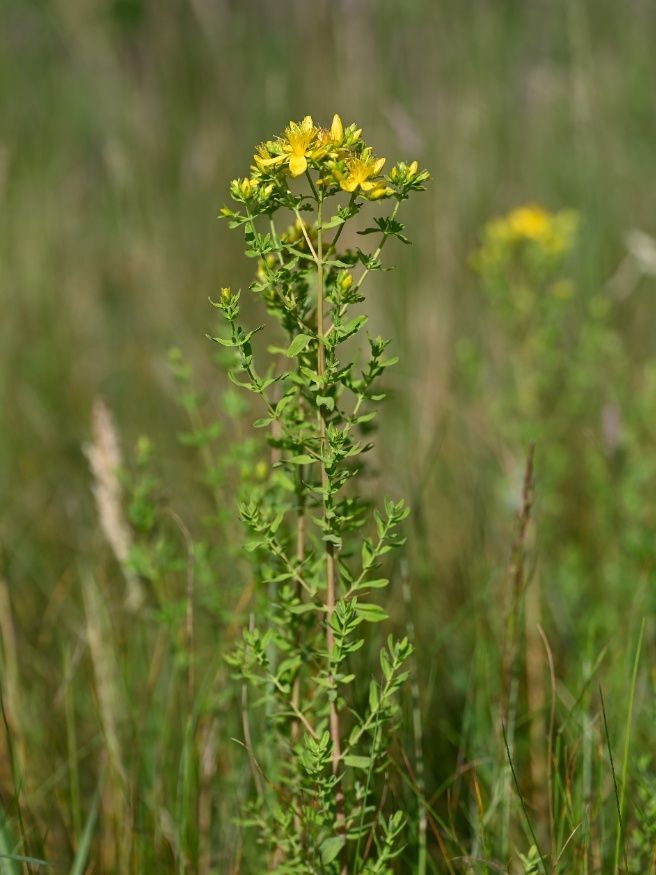
St. John's wort (Hypericum perforatum) is a bright flowering herb that thrives in sunny fields, roadsides, and open hillsides. Its upright stems carry narrow green leaves dotted with tiny translucent glands that appear as small perforations when held to the light. In midsummer, the plant produces clusters of vivid yellow flowers with numerous golden stamens that attract bees and other pollinators.
The flowering tops have long been valued in traditional herbal medicine. When the blossoms are crushed, they release a deep red pigment that colors infused oils used for skin care and wound healing. Herbalists have also used preparations of the plant to support emotional balance and nervous system health.
St. John's wort grows easily in well-drained soils and often naturalizes in open landscapes. Its cheerful flowers and resilient nature have helped it spread widely beyond its native range. Though simple in appearance, the plant carries a rich cultural history and remains one of the most widely recognized medicinal herbs in traditional European herbalism.
Traditional Use
Folk Use
Chinese Medicine
Combinations
Precautions
| Medicinal Species | Hypericum perforatum |
|---|---|
| Tastes | bitter, astringent |
| Organ Systems | immune/lymphatic, nervous, integumentary (skin, hair, nails) |
| Thermal Nature | neutral |
| Moisture | drying |
| Parts Used | flowers |
| Preparations | oil, tea/infusion, tincture |
| Organs and Tissue | blood |