About This Plant
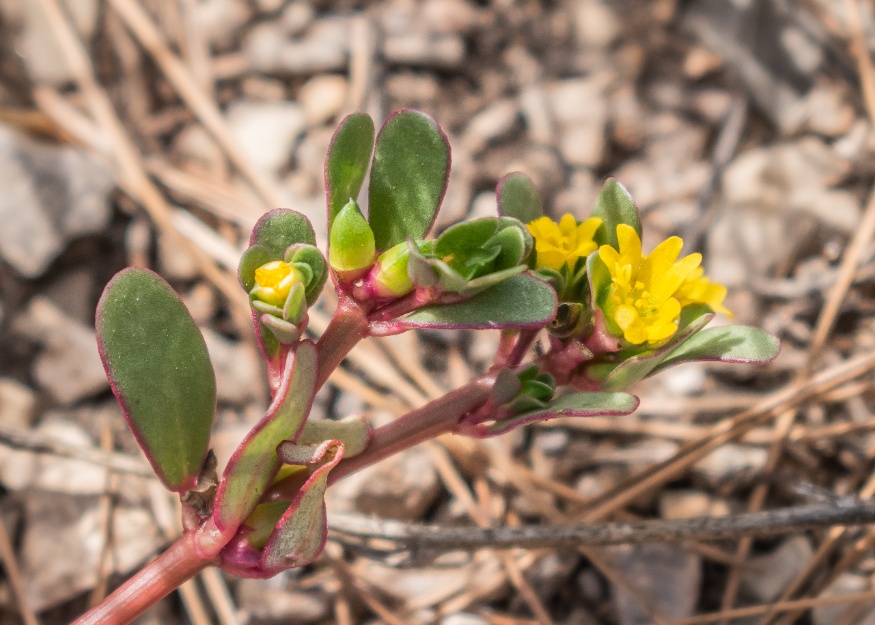
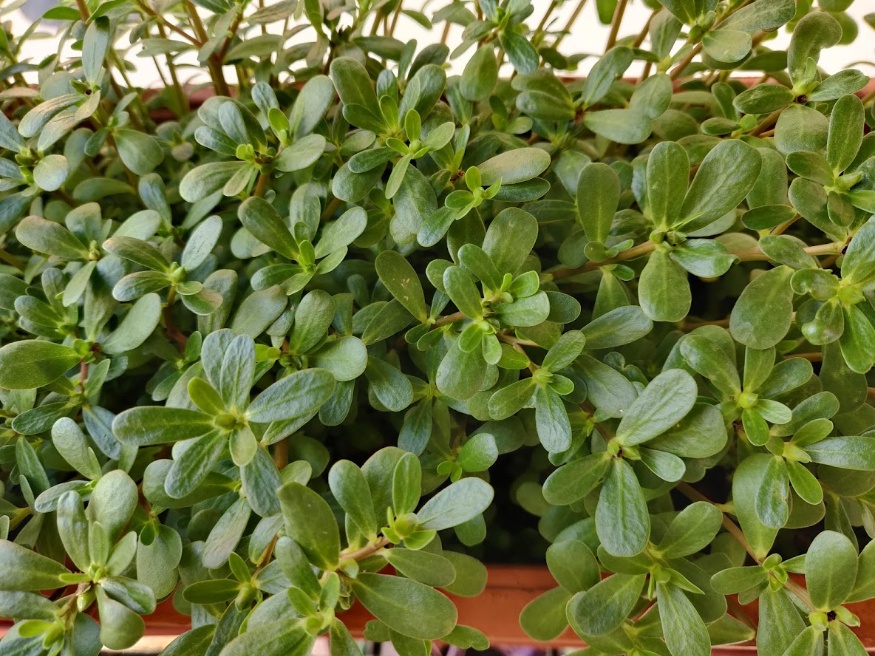
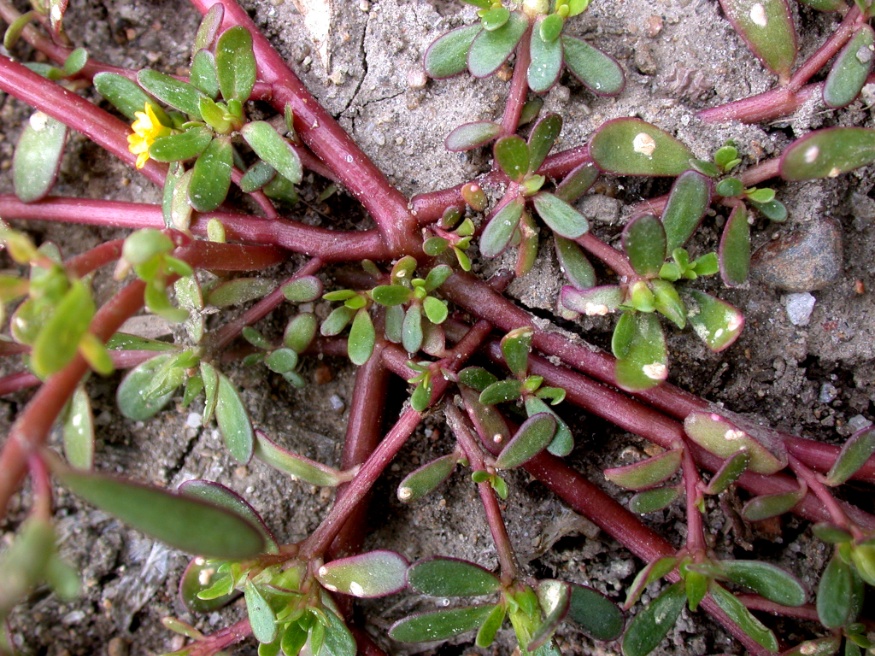
Purslane (Portulaca oleracea) is a low-growing, succulent annual herb that thrives in warm, sunny environments. Its smooth, reddish stems spread outward along the ground, forming mats of fleshy, oval leaves that store water and allow the plant to tolerate heat and drought with ease.
Often found in gardens, sidewalks, and disturbed soils, purslane is highly adaptable and can quickly establish itself in open spaces. Small yellow flowers appear during the warmest part of the day, opening briefly in sunlight before closing again.
Despite often being regarded as a common weed, purslane has a long history as a nutritious food plant. It is rich in beneficial compounds and has been eaten in many cultures around the world, either raw or cooked. Its slightly tangy flavor makes it a refreshing addition to salads and other dishes.
In addition to its culinary uses, purslane has been valued in traditional medicine for its cooling and hydrating qualities. Its resilience and nutritional value make it an important plant in both wild and cultivated landscapes.
Traditional Use
Folk Use
Chinese Medicine
Combinations
Precautions
| Medicinal Species | Portulaca oleracea |
|---|---|
| Tastes | salty, sour |
| Organ Systems | circulatory, digestive, urinary |
| Thermal Nature | cool |
| Moisture | moistening |
| Parts Used | stems, leaves |
| Preparations | tea/infusion |
| Organs and Tissue | blood |