
About This Plant
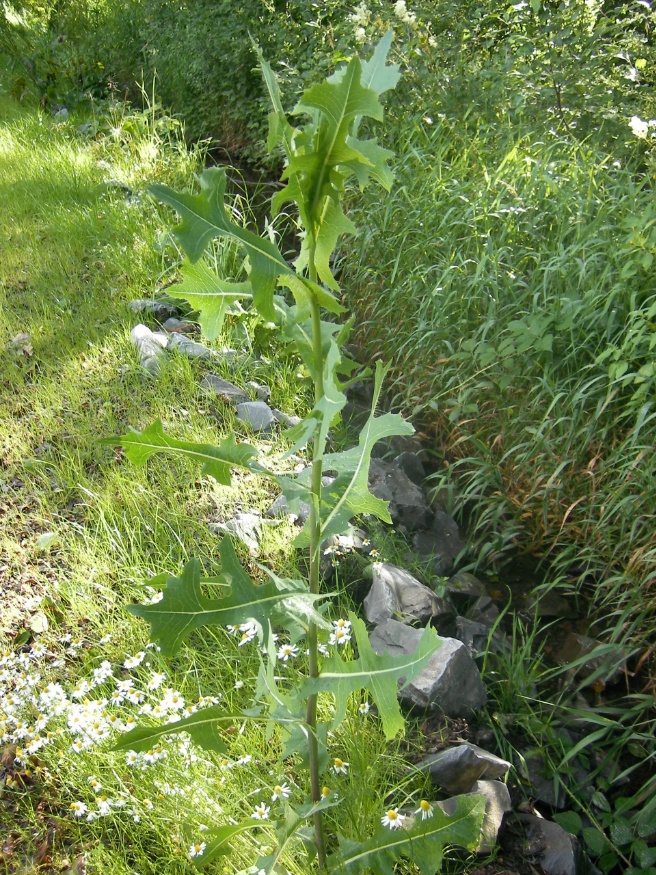
Prickly lettuce (Lactuca serriola) is a tall annual or biennial herb that commonly appears in open fields, roadsides, and other disturbed environments. The plant begins as a low rosette of leaves but soon sends up a rigid central stem that may reach several feet in height. Its leaves are narrow and deeply lobed, often bearing small prickles along the midrib and edges that give the plant its common name.
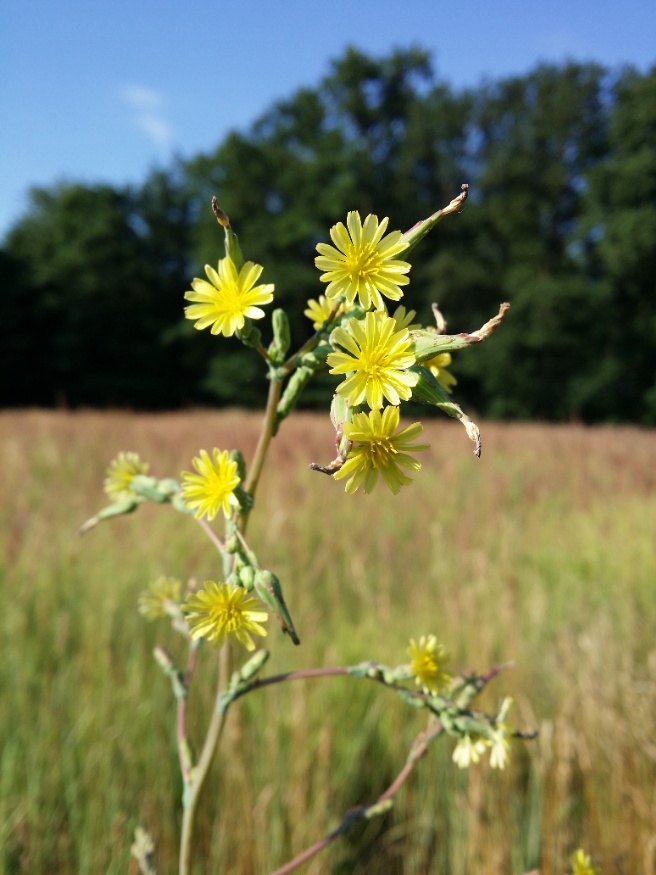
A distinctive feature of prickly lettuce is the way its leaves sometimes orient themselves vertically, a trait that has led to the name "compass plant." This orientation may help the plant reduce water loss in sunny, exposed environments. In summer, branching stems produce numerous small yellow flowers that resemble those of dandelions and other members of the daisy family.
Like other wild lettuces, the plant releases a milky latex when cut. This sap has long been associated with traditional herbal uses. Though often considered a common weed, prickly lettuce plays an ecological role by providing nectar for insects and thriving in habitats where few other plants can easily establish themselves.
Traditional Use
Folk Use
Chinese Medicine
Combinations
Precautions
| Medicinal Species | Lactuca serriola |
|---|---|
| Tastes | bitter |
| Organ Systems | digestive, respiratory, nervous |
| Thermal Nature | cool |
| Moisture | drying |
| Parts Used | leaves |
| Preparations | extract, tea/infusion, tincture |
| Organs and Tissue | lungs |