About This Plant
Pipsissewa (Chimaphila umbellata), also known as Prince's Pine, is a small evergreen woodland perennial in the heath family (Ericaceae). Native to the cool temperate forests of North America, Europe and Asia, it has long been admired for its glossy evergreen leaves and delicate nodding flowers. Despite its modest appearance, pipsissewa holds an important place in North American herbal history, where it became one of the continent's most respected urinary tract remedies. The plant grows slowly beneath mature coniferous and mixed forests, relying upon complex relationships with mycorrhizal fungi to obtain nutrients from the nutrient-poor, acidic soils in which it naturally thrives. This intimate ecological partnership makes it one of the more difficult medicinal plants to cultivate successfully.
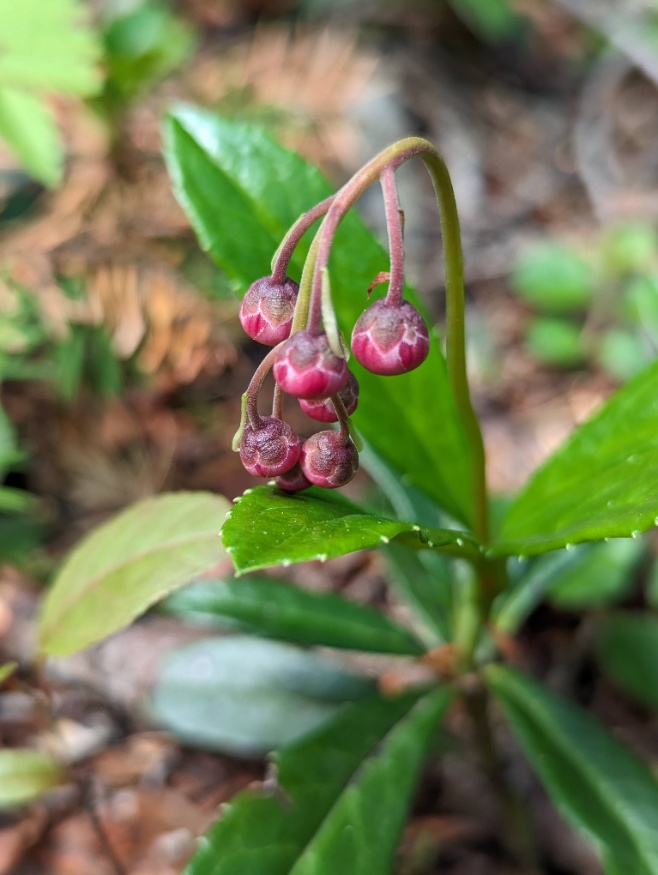
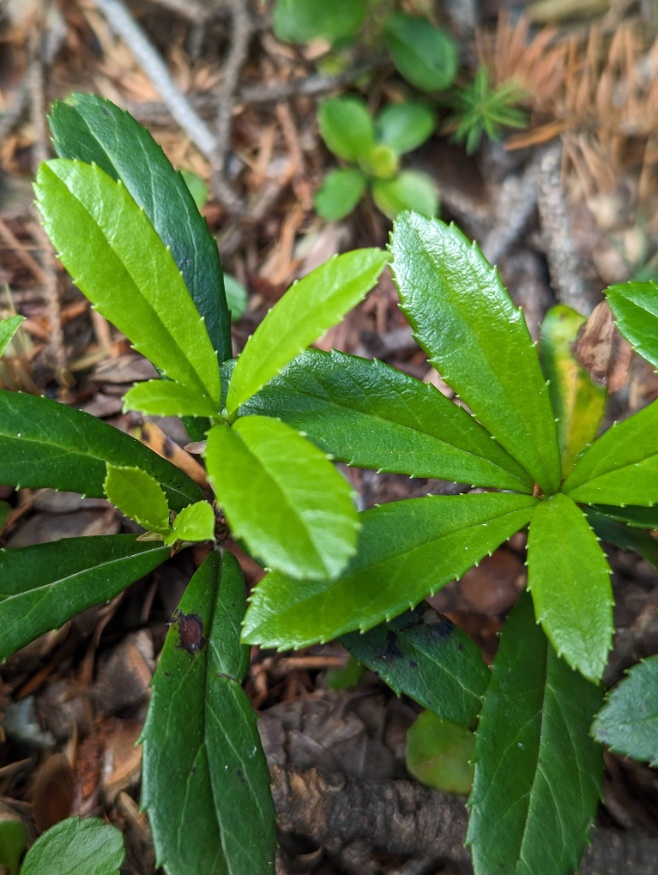
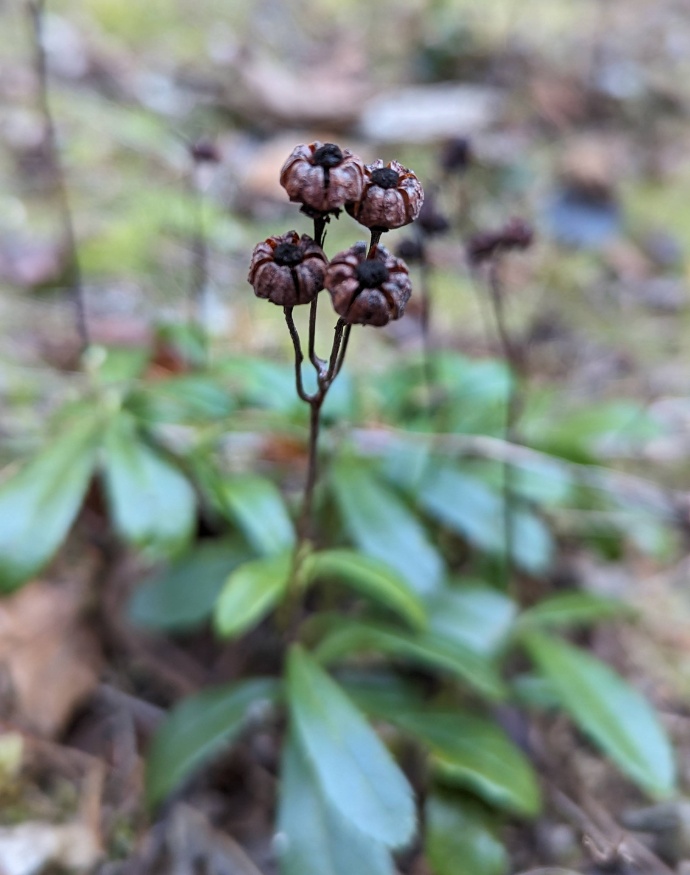
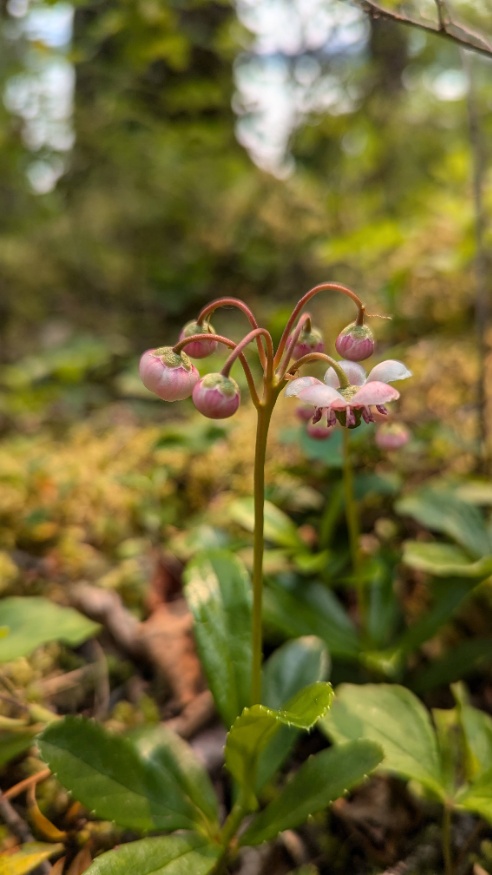
Plants typically form small colonies connected by creeping underground rhizomes. The leathery dark green leaves remain evergreen throughout the year, allowing the plant to photosynthesize whenever conditions permit. In early to midsummer, graceful stems produce clusters of fragrant white to pink flowers with prominent curved stamens that attract native bees and other woodland pollinators. Following pollination, upright seed capsules develop and eventually release thousands of minute seeds. Like many members of the heath family, however, successful germination depends upon the presence of compatible soil fungi, limiting natural establishment and making transplantation from the wild largely unsuccessful.
Pipsissewa has been valued for centuries by Indigenous peoples throughout eastern and northern North America. Decoctions and infusions prepared from the leaves were traditionally used to support healthy kidney and bladder function, encourage comfortable urination and relieve urinary irritation. The Cree-derived name "Pipsissewa" has commonly been interpreted as referring to the herb's traditional association with breaking up urinary gravel. European settlers readily adopted these uses, and nineteenth-century Eclectic physicians regarded the plant as one of the principal North American urinary tonics. It was also recommended for enlarged prostate, rheumatic discomfort and as a topical wash for minor skin irritations.
Modern Western herbalists continue to recognize pipsissewa as a valuable traditional urinary herb, although its use has become less common because of conservation concerns and the difficulty of cultivating the species sustainably. The leaves contain compounds such as arbutin and chimaphilin that contribute to the plant's longstanding reputation for supporting urinary tract health. Today, responsible herbalists emphasize ethical harvesting, favouring cultivated or sustainably sourced material whenever available. Combining remarkable ecological adaptations with a distinguished medicinal history, pipsissewa remains one of North America's most fascinating woodland herbs and an enduring symbol of the close relationship between healthy forests and traditional herbal medicine.
Traditional Use
Folk Use
Pipsissewa has long been one of North America's most respected woodland medicinal plants. Indigenous peoples throughout its native range prepared teas and decoctions from the evergreen leaves to support urinary tract health, encourage comfortable urination and relieve joint discomfort. The common name "Pipsissewa" is derived from the Cree language and has been interpreted as meaning "it breaks into small pieces," referring to the traditional belief that the herb supported the passage of urinary gravel and small stones.
European settlers quickly adopted the plant into colonial herbal medicine, where it became valued for supporting healthy kidney and bladder function as well as relieving urinary irritation. Nineteenth-century Eclectic physicians frequently prescribed pipsissewa for chronic urinary conditions, enlarged prostate and mild rheumatic complaints. Externally, washes prepared from the leaves were applied to minor skin irritations and slow-healing wounds because of their gentle astringent properties.
Modern Western herbalists continue to appreciate pipsissewa as a classic urinary tonic, although the plant is used less frequently today because of conservation concerns and the difficulty of sustainable cultivation. Its long history among Indigenous healers and early North American physicians nevertheless secures its place as one of the continent's most important traditional woodland medicines.
Chinese Medicine
Pipsissewa (Chimaphila umbellata) is not a traditional herb of the classical Chinese Materia Medica and has no established role within ancient Traditional Chinese Medicine. Although the species grows naturally in parts of northern Asia, it was not incorporated into the core TCM pharmacopoeia. Instead, its medicinal reputation developed independently among Indigenous peoples of North America and later within Western herbal medicine. Consequently, there are no classical channel associations, standard formulas or traditional dosage recommendations recorded for this plant.
From a modern energetic perspective, pipsissewa is considered cool, bitter and drying, with a strong affinity for the Kidneys, Bladder and urinary tract. Western herbalists have traditionally employed it where irritation, inflammation or stagnation affect urinary elimination. Within an integrative framework, its actions resemble the TCM concepts of clearing Damp-Heat from the lower burner while promoting the smooth movement of fluids. Its mild astringency also supports the toning of irritated urinary tissues, while its historical use for rheumatic discomfort suggests an ability to help resolve lingering Dampness affecting the joints.
Practitioners integrating Western herbs with TCM principles generally regard pipsissewa as a specialized urinary botanical rather than a constitutional tonic. For patterns involving pronounced Kidney deficiency or complex Damp-Heat syndromes, practitioners typically rely upon classical Chinese herbs with much longer histories of documented use. Pipsissewa is therefore best viewed as a complementary Western woodland herb whose traditional strengths lie in supporting healthy urinary function.
Special Chemistry
Pipsissewa contains arbutin, chimaphilin, ursolic acid, flavonoids, hydroquinone derivatives, tannins and various phenolic compounds. Arbutin has long been associated with the plant's traditional urinary applications, while chimaphilin exhibits notable antimicrobial activity in laboratory studies. The combination of phenolic compounds, flavonoids and triterpenes contributes antioxidant and mild anti-inflammatory properties that complement its historical use in urinary and musculoskeletal herbal preparations.
Signature
The evergreen leaves remain healthy through long northern winters, symbolizing endurance, purification and resilience. Growing quietly beneath towering conifers, the plant reflects gentle but persistent support rather than dramatic action. Its preference for clean, well-drained woodland soils mirrors its traditional reputation for promoting healthy fluid movement and cleansing the urinary system.
Combinations
Pipsissewa has traditionally been combined with other North American urinary herbs to provide broader support for kidney and bladder function. It also pairs well with soothing demulcent herbs when urinary tissues are irritated, balancing its mildly drying nature. Because of its specialized actions, pipsissewa is generally included as one component of a balanced urinary formula rather than being relied upon as a single herb.
Precautions
Pipsissewa is generally well tolerated when used in traditional amounts, although large doses may cause digestive upset because of its bitter constituents. Individuals with severe kidney disease, pregnancy or breastfeeding should avoid medicinal use unless supervised by a qualified healthcare practitioner due to insufficient safety information. Because wild populations grow slowly and depend upon specialized mycorrhizal fungi, harvesting from natural stands should be avoided whenever possible. Cultivated or ethically sourced material is strongly preferred to help conserve this distinctive woodland species.
| Medicinal Species | Chimaphila umbellata |
|---|---|
| Tastes | bitter, astringent |
| Organ Systems | urinary, immune/lymphatic, reproductive, integumentary (skin, hair, nails), musculoskeletal |
| Thermal Nature | cool |
| Moisture | drying |
| Parts Used | stems, leaves |
| Preparations | decoction, tea/infusion, tincture, wash, poultice |
| Organs and Tissue | kidneys, bladder, skin, prostate |
Growing Guide
Pipsissewa is a slow-growing evergreen woodland perennial that thrives beneath mature coniferous and mixed forests where acidic, well-drained soils remain rich in decomposing needles and leaf litter. Like many members of the heath family (Ericaceae), it forms close relationships with mycorrhizal fungi, making it challenging to establish outside its natural habitat. Plants prefer dappled shade, consistently cool soils and minimal disturbance once established.
Seeds benefit from approximately 60-90 days of cold moist stratification but are notoriously difficult to germinate because successful establishment depends upon compatible soil fungi. Division is rarely successful, and wild plants should never be transplanted because survival rates are extremely poor. Nursery-grown plants propagated under controlled conditions offer the best opportunity for cultivation. Maintaining an acidic woodland soil with abundant organic matter helps support long-term health.
The glossy evergreen leaves remain attractive throughout the year, while clusters of fragrant white to pink flowers appear during early to midsummer. Medicinal leaves are traditionally harvested during the flowering period when their active constituents are believed to be most concentrated. Only small portions should be collected from any colony to ensure continued growth, and cultivated sources are strongly preferred over wild harvesting because natural populations recover slowly.