About This Plant
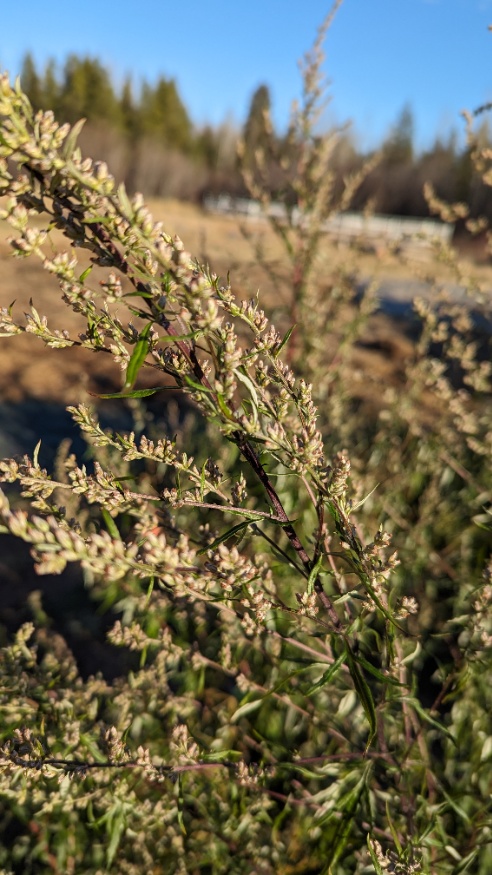
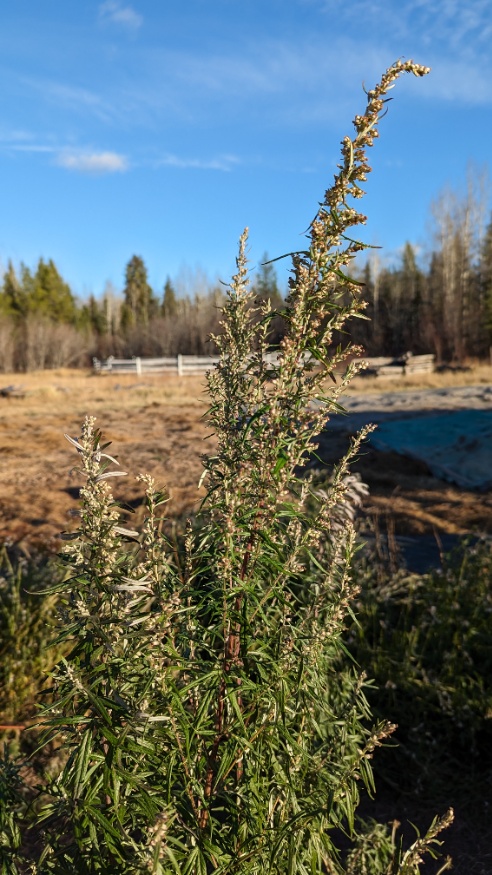
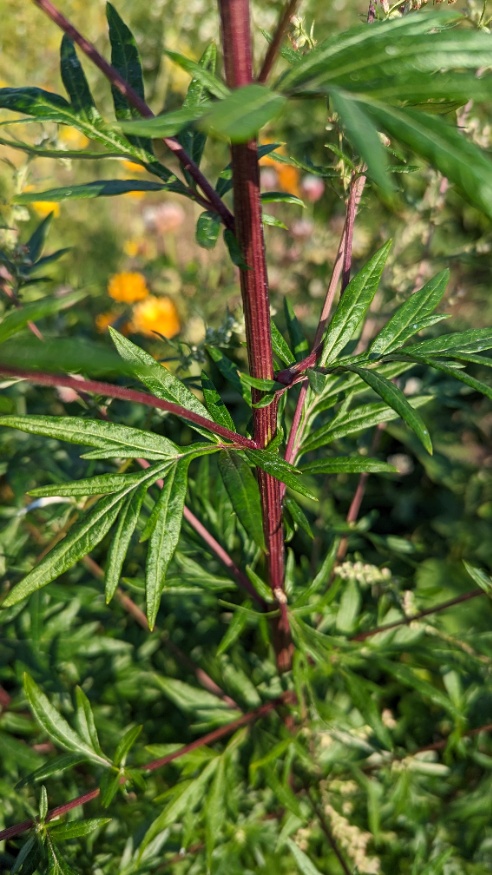
Mugwort (Artemisia vulgaris) is a tall, aromatic perennial herb that grows vigorously in open fields, roadsides, and disturbed ground. Its sturdy stems rise several feet above the soil and carry deeply divided leaves that are dark green on top and pale silvery beneath. When the wind moves through a patch of mugwort, the shifting foliage creates a subtle shimmer that makes the plant easy to recognize in the landscape.
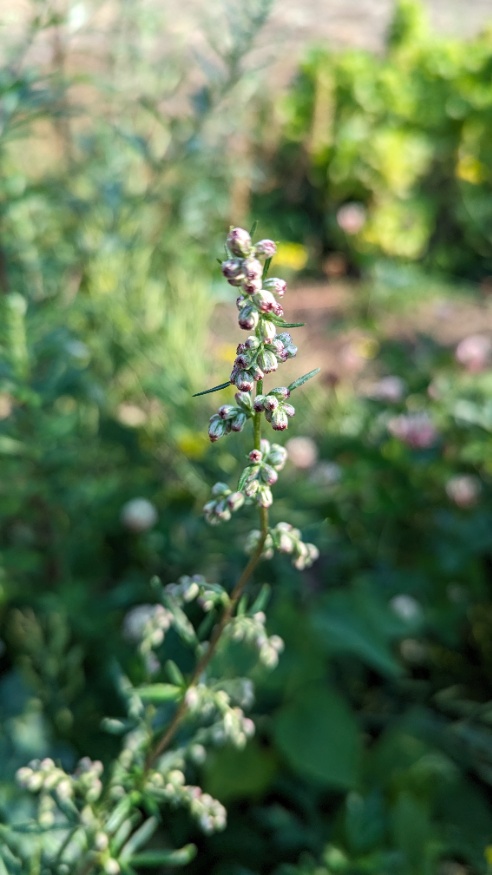
In late summer, slender branching stems produce clusters of small, inconspicuous flowers that attract a variety of insects. The plant spreads through creeping roots, allowing it to form large colonies in favorable conditions. Because of this hardy nature, mugwort has naturalized widely beyond its native range.
Throughout history mugwort has held an important place in both herbal medicine and cultural traditions. The leaves have been used in teas and herbal preparations, while dried stems were sometimes burned as incense. In East Asian medicine, mugwort is especially significant as the herb used in moxibustion therapy. With its resilience, distinctive aroma, and long history of use, mugwort remains a well-known and widely recognized medicinal plant.
Traditional Use
Folk Use
Chinese Medicine
Combinations
Precautions
| Medicinal Species | Artemisia vulgaris |
|---|---|
| Tastes | bitter |
| Organ Systems | digestive, nervous, reproductive |
| Thermal Nature | warm |
| Moisture | drying |
| Parts Used | leaves, flowers |
| Preparations | extract, tea/infusion, tincture |
| Organs and Tissue | stomach, liver |