About This Plant

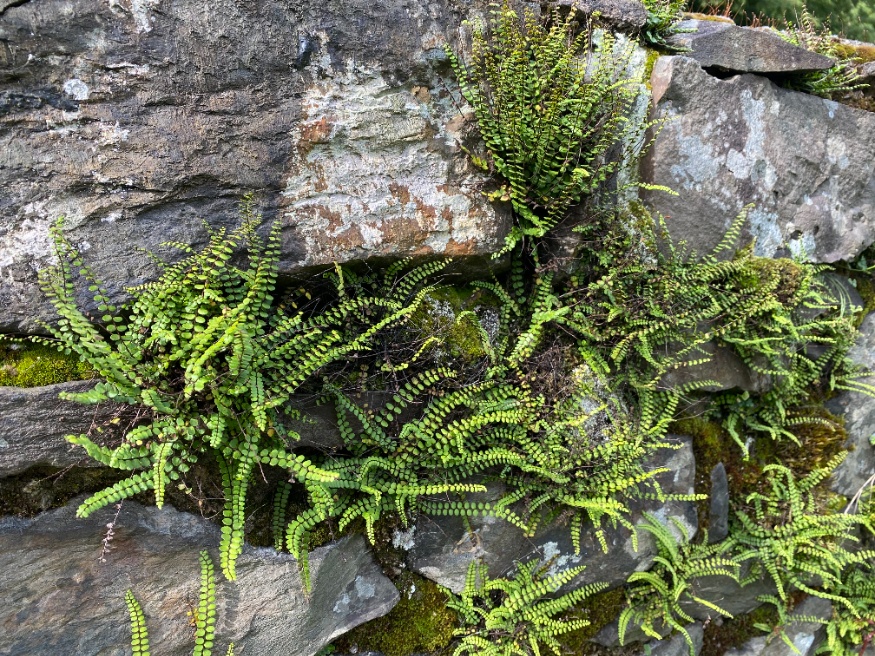
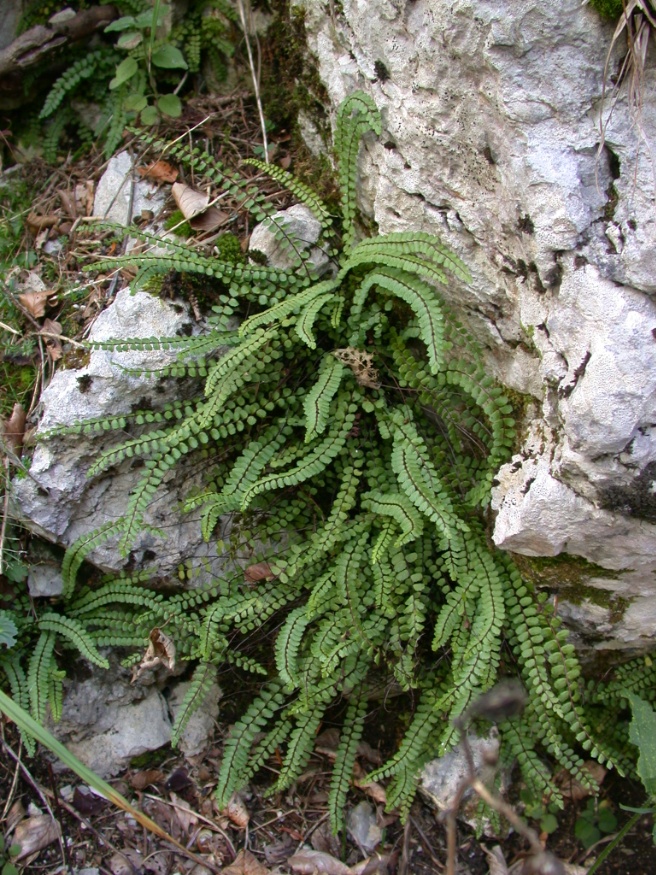
Maidenhair spleenwort (Asplenium trichomanes) is a small evergreen fern found growing in rocky habitats throughout much of the Northern Hemisphere. It commonly appears in crevices of cliffs, stone walls, rocky slopes, and shaded outcrops where moisture is present but drainage is excellent.

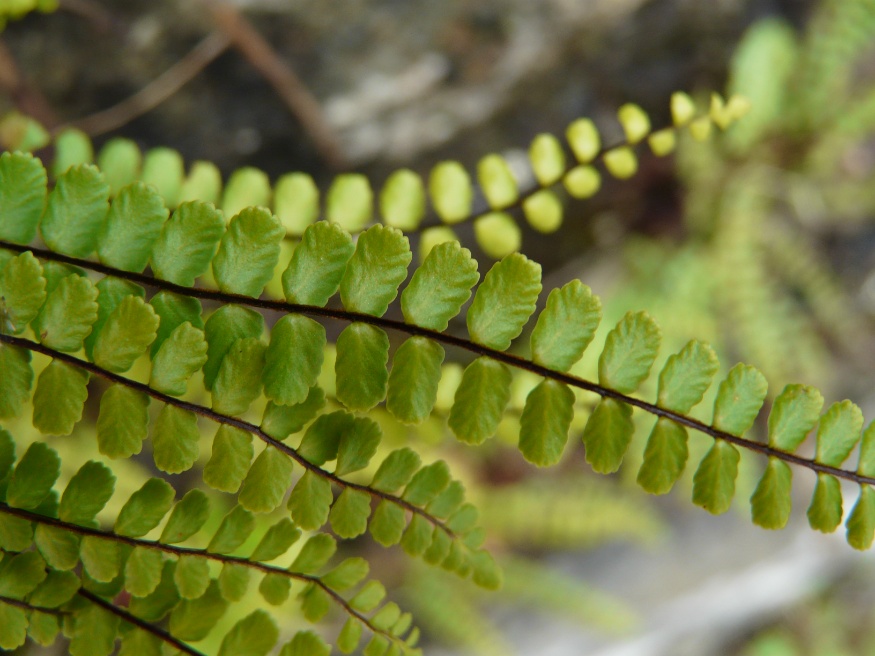
The plant forms small clumps of delicate fronds that arch gracefully from a short rhizome. Each frond has a slender dark stem lined with many tiny rounded leaflets arranged in opposite pairs. The dark wiry stems contrast with the bright green leaflets, giving the fern a distinctive and elegant appearance.

This species is well adapted to life in narrow rock fissures where soil is minimal. Its roots anchor deeply into crevices, allowing it to survive periods of dryness while still benefiting from moisture that collects in the stone.

Maidenhair spleenwort grows slowly but can persist for many years once established. Because of its delicate beauty and tolerance for shade, it is sometimes cultivated in rock gardens, shaded stone walls, and crevice plantings. In natural settings it contributes to the biodiversity of rocky habitats and sheltered woodland cliffs.

Traditional Use

Folk Use

Maidenhair spleenwort has a long history in European herbal traditions, particularly during the medieval and Renaissance periods when many ferns were used medicinally. The plant was traditionally valued for respiratory complaints and was often prepared as a tea or syrup to soothe coughs, bronchial irritation, and hoarseness. Herbalists considered it helpful for clearing thick mucus from the lungs and throat. It was also used as a mild diuretic to support kidney and urinary function. In some traditions the herb was included in formulas intended to dissolve small kidney or bladder stones. The name "spleenwort" reflects an old belief that the plant could treat disorders of the spleen, though this use was largely symbolic. Because of its mild astringent qualities, infusions were sometimes used to soothe digestive irritation or as a gentle tonic for weakened tissues.

Chinese Medicine

Maidenhair spleenwort is not a traditional herb in classical Chinese medicine, but its actions resemble herbs that clear heat and transform phlegm in the lungs. Energetically, it is considered slightly bitter and cooling, helping to soothe inflamed mucous membranes and promote the movement of fluids. Its primary affinity is with the Lung system, where it helps loosen and clear thick mucus while calming irritation in the throat and bronchial passages. The herb's mild diuretic action suggests a secondary connection with the Kidney and Bladder systems, where it may assist in clearing damp heat or minor urinary irritation. In modern integrative herbal practice, it is sometimes used in gentle respiratory formulas designed to soothe coughs and support lung recovery following illness. Its mild nature makes it more supportive than strongly medicinal.

Special Chemistry

Maidenhair spleenwort contains flavonoids, tannins, mucilage, and small amounts of phenolic compounds. These constituents contribute to its mild astringent, soothing, and anti-inflammatory properties.

Signature

The delicate fronds with fine leaflets resemble tiny lungs or branching airways, reflecting the plant's traditional association with respiratory conditions. Its ability to grow in narrow rock crevices symbolizes resilience and support for tissues under strain.

Combinations

Maidenhair spleenwort may be combined with mullein, coltsfoot, thyme, or licorice root in formulas intended to soothe coughs and support respiratory function. For urinary support it can be paired with plantain, corn silk, or horsetail.

Precautions

Generally considered a mild and safe herb when used in moderate amounts. Because the plant is small and slow growing, wild harvesting should be done sparingly to protect natural populations.

Medicinal SpeciesAsplenium trichomanes, Asplenium scolopendrium, Asplenium adiantum-nigrum, Asplenium ruta-muraria
Tastesbitter, astringent
Organ Systemsdigestive, respiratory, urinary
Thermal Naturecool
Moisturedrying
Parts Usedleaves
Preparationsdecoction, tea/infusion, powder, syrup
Organs and Tissuelungs, stomach, kidneys, mucosa

Growing Guide

Maidenhair spleenwort grows naturally in crevices of rocks, old stone walls, and shaded cliffs where moisture is present but drainage is excellent. It prefers partial to full shade and thrives in well-drained mineral soils or rocky substrates with some lime content. In cultivation it performs well in rock gardens, shaded stone walls, or crevice plantings where water does not accumulate around the roots. Propagation is usually done by spores, though division of small clumps may also work if handled carefully. Maintain moderate moisture but avoid heavy soils or standing water, which can cause root rot.