About This Plant
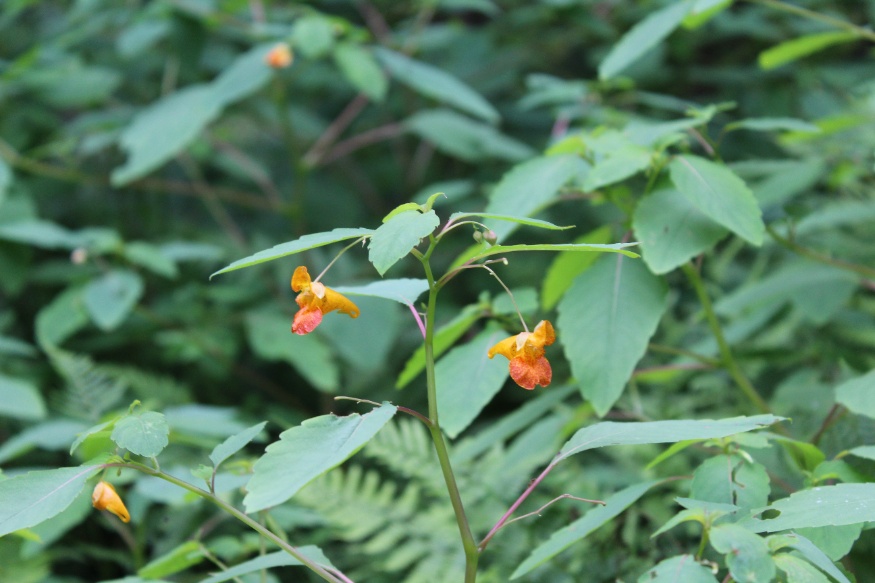
Jewelweed (Impatiens capensis) is a delicate annual plant commonly found in moist, shaded environments such as stream banks, wetlands, and forest edges. Its succulent stems and soft green leaves create a lush appearance, often forming dense patches in areas with consistent moisture.
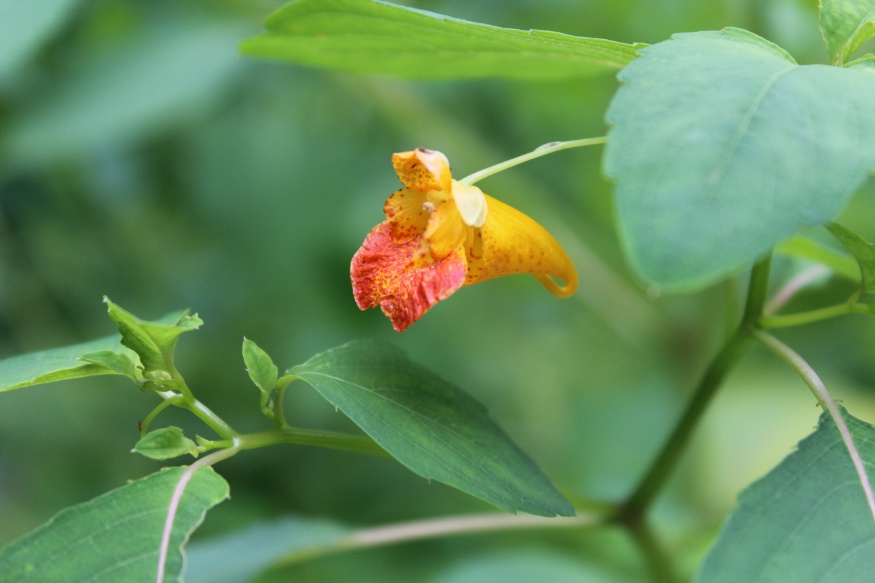
The plant is especially known for its bright orange, trumpet-shaped flowers that hang gracefully from slender stems. These blossoms are a favorite of hummingbirds and other pollinators. When mature, the seed pods burst open at the slightest touch, scattering seeds and giving rise to the name "touch-me-not."
Jewelweed's leaves have a unique quality that causes water to bead up and roll off their surface, creating a jewel-like effect after rain. This feature contributes to the plant's common name and adds to its visual appeal.
For generations, jewelweed has been valued as a soothing skin remedy, particularly in regions where it grows alongside plants that cause irritation. Its ability to thrive in damp, shaded habitats makes it an important component of wetland ecosystems and a familiar plant to those who spend time in forested landscapes.
Traditional Use
Folk Use
Chinese Medicine
Combinations
Precautions
| Medicinal Species | Impatiens capensis |
|---|---|
| Tastes | astringent |
| Organ Systems | integumentary (skin, hair, nails) |
| Thermal Nature | cool |
| Moisture | moistening |
| Parts Used | stems, leaves |
| Preparations | salve, wash |