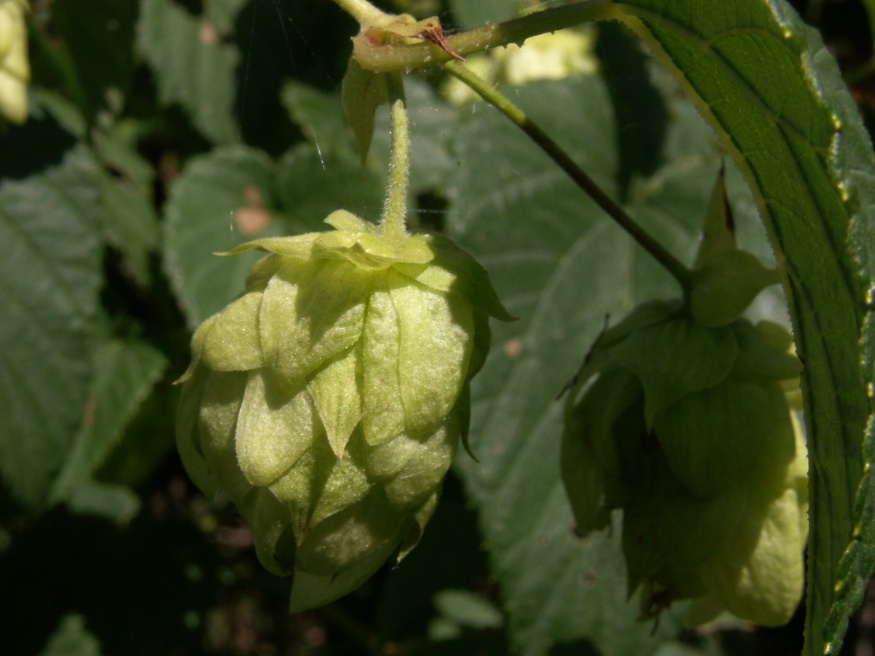
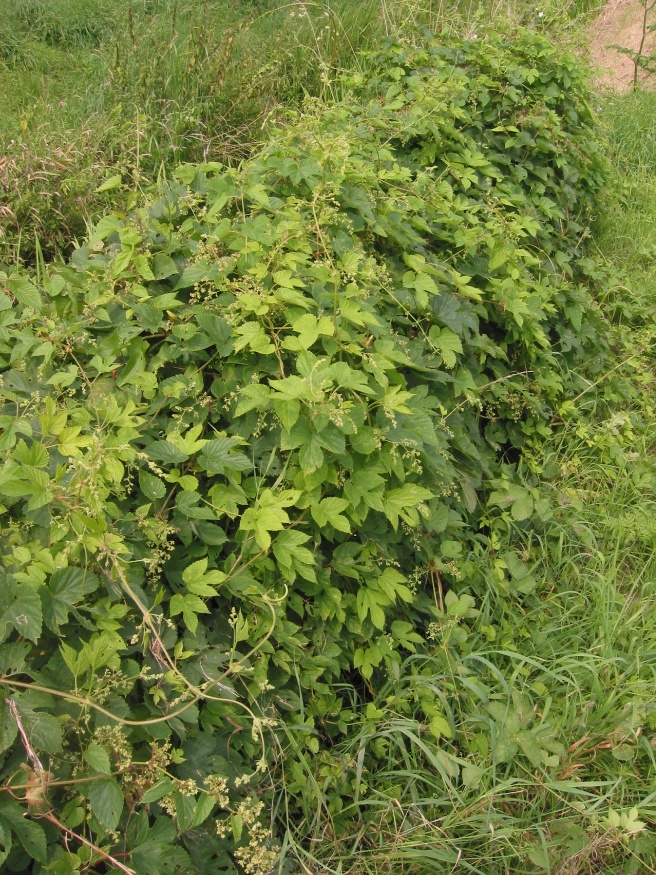
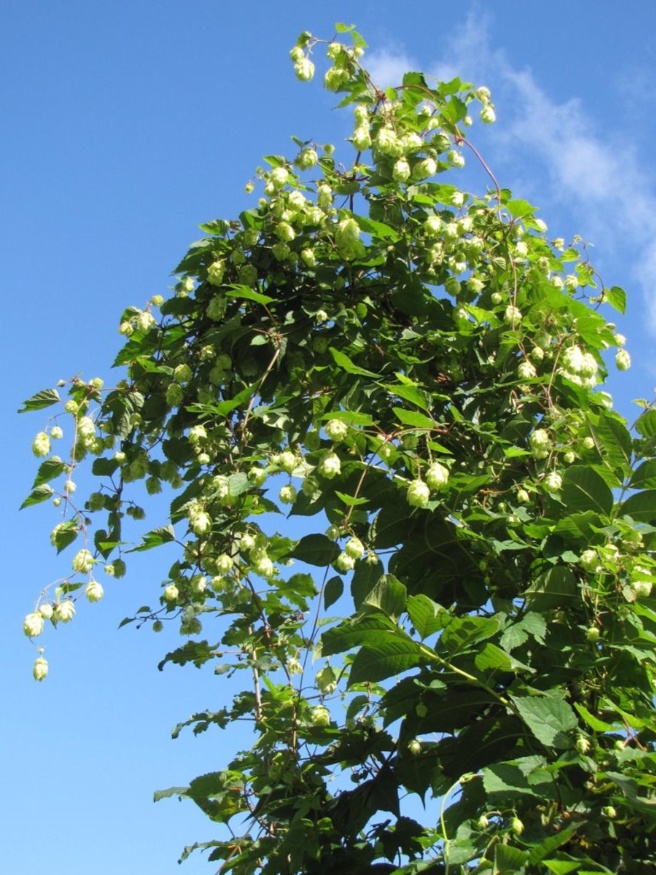
Hops (Humulus lupulus) are fast-growing perennial vines native to Europe and parts of North America. They produce coiled, climbing stems that can reach 20–25 feet in height during a single growing season. The female plants develop cone-like flowers in late summer, which are aromatic and used for medicinal and brewing purposes. Hops thrive in open forest edges, hillsides, prairies, and riparian areas where they receive ample sun and support for climbing. Leaves are large and lobed, providing shade and structural beauty along the trellis. Historically, hops have been used in teas, tinctures, and poultices to calm the nervous system, ease digestive discomfort, and promote restful sleep. Their growth habit makes them both an ornamental and functional plant in gardens, while the cones continue to attract pollinators and provide therapeutic benefits.
Hops have a long history as a calming herb and digestive aid. The female cone-like flowers were traditionally brewed in teas or tinctures to promote relaxation, reduce anxiety, and improve sleep quality. Hops were also used as a digestive tonic, alleviating bloating and mild gastrointestinal discomfort. Externally, they were occasionally applied in poultices to soothe inflammation or muscle tension. In European herbalism, hops were considered a gentle nervine and a mild sedative, often combined with other relaxing herbs such as chamomile or valerian.
In modern integrative TCM frameworks, hops are interpreted as mildly bitter and cooling, acting on the Heart and Liver to calm the spirit and relieve restlessness. They may be incorporated in formulas for insomnia, anxiety, or digestive imbalance, supporting relaxation and regulating qi without being overly sedating.
Hops contain bitter acids, flavonoids, essential oils, and polyphenols contributing to sedative, digestive, and anti-inflammatory properties.
The climbing habit and aromatic cones symbolize elevation and relaxation, reflecting its traditional use for calming the nervous system.
| Medicinal Species | Humulus lupulus |
|---|---|
| Tastes | bitter, acrid/pungent |
| Organ Systems | digestive, nervous, muscular, constitution |
| Thermal Nature | cool |
| Moisture | drying |
| Parts Used | roots, stems, leaves, flowers |
| Preparations | decoction, extract, tea/infusion, tincture, powder |
| Organs and Tissue | stomach, muscle & connective tissue, blood |
Hops are vigorous climbing vines that thrive in full sun with well-drained, fertile soils. They prefer soils with moderate moisture and benefit from support structures such as trellises or fences. Seeds require cold stratification for germination, and vegetative propagation via rhizomes is common. Hops grow rapidly in spring and summer and can reach heights of 20–25 feet. Regular pruning of old stems encourages new growth and higher yields. The plants tolerate a range of soil types and are hardy to cold northern climates.