About This Plant
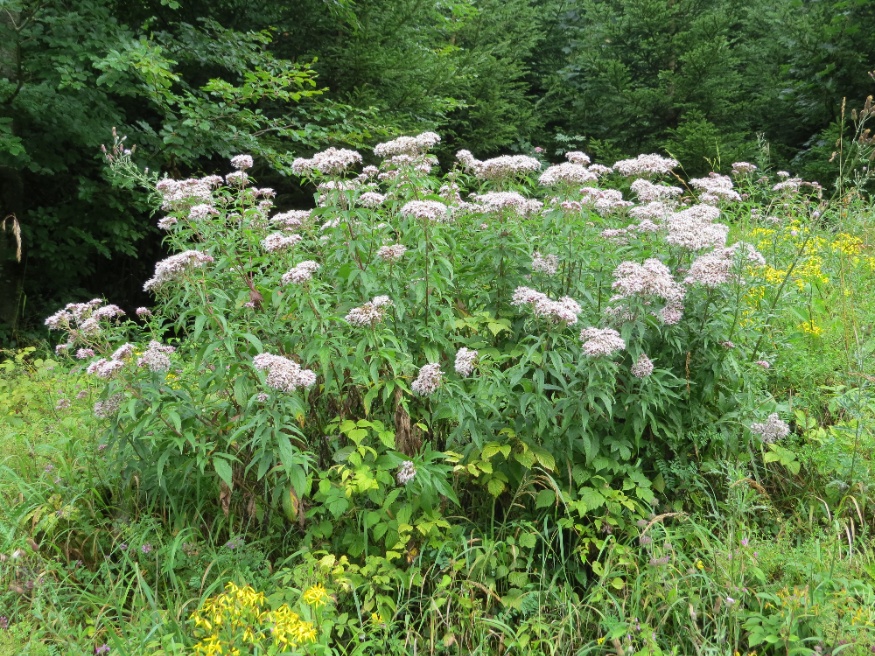
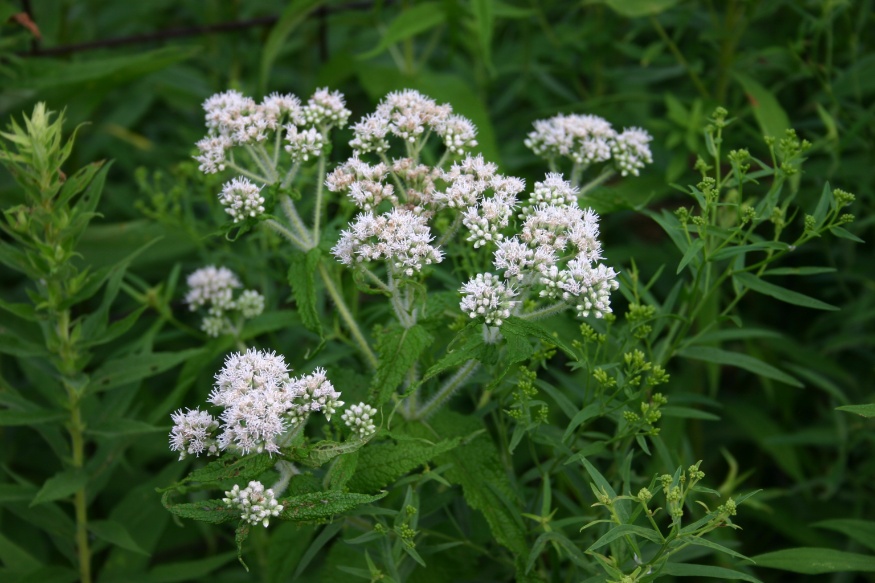
Boneset (Eupatorium perfoliatum) is a tall perennial herb commonly found in moist meadows, wetlands, and along stream edges. Its upright stems are distinctive, appearing to pass directly through pairs of opposite leaves that are fused at the base, giving the impression that the stem pierces them. This unique feature makes the plant easy to identify in the field.
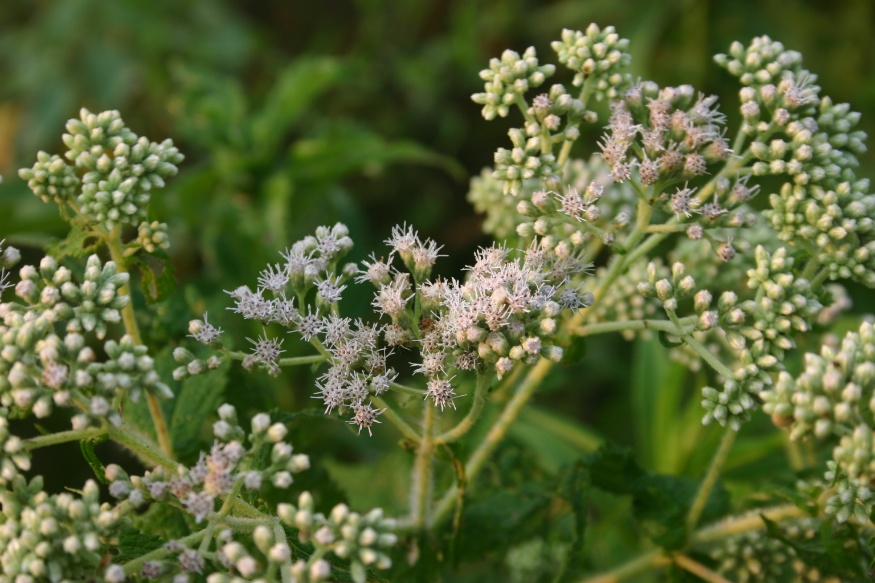
In late summer, boneset produces clusters of small, white flowers that form flat-topped groupings, attracting a wide range of pollinators. The plant thrives in damp soils and can often be found growing in areas that remain consistently moist throughout the growing season.
Historically, boneset has been an important medicinal plant, particularly in North American herbal traditions. It was widely used during times of illness to support the body's natural defenses and promote recovery. Its strong, bitter qualities reflect its potent nature.
With its distinctive leaf structure and affinity for wet habitats, boneset stands out as both a visually unique and historically significant plant in natural and cultivated landscapes.
Traditional Use
Folk Use
Chinese Medicine
Combinations
Precautions
| Medicinal Species | Eupatorium perfoliatum |
|---|---|
| Tastes | bitter |
| Organ Systems | respiratory, immune/lymphatic |
| Thermal Nature | warm |
| Moisture | drying |
| Parts Used | leaves, flowers |
| Preparations | tea/infusion, tincture |
| Organs and Tissue | lungs |