About This Plant
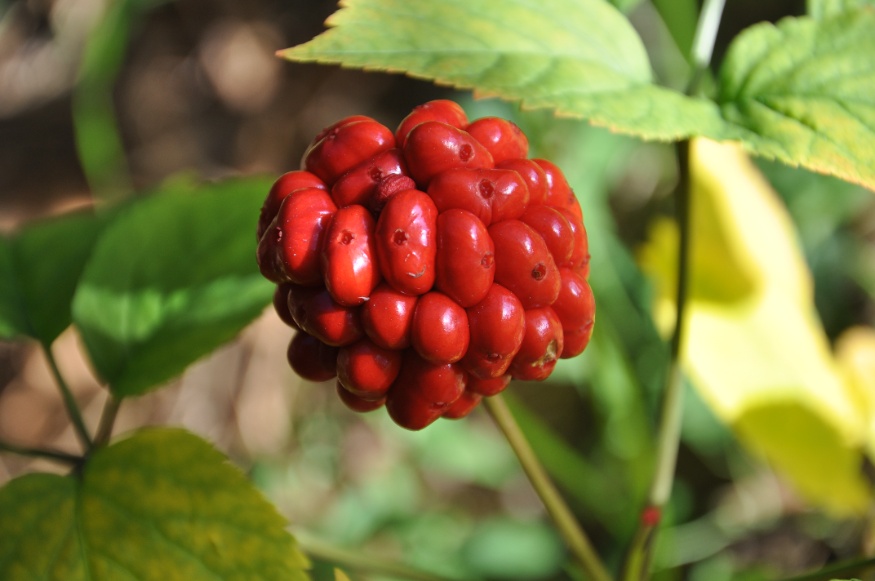
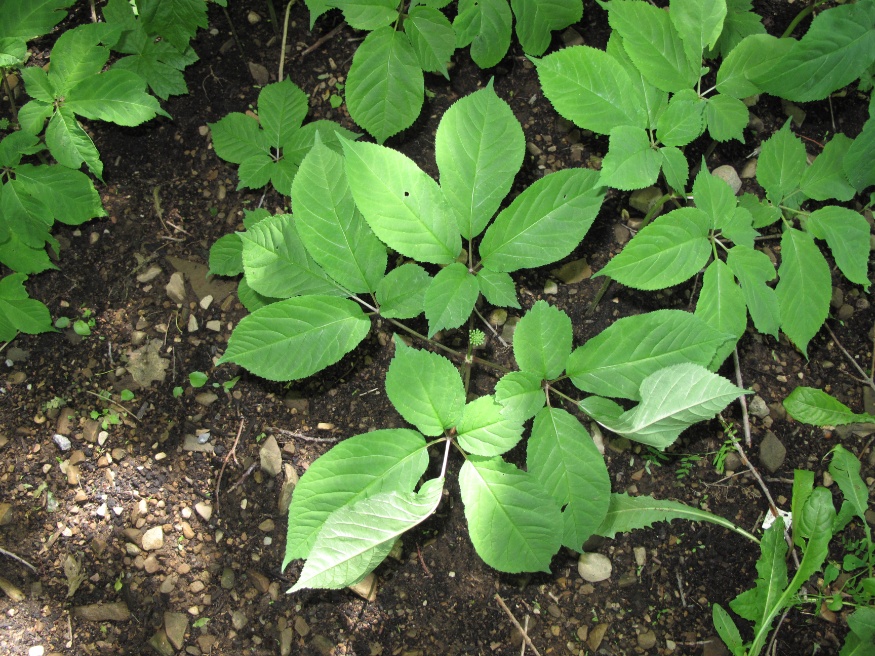
American ginseng (Panax quinquefolius) is a slow-growing perennial forest herb native to eastern North America, particularly throughout the Appalachian region and into parts of southern Canada. It thrives in rich, shaded hardwood forests beneath species such as maple, beech, and basswood, where soils are well-drained, humus-rich, and consistently moist. The plant is identifiable by its whorl of compound leaves, most often with five leaflets, and a small cluster of greenish-white flowers that mature into bright red berries in late summer.
Historically, American ginseng has been deeply valued by Indigenous peoples and later became a major export to Asia, where it remains highly sought after. Intense harvesting pressure over centuries has led to declining wild populations, and it is now considered at risk in many areas, with harvesting regulated or restricted.
Medicinally, the root is considered a gentle adaptogen, used to support energy, immune resilience, and recovery from stress or illness. Compared to Asian ginseng, it is regarded as more cooling and less stimulating, making it suitable for longer-term use. It is commonly prepared as a decoction, tincture, or chewed in small amounts for sustained support.
Traditional Use
Folk Use
American ginseng has a long history of use among Indigenous communities as a restorative tonic, often used for fatigue, digestive weakness, and recovery from illness. It was also valued for supporting lung health and easing coughs.
In traditional Chinese medicine, American ginseng (Xi Yang Shen) is classified as a yin tonic. It is used to nourish fluids, clear heat, and support the lungs and spleen. It is often chosen over Asian ginseng when there are signs of dryness or excess heat.
Modern herbalists use it for stress adaptation, immune modulation, and gentle energy support without overstimulation.
Chinese Medicine
In Traditional Chinese Medicine, American ginseng is considered cooling and nourishing to Yin. It is used to support the Lung and Spleen systems, replenish Qi, and calm internal heat caused by stress or illness. It is often used for fatigue, dryness, and weakened immune function.
Special Chemistry
American ginseng contains ginsenosides, a class of triterpenoid saponins responsible for its adaptogenic effects. Its profile differs from Asian ginseng, contributing to its more cooling and calming nature.
Signature
The forked, human-like shape of mature roots reflects its traditional use as a whole-body tonic, supporting systemic balance and vitality.
Combinations
Often combined with astragalus for immune support or with licorice to harmonize formulations.
Precautions
Generally well tolerated, but excessive use may cause digestive upset or interfere with medications. Use cautiously in pregnancy and avoid overstimulation when combined with other tonics.
| Medicinal Species | Panax quinquefolius |
|---|---|
| Tastes | bitter, sweet |
| Organ Systems | respiratory, immune/lymphatic, nervous, endocrine |
| Thermal Nature | cool |
| Moisture | moistening |
| Parts Used | roots |
| Preparations | decoction, tea/infusion, tincture, powder |
| Organs and Tissue | lungs, adrenal, blood |
Growing Guide
American ginseng requires a shaded woodland environment that closely mimics its natural habitat. It prefers 70–90% shade, rich loamy soil, and good drainage with consistent moisture. Seeds require a double dormancy cycle and are best planted in the fall, often taking 18 months to germinate.
Plants grow slowly and may take 5–10 years to reach harvestable size. Companion planting with forest species such as maple can help create suitable conditions.
Due to its conservation status, ethical cultivation practices are essential, including seed replanting and minimal disturbance to surrounding soil ecology.
Plants grow slowly and may take 5–10 years to reach harvestable size. Companion planting with forest species such as maple can help create suitable conditions.
Due to its conservation status, ethical cultivation practices are essential, including seed replanting and minimal disturbance to surrounding soil ecology.